13 min read
20 Minutes, No Equipment, Zero Excuses: Best Home Workouts

Why does a 20-minute workout beat an hour-long one? Because, being a human for a while now and having an impressively stubborn spare tire, I’ve realized a lot of things about the human condition (and have more questions with each year that passes), including that a 20 min exercise routine is better for you simply because you’ll actually do it.
If you haven’t worked out in a while (or ever), your idea of an active day is going a few flights of stairs (to that great restaurant above), and you can’t name more than 2 pieces of workout equipment, this one’s for you, darling. Quick workouts at home, from 20-minute workouts to no-equipment workouts, have been a game changer for this, always on the chubby side, woman (no model body-remodeling, but 17 pounds lighter and much firmer). You can eat as clean as you want, but in the long term, nothing significant will change in your body composition until you move. This is the flat-out truth, and crying about it makes no difference; believe me, I’ve tried, didn’t even lose a gram to tear dehydration.
And you really don’t need much. Don’t get intimidated by gym bros asking "do you even lift", or by the yoga-pant-split glutes squatting Volkswagens daily. There is nothing wrong with focusing on your body and health for hours a day; if you can do it, more power to you. But I don’t have these hours to focus solely on myself, and am clearly not (neither are you if you’re still here) really into this body is a temple/restricting thing. I do like to fill it up with wine or cookies from time to time, as I’m also into feeding my soul and staying sane.
So if you too have no extra time, money, nonsense tolerance, and are inclined to hit the trainer yelling at you, you can do a quick at-home workout, in the morning or evening, that will not make you wish you were dead (or contemplate murder). If you do a few easy, quality exercises on any kind of common-sense, consistent schedule, you’ll get huge benefits, not only physically but in mental health, stress reduction, and emotional stability as well. The great news is that the worse shape you’re in when you start, the more you’ll feel the benefits. You don't need to run marathons, be a triathlon champion, invest thousands in expensive fancy equipment, or turn your garage into a gym. 15-20 minutes and a few square feet are enough.
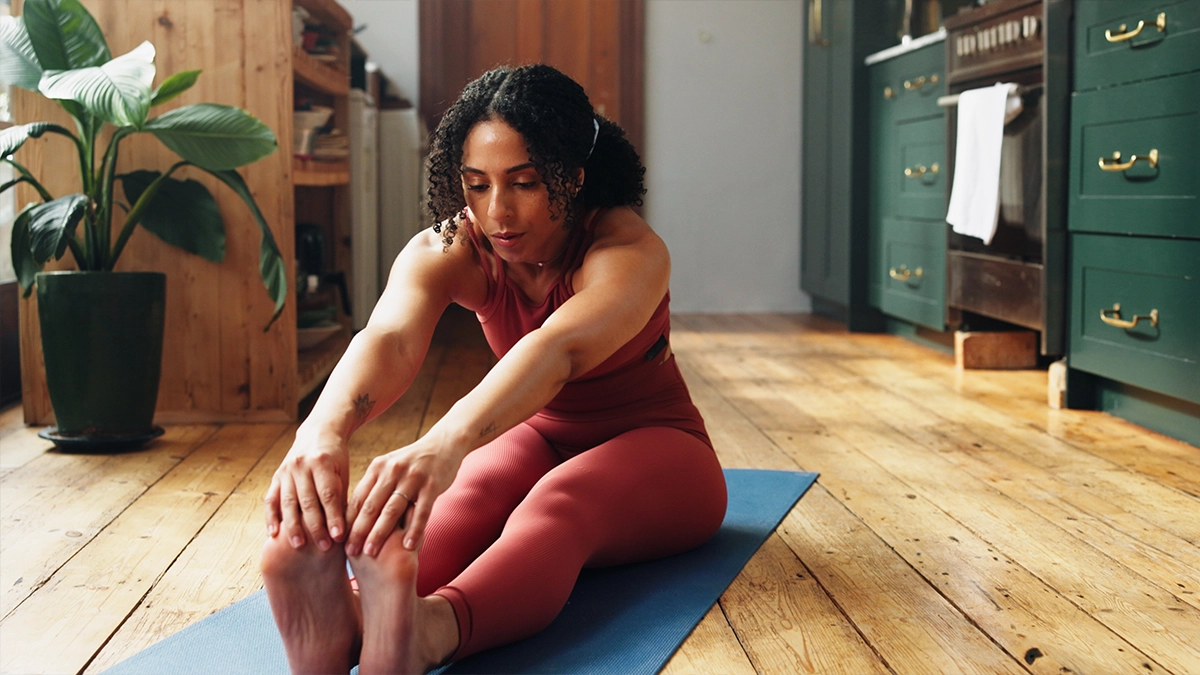
The trick isn't finding one perfect routine. There’s no such thing because we’re all different, have different strengths, weaknesses, goals, life circumstances, social and financial structure, access to equipment... The trick is finding the right home workout for your spare time (or lack thereof), fitness level, and desired outcomes. So we’ll look at the best home workouts, whether you're a complete beginner, looking to get stronger, or hoping to lose weight in a sustainable, healthy way. I’ll try not to bore you with too many verbal explanations of the exercises and will provide videos that demonstrate them nicely. So let’s communally loathe spandex and get started in the comfort of our own living room. Get yourself something to sip on (ideally water, but we don’t judge) and let’s go.
Workout For When You
Only have 20 minutes
And there is no way you’ll have more in the foreseeable future based on how life is set up right now, or you need something so quick that you have no time to change your mind. A 20 min workout is just fine and can get your whole body moving, and you can work up a great sweat. The best 20-minute workout will combine compound movements that work multiple muscle groups at once to make use of your time (btw, slow compound movements are also great for PCOS and insulin resistance, just putting this out there). Try each exercise for 30–45 seconds, rest briefly between movements (in PCOS, do 1 minute of work and 1 minute of rest to help prevent cortisol spikes), and repeat the circuit for three or four rounds.
A routine could include simple bodyweight exercises like push-ups, lunges, or crunches, and you can extend the rest periods if you’re just starting, or adjust things like going into a shallower lunge, doing push-ups on your knees, or even angling your body toward the wall. Here is a good guided video showing a doable 20-minute routine at a normal tempo.
Or you might want a good full-body workout that’s a bit more dancy, bubbly, and cardio-oriented like this one:
If you're looking for a 20-minute workout for beginners, focus on learning the movements with good form and do them slowly rather than trying to move as quickly as possible.
Own zero equipment
Like nothing, not a single weight or band in sight, and you're convinced that a bench is something you sit on as the pigeons stare at you. One advantage of a no-equipment workout is that it costs nothing extra and you can do it almost anywhere. Your body provides enough resistance, and you can build a totally effective home workout without equipment using simple bodyweight movements.
A full-body workout, no-equipment style, can include exercises we all know, such as squats for your legs, push-ups for your chest and arms, glute bridges for your posterior chain, and planks for your core. We’re not reinventing the wheel here.
To make a bodyweight workout at home more challenging, you can increase the number of repetitions, slow down each movement (Yes, yes, this makes it surprisingly more difficult), add pauses, or reduce your rest time (but I’m always into getting a good rest so I can pay attention to proper form and not just wanting to be done with it). You can also progress from easier variations to more challenging ones as you become stronger.
Here is one with no equipment for those very out of shape, with limited mobility, or those in recovery, designed by two physical therapists:
The goal isn't to make every at-home workout exhausting and to get ripped beyond recognition. You want to challenge your body appropriately so that you can be strong, healthy, emotionally stable, and perform consistently in real life, pick up your kid or a sock without back pain, or walk to that store without joints squeaking or getting winded. Every time you exercise, remember that you’re not doing this for the beach body (only). You’re doing it for life.
Are an absolute beginner
Sweating even at the idea of a structured exercise routine, and having anxiety attacks from pulling on tights. If you're new to exercise for any reason, starting with complicated routines for seasoned exercisers can be intimidating, crush your spirit, and keep you from even starting. Many times, workouts get postponed to tomorrow (meaning some undisclosed moment in the future very similar to never) because you bit off more than you could chew. Be kind to yourself. The fact that you want to become a better, healthier version of yourself is huge.
A good beginner workout should be simple, manageable, and easy to modify, especially if you’ve been sedentary because of pain, injury, or a health issue.
The best exercises for beginners at home are generally movements that teach fundamental patterns, such as squatting, pushing, hinging, lunging, and stabilizing your core. These simple exercises can form the foundation of full-body workouts for beginners without requiring a trip to the gym or specialized equipment. You want to feel a bit of a burn and break a sweat.
Start with a few sessions per week and gradually increase the duration or intensity.
Learning to exercise safely and consistently matters far more than trying the hardest workout right away, then crashing from soreness and deciding this is no life and working out isn't for you.
7 Exercises to do every day
Because you need a no-brainer, since you're already giving your brain too many things to do. If you’re getting lost in the infinite options of workouts out there and want to simplify your life by just doing a few of the same low-effort, high-impact simple moves, that’s ok.
I had a routine I didn’t change for months because I was overwhelmed with life and needed a fallback. You don't necessarily need to do a full workout or different movements every day to stay active. Sometimes, a few minutes of simple movement is enough to break up long periods of sitting and keep exercise part of your daily routine. Occasionally, it’s more important to keep the routine than to advance or do a huge variety of things.
Good candidates for 7 exercises to do every day to cover a full body:
- Squats – work your legs and glutes.
- Glute bridges – strengthen your glutes and posterior chain.
- Wall push-ups – train your chest, shoulders, and arms.
- Reverse lunges – challenge your legs and balance.
- Bird dogs – build core strength and coordination.
- Plank – strengthen your core and improve stability.
- Gentle mobility work – move your joints through comfortable ranges of motion.
This is also a good place to mention a few of the exercises proven to protect the body's mobility into autumn years and keep fragility and dependence on others at bay.
Want a circuit workout
Sometimes we fear things unnecessarily. You may have started with some absolute beginner workouts and realized you’re actually in better shape than you thought, but you're not yet ready to level up the exercises. You can stack these simple movements into a circuit and make these straightforward at-home workouts more efficient. In gym lingo, a circuit means creating a sequence of movements you repeat without rests, rather than doing just one exercise at a time.
Choose four to seven exercises and perform them one after another, taking a short rest between movements. After you complete the entire circuit, rest for a minute or two and repeat.
For example:
Squats → push-ups → reverse lunges → glute bridges → mountain climbers → plank
Beginners can start with 20–30 seconds per exercise, while more experienced exercisers can work for 30–60 seconds. If you’ve never done this before, these 20 seconds only seem like child’s play. That last plank will have you shaking.
Circuit exercises are a great way to get a short, full-body session in without learning a bunch of new moves or following along with the video. Just do what you’ve already learned in a breakless sequence. This isn't HIIT, since you’re not doing really high intensity, but you can make it HIIT if you amp up.
Are more interested in strength than pounds
Our goals differ. Sometimes it’s not about sweating it out, or fitting into those aspirational jeans at the back of the closet that have survived every death cleaning and move since high school. Sometimes our main goal is getting stronger.
You may have been ill, are entering a life transition that shifts hormones and compromises your bone density, may be postpartum and feel all mushy, or have noticed you really can’t unscrew the lids without a man (gasp). In this case, focus on movements that progressively challenge your muscles rather than simply trying to work up a sweat. Sure, you can use bodyweight exercises, which you’ll find plenty of in the videos above, but here you’d ideally add extra resistance or weight.
The best exercises for strength at home don't need to look dramatically different from a beginner routine. The difference is that you gradually increase the challenge. For example, you may do regular squats for a warm-up and add weights later, increasing them progressively as you get more comfortable.
Muscle and brain agree on one thing – they need to be challenged to grow, or as the folks would aptly say, “Use it or lose it”. It is true, and it rhymes, so it’s extra true. Your body is smart and will not waste resources keeping something you don’t use. It’s designed to make you survive and thrive amongst environmental challenges, so accept a challenge. You’ll notice you feel much better for having accepted.
Want to lose weight
I personally enjoy a bit more cushioning and think that people look better as their a bit more voluptuous selves, men and women alike. I like substance and people who take up space. But if you have enough extra weight packed to endanger your health, to leave you vulnerable to chronic disease, or just have a general feeling of malaise at a certain weight, only you can decide to change that. No blame game or excuses; only you are responsible for you. Yes, you may have support, but you’re the one dripping sweat in a plank.
Now there’s a catch to weigh loss here. The body views its fat reserves as one uniform storage space. It does not distinguish between arm fat and butt fat. So, don’t buy the deceitful snake oil fiction of melting just one single area in a week, or whatever they promise. We can’t selectively melt just the food baby but keep the backend thick, or lose weight on the thighs but not from the breasts. It doesn’t work like that. When you melt fat away, you’ll lose it from all over.
Also, how fat is distributed on your body, regardless of your weight, will heavily depend on genetics and hormonal factors. You may naturally have, for example, a wider rib cage or a tendency to create love handles, and that’s ok. The best at-home exercises for weight loss can change your body composition by melting fat, building muscle, and redistributing reserves. A consistent weight loss routine can make you look much different even if your weight doesn’t change as much as you’d expect. Your basic body type won’t change that much, and a heavier set of mountain genes in my body will never let me, no matter how much I exercise, look like Heidi… you know which one.
Remember that no individual exercise guarantees weight loss. Your overall energy balance, nutrition and gut health, activity levels, sleep, and consistency all matter, and time is a huge factor in healthy weight loss. Slow and steady will always beat a crash diet and dying on a treadmill, especially for women who have a whole orchestra of hormones to protect too.
A combination of strength training and cardio is the best at-home workout to lose weight.
Bodyweight circuits, weight lifting, brisk walking, pilates, cycling, and other activities can all help you become more active. It doesn’t need to be anything structured. If you are starting from zero, half an hour of brisk walking, and slowly increasing to an hour or more, will do freakin’ wonders. You can find some of the many free dance exercise videos to have fun as you increase your metabolic rate, or grab your partner or a friend and take the dogs to the woods as often as you can. Incline changes on hills and mountains are an excellent way to burn more calories.
Choose at-home workouts you enjoy and can realistically repeat. If you don’t enjoy a lot of jumping, don’t start a cardio challenge. If you’re just starting, it’s silly to join an advanced yoga program. Maybe you like doing slow weights, jumping on a trampoline (btw great for lymph flow), looking for mushrooms in the woods, or feel the need to dance every time you hear a Latin music beat. Use your natural preferences. I’ve figured out I’m into weights, I like to be on the floor, and enjoy walking, uphill specifically, so I’ve used that to my advantage to do some cardio and strength, switching it up every other day.
The best routine is ultimately the one that matches your current fitness level and fits naturally into your day and preferences.
The Final Countdown
Not the song, but the last minute of our time together. If you’re anything like me, you didn’t even expect exercising to be fun, but know that this is something you need to do until one day you realize you’ve gotten so used to feeling great that you’re looking forward to your next home workout. As someone whose last structured activity was jazz dance in primary school, I didn't expect this. I did spend a lot on cute tights to motivate myself, as I was in the phase of telling everyone how I’m gonna start working out without actually beginning, but that’s beside the point.
Knowing how to stay fit at home isn’t about finding new exercises every day or week, but about creating variety that feels good to you, even if this is doing the same 7 exercises and changing the repetitions and rests, or a circuit vs non-circuit version.
Some may enjoy alternating strength-focused sessions with cardio, mobility work, wall pilates, and shorter recovery-day routines, or changing workout length depending on how much time and energy they have. After they build some strength and stamina, others may ditch quick workouts at home and head for mountains, parks, or hiking trails.
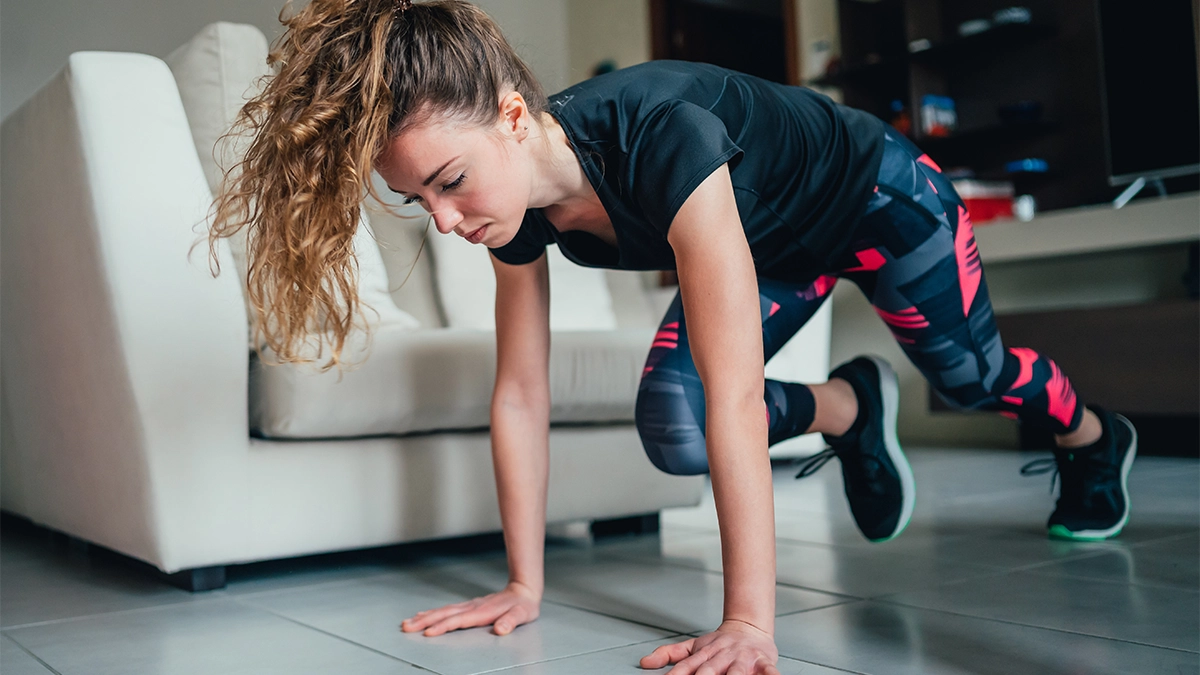
So don’t sweat it; we’re all different, and no one can judge you for choosing what is right for you in this mind, heart, and body set and your life circumstances. On busy days, a 10- or 20 minute workout may be all you can manage, even though you’re trying with all your might. On days when you have more time, you can do a longer home workout or combine strength and cardio and perhaps finish up with some recovery yoga. Why not?! Or just take a rest day and sit in the garden if you’re sore. You’re the boss of you.
There is no perfect workout or a universal fit. Relax. You’re doing just fine. A short session you actually complete is more useful than an elaborate routine you keep postponing. So, whether you choose a no-equipment workout, a 20 min workout, a beginner workout, or a few of the 7 exercises to do every day, you have plenty of options without leaving your living room. Choose workouts to do at home that fit your real life rather than an imaginary version of it (and yourself; we all have her somewhere in the back of your mind, but in reality she’d probably be hungry all the time and unhappy, tears dripping in her Prada shirt). When it comes to staying fit, the best home workout isn't necessarily the hardest one - it's the one you actually do.
We hope we’ve put some pep in your step today and inspired you to move and love a bit more, as fast or slow as you’d like, to be kind to yourself and see it all as an investment in the future you. Stay cool, curious, and enjoy living in your gorgeous skin.






Leave a comment