22 min read
Perimenopause vs. Menopause: Age Spans, Hormones, Symptoms & Relief

Have you recently forgotten a simple word for an everyday item or woken up drenched in sweat? Oh, the monstrosity, oh the bone-chilling horror! Perimenopause vs. menopause is a totally appropriate topic for peri-Halloween since it is one of the scariest things you may go through.
And no matter how much you think you know and how ready and prepared you believe you are, you’ll never be ready for this ride. Never! YOU cannot be ready, because that YOU that is ready will become someone else, taking the body and mind of the original you on a rollercoaster ride she never agreed to. No concept of consent. And yes, it will be the mind as well; you think it won’t, but it will get you. P.S. Some very lucky unicorn mares out there will sail through easier, and if you’re one of them, congratulations, you won the lottery.
What is perimenopause? A gift from nature for surviving this life long enough to no longer be able to (naturally) make new people. You’ll become someone who seriously contemplates violent crimes while chopping celery; you’ll be turning down the AC to simulate a castle from Frozen, to the dismay of your entire family walking around in ski pants… in July. And the rage! Oh my, don’t get me started on the rage. You genuinely won't believe you can get so angry over changing the bedding when the pillowcase gets stuck.

But look, as horrible as it sounds (and is), you’re leveling up in so many ways. It’s a sort of rite of passage. When the dust settles, it won’t be a post-apocalyptic wasteland. You’ll be so fantastically you, unwilling to tolerate other people’s crap or excuses, unbothered by their opinions, and doing your own thing. You’d almost go through it once again just to keep feeling this good. Almost… A whole new Pokémon, a whole new life. That’s how matrons are made.
Officially, perimenopause is a foyer to menopause where the hormonal balance starts wobbling. During this time, your ovaries start functioning less predictably, and estrogen and progesterone levels go all over the place. Menopause is the milestone after 12 consecutive months without a period, provided there is no other medical explanation for the absence of menstruation (BTW, you may get pregnant in perimenopause; stay safe). After menopause, you enter postmenopause, the stage that lasts for the rest of your life.
Unofficially, perimenopause and menopause are probably the closest we’ll come to licking the doorway of madness, sort of like a second puberty in reverse, just with more money and responsibilities. So, today we’ll go through a whole range of perimenopause vs. menopause similarities and differences. We’ll answer the core questions “what is perimenopause” and “what is menopause”, talk about age ranges, hormonal changes, symptoms that most women experience, and how to find relief.
Basically, ladies, my goal is to make you understand the key aspects of what is happening to your mind and body, help you navigate the minefield, and try to keep you out of prison (remember the rage?). There is nothing wrong with you if you’re going through the change right now, wherever you are in the stages of menopause. It’s a normal transition into a new chapter of life… although pages do stick sometimes and you may want to rip a few out. It’s ok; we’ll glue them back later.
Perimenopause vs Menopause vs Postmenopause
What’s the difference between perimenopause and menopause? The simplest way to understand the difference is this:
- Perimenopause is the transition leading up to menopause
- Menopause is not something you’re in. It is a specific milestone that marks the end of natural menstrual cycles (you can, of course, get some hormone replacement therapy (HRT) and simulate a cycle to ease symptoms)
- Postmenopause is everything after the point of 12 months without a period.
Perimenopause can last several years, with hormones fluctuating and periods becoming increasingly unpredictable. Menopause is confirmed retrospectively after 12 consecutive months without a menstrual period, if there is no alternate explanation for its absence. After menopause, you enter postmenopause, which continues for the rest of your life. Here's how the three stages compare.
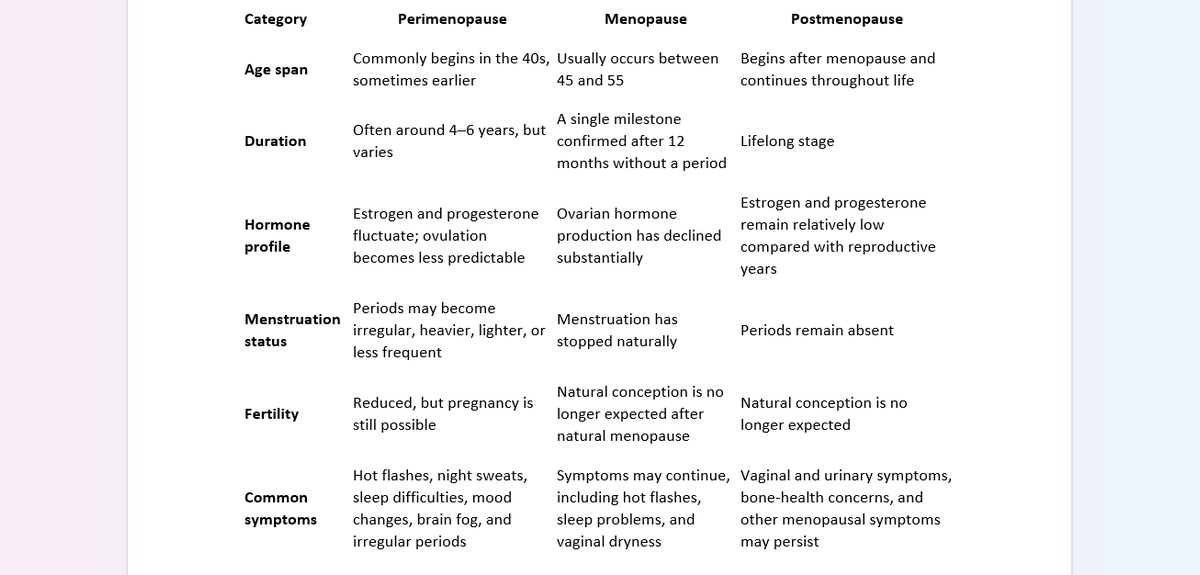
Sources: Australian Government Department of Health — Perimenopause; NHS — Menopause and perimenopause; UC Davis Health — Perimenopause, menopause and postmenopause.
Look, I know we started with drama, and you may get all the symptoms, very few, or barely feel that something is happening. There is no single way to experience menopause, just as all of our periods are/were different. Some had a light flow for 3 days, others heavy flow for 5, some of us felt like a beast was tearing us up from the inside, and others just a twinge here and there. I know women who can barely move and have to take a sick day each month, and those who get through it with a daily panty liner. Some have PMS known in three counties, others devour sweets, and the third hate how everyone around them breathes but have great bowel movements so it evens out, and others feel nothing at all.
There is no one-size-fits-all in life, and there is not one in menopause either. Some people have relatively few symptoms, while others find that sleep deprivation, wild mood swings, irregular bleeding, and a drop in libido significantly put a kink in their daily lives. Your experience is individual.
Perimenopause: Hormones Start Changing
Perimenopause age range: Usually the 40s, sometimes even late 30s
Perimenopause symptoms may begin as early as the late 30s for some women, but more often in the early 40s, lasting on average 4-6 years. It can be shorter or last up to 10 years, but you’ll most likely fall on the hump of the Bell distribution curve at about 5 years.
You might first notice that your periods are less predictable than they used to be and that things have gotten a bit messy. The cycle is suddenly shorter, bleeding is heavier than usual, or you skip a period or have two just weeks apart; this is all due to the hormones wildly fluctuating. For others who may have had a bit of irregularity their whole lives (due to issues like endometriosis or PCOS, for example) changes like sleep deprivation, sudden anxiety bursts, energy dips, or body temperature swings are more noticeable than menstrual changes.
Hormone profile: Estrogen and progesterone
You’re born with all the eggs you’re ever gonna have, and women who don’t ovulate regularly for whatever reason may enter perimenopause later. In perimenopause, ovulation becomes less consistent, and the dance of estrogen and progesterone is no longer a beautifully choreographed ballroom dance, but erratic 3 AM semi-buzzed unstructured raving in the club.
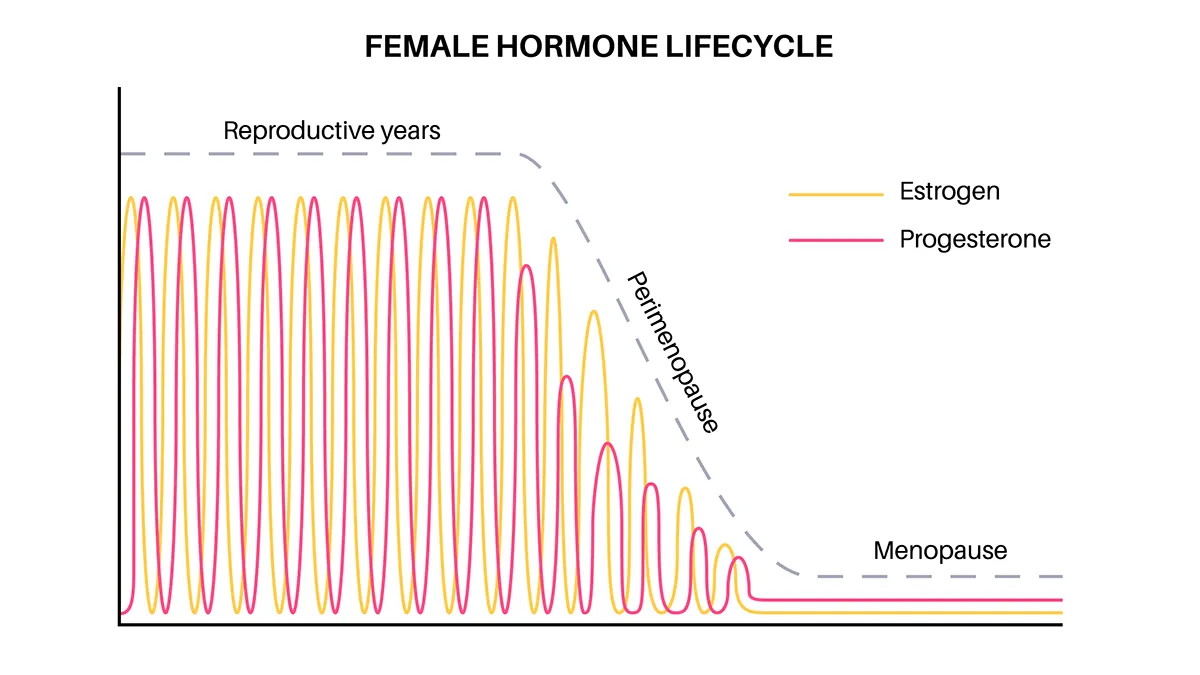
Official pages, like the Australian Government Department of Health, agree that estrogen doesn't simply decline steadily from the beginning of perimenopause to menopause, but can pulse and fluctuate, sometimes reaching relatively high levels before falling again. Progesterone production may also become less consistent when ovulation doesn't occur. This helps us understand why you might feel fine one week and sweat through the sheets while negotiating with insomnia the next.
Irregularities in estrogen and progesterone affect vaginal tissues, the menstrual cycle, and how our bodies regulate temperature, so you have women standing on porches in the middle of winter in their bras, steam just coming off them. Not every cycle means an egg was released; you can also have anovulatory cycles where you bleed in response to hormone withdrawal, but no egg was released that month.
This shifting quicksand of hormones means that a single blood test can’t reliably confirm or rule out perimenopause in someone over 45 with typical symptoms. This test will only be a snapshot of a composite movement. Like a photo showing you flipping the middle finger, but in reality you were just going to push your glasses back up your nose (you know you use the middle finger). So neither snapshot tells the whole story. A healthcare professional will consider your age, menstrual history, symptoms, multiple tests, and lifelong medical background before officially declaring menopause.
It's worth tracking your periods, including how long they last and how heavy the bleeding is. This can help you recognize patterns and give your doc some very useful information so they can help you better.
Can you still get pregnant during perimenopause?
Yes, you can. If you’re not considering a swan song of the ovaries in the form of a new baby, use protection. A surprising number of women who believe they’re entering perimenopause actually end up pregnant in their 40s. A third of pregnancies in women 40-45 are unplanned, and symptoms are mistaken for perimenopause. Be safe.

Although fertility declines with age, ovulation can still occur during perimenopause, even if your periods have become irregular. If you don't want to become pregnant, continue with contraception until a healthcare professional advises that it is safe to stop.
Common perimenopause symptoms
NHS claims that a lot of perimenopause vs menopause symptoms overlap, but menopause has some bonuses in store that we’ll cover in the next chapter. These are the common symptoms of perimenopause.
Hot flashes and night sweats
It is not just feeling a bit hot; it's like standing in front of an open furnace, scorching your face and neck while your whole body sweats. And the sweats aren't just a random damp pit; they flush you and soak through your pajamas. Night sweats can be so uncomfortable that they wake you up multiple times a night, leaving you drained and tired the next day and feeding the rage that makes you feel better when you plan how you’d get rid of a body.
Sleep disturbance
It may take you much longer to fall asleep, and it may be harder to stay asleep. Many women report waking up repeatedly during the night. Wake-ups can be due to hormonal imbalance, the night sweats mentioned, a heightened stress response, and underlying health conditions you may not be aware of, like a malfunctioning thyroid or sleep apnea.
Mood changes, anxiety, and irritability
You might get easily overwhelmed with sounds and people, smells, and chores in general. There is an increased level of anxiety and feelings of dread that appear out of nowhere and have no apparent cause in reality. You can also become more emotionally sensitive, and things or comments that never bothered you before can disturb you. Sleep disruption only amplifies the loop and emotional reactivity. Here are some relaxation tips for the chronically stressed, but too lazy to change their whole life.

Brain fog and trouble concentrating
It’s not just feeling less sharp and mentally agile, or the ordinary occasional “you go into a room and forget why you’re there”. You may struggle to find words for ordinary things like a chair or door, and be left standing there stumped and frustrated. Then you just make up a word for it and describe its function before you remember the word. You’re not losing your mind; it’s not early-onset dementia, and it is hormonal, just like the phenomenon of mommy brain.
Changes in periods
From a practical standpoint, this is the most recognizable sign of perimenopause, although it doesn’t have to be the first symptom. Still, you can’t rationalize it away as just a bad day, as you can with fatigue or irritability.
Women who have set foot in the perimenopause thunder dome often report that periods become:
- Heavier or lighter than they used to be.
- Closer together or farther apart.
- Shorter or longer.
- Occasionally skipped altogether.
Basically, you’re looking for anything out of character from your usual cycle regularity and intensity.
Also, unusually heavy bleeding or a significant change in bleeding patterns shouldn't automatically be blamed on hormones or the onset of perimenopause, as you get older the risk of things like fibroids or thyroid problems goes up, so get yourself checked up before you presume.
Plus, you can use the time your mom entered perimenopause as a loose guide. It’s not foolproof, and there is some variability. But if she entered perimenopause prematurely, your chances of doing the same are 6 x higher.
Vaginal dryness and changes in libido
The very words vaginal dryness sound like sandpaper on the brain. But if you once had a solid amount of healthy discharge or flooded your panties upon excitement, this may dry out a bit or a lot.
If you’re very dry it may lead to discomfort during sex and the same hormones bring on changes in sexual desire. It is not that you don’t love your partner or don’t want to be intimate; you just feel zero desire to do so, and may have some overwhelm issues where you can’t imagine being touched right now. These symptoms can develop during perimenopause and get more pronounced after menopause.
Headaches and joint aches
You may notice changes in migraine patterns or get a migraine if you’ve never had them before, and experience more aches and stiffness, for example, when getting out of bed in the morning. Still, this is not necessarily perimenopause. You may have just not been taking care of yourself lately. A 45-year-old body cannot live like it's 20 without getting some check engine lights.
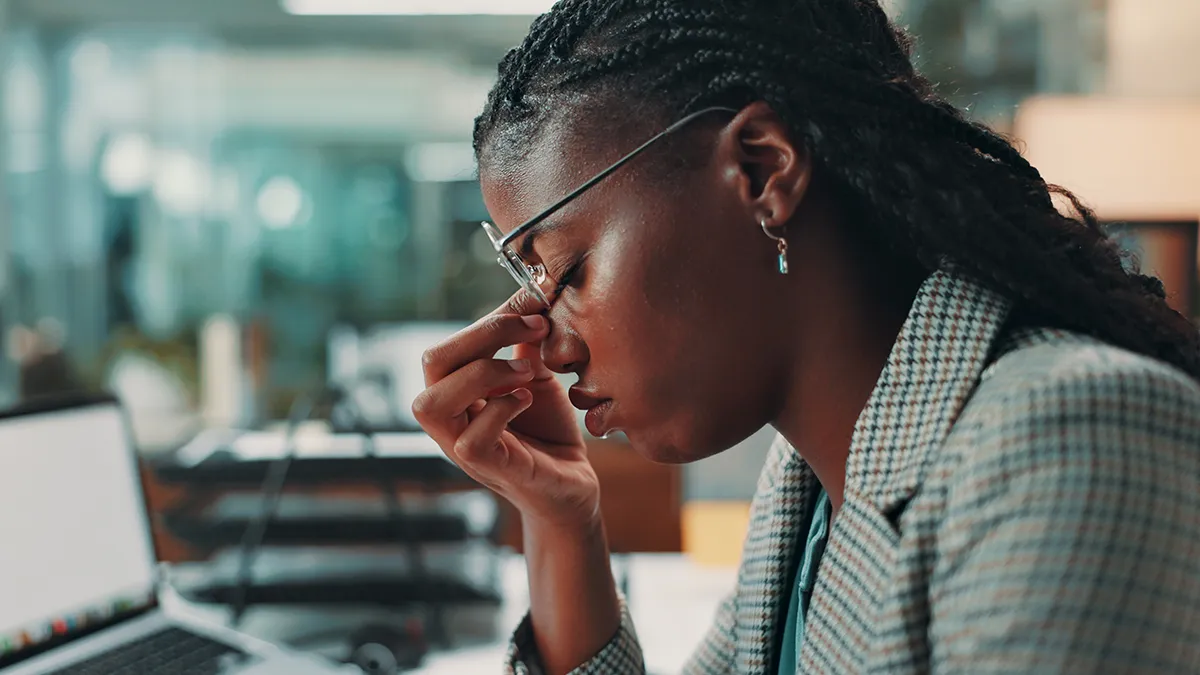
You can get none of this to the point that it interferes with your daily life, get a few, or experience them all coming and going. Symptoms vary significantly between individuals. The rule is: if something is persistent, severe, new, or affecting your life quality, it's worth getting checked out.
How to alleviate perimenopause symptoms
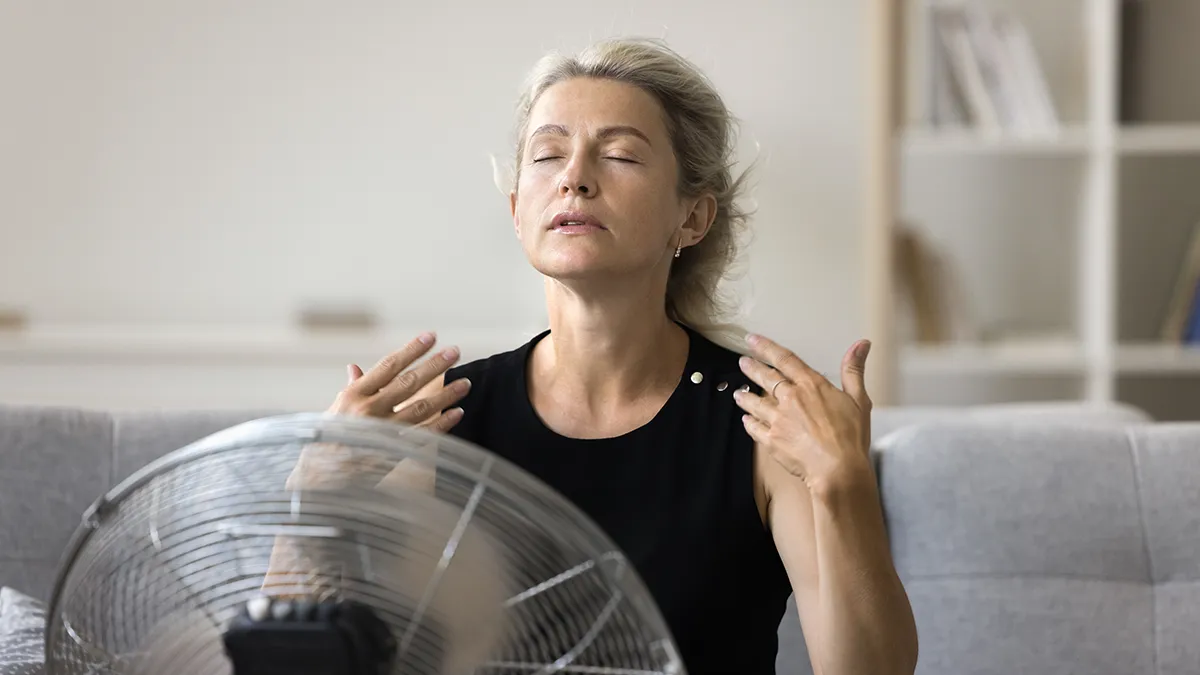
Hot flashes and night sweats tips
- Make yourself as comfortable as possible
- Wear breathable layers
- Keep your bedroom cool and dark
- Consider a fan or moisture-wicking sleepwear
- Figure out if things like alcohol, caffeine, spicy foods, or overheating before bed trigger the sweats for you
- Menopausal hormone therapy (MHT) for severe cases
Sleep problems and fatigue tips
- Go to bed and wake up at the same-ish time every day; this will do wonders for your out-of-kilter circadian rhythm
- If your circadian rhythm is very unstable, try a red light therapy device designed for sleep aid, and you may find yourself falling asleep longer and sleeping deeper
- Do something physical you like and move daily; no need for extreme cardio or HIIT, cut some hedges or move the couches to vacuum below them, walks are a great idea, especially if you’ve got a patch of nature nearby.
- Keep your caffeine in the early part of the day (I would never presume to advise any woman out there to give up coffee; during some life periods it was all we had)
- Persistent insomnia that’s destroying the edifice of your sanity may respond to cognitive behavioral therapy for insomnia (CBT-I).
If you get yourself checked out and it turns out it is not perimenopause, consider iron or other nutritional deficiency, thyroid disorders, or sleep apnea
Anxiety, irritability, low mood tips
- Give yourself permission to take your emotional wellbeing seriously and stop brushing it off to the side because you’ve gotten so used to caring for all others first
- Get regular movement and time outdoors. Seriously, we underestimate the simple pleasure of the sun on our skin
I have somewhat of a limited sympathy for woe-is-me moaning because I was raised to walk it off, under the wing of rural grandparents who survived two wars, and they were right. Most things that cause anxiety and stress are not real problems, have never happened, are not happening now, will not happen at any future point, and even if they did, mostly will not matter in a week's time.
There is no therapy like breathing and choosing to let sh**… stuff go. Do your best, detach from an outcome, and go enjoy a glass of wine with another premenopausal lady (not before bed if it gives you the sweats) and laugh it off. I know the beast can grip you so hard you can’t relax, clenching your jaw and pulling your shoulders up to your ears, but some of us get addicted to feeling stressed because it means we have a lot to do and we’re needed. Relax.
P.S. I know you don’t feel like moving, but get a punching bag and set it up in a garage. Go get yourself some well-padded gloves. You’ll enjoy this. Trust me.

- If anxiety or low mood persists and nothing helps (not even the punching bag), if you feel like something is really wrong (as opposed to an occasional gloomy afternoon), psychotherapy and medication can be a lifesaver, and hormone therapy can help fade some of these symptoms.
Brain fog and concentration tips
- Prioritize sleep, no sleep, no brain
- Whatever you’re concentrating on, take a break and move a bit; stretch, walk a few minutes, go get water in the canteen that’s further away from your desk in the office
- Make use of practical tools like calendars, reminders, and written lists (digital or analog, whichever works for you); color-code if it helps reduce mental load
- Clear your working and living space; clutter will make you lose concentration and may even make you feel anxious (or if you’re a type B, get all of your trinkets around you and enjoy the chaos)
- Binge-watch minimalism shows, I don’t know why it helps
Vaginal dryness and discomfort during sex tips
- Lubricate if your problems are more tied to the fun times, or use vaginal moisturizers, which can help relieve dryness when used regularly and make you more comfortable in general
- Low-dose vaginal estrogen may be an effective option for many people. It acts on local tissues and has much lower systemic absorption than regular hormone therapy.
Irregular or heavy periods tips
- Keep track of your bleeding so you can see patterns; you think you’ll remember, but you won’t
- Show your period diary to your doctor and make a plan together; mention all other symptoms you’re having
- Pharmaceutical help: hormonal contraception, a levonorgestrel-releasing intrauterine system, or other treatments your doctor thinks may fit your case.
NHS - Menopause and perimenopause article also warns that very heavy, prolonged, or unusual bleeding needs to get checked out. Don’t ignore it, please. It may not be connected to perimenopause, especially if you have no other symptoms. Female plumbing is much more complicated than male plumbing, and we have more parts that could go haywire.
Menopause: Your Periods Stop, Hormones Drop
Menopause age span: Between 45 and 55
Menopause, meaning no cycles for 12 months, typically occurs between ages 45 and 55, averaging around 51 in many populations worldwide.
By now we’re used to seeing perimenopause as an era in our lives lasting for years, with masks falling and symptoms appearing and disappearing off script, but menopause is a specific milestone after you've gone 12 consecutive months without a period and there is no other explanation for the absence of menstruation. If you have any other explanation, like a few months without menstruating and then pregnancy, or, for example, chemical suppression of hormones due to a hormone-dependent cancer, this doesn’t qualify.

Menopause occurring before age 45 is rare, and it's described as early menopause. Early or premature menopause deserves particular attention because reduced ovarian hormone production over a longer period can affect bone health and other aspects of long-term wellbeing.
IMPORTANT NOTE: Any vaginal bleeding after menopause, even a little bit of spotting, should be assessed by a healthcare professional. After menopause, no blood should ever pass your lips. (The joke is lame; the point very important).
Hormone profile: Estrogen and progesterone remain low
A big difference between perimenopause and menopause is that, as we’ve learned, in perimenopause hormones fluctuate up and down, and in menopause they stay down. By the time menopause occurs, ovarian activity has declined substantially, and estrogen and progesterone production are much lower than during your reproductive years. These levels generally remain relatively low after menopause.
This sustained drop helps explain why some symptoms may continue even after your periods have stopped. Hot flashes and night sweats can linger for years, but as time passes and the body adapts to a new baseline, they will become less severe and further apart. Vaginal and urinary symptoms may become more noticeable because lower estrogen has the strongest effects on the vaginl tissues and urinary tract.
A big one that makes women far more prone to osteoporosis than age-matched men is that lower estrogen also means expedited bone loss, which is one of the key areas we want to focus on in postmenopausal women. You don’t want to be a frail old lady who needs help with simple daily tasks and cannot live independently. You don’t want to fear stairs or get stuck in a bathtub. You want to be strong, vital, and able to take care of yourself.
Common menopause symptoms
We’ve mentioned already that many menopause symptoms overlap with perimenopause symptoms, so we’ll cover only the bonuses here now.
Urinary changes
Even the regular peeing you've been used to all your life, and taken for granted, may be taken away.
You may be completely fine one moment and feel like your bladder is going to explode the next; you may find yourself having to pee more often and then just tinkling a bit although it felt like your bladder was full; you may feel some discomfort or get frequent UTIs.
Joint aches and changes in body composition
Do you feel like a rusty tinman when getting out of bed or off a couch? Are you making a sound like a Balkan curse word as you get up now?
People report losing limberness, ease, and fluidity of movement as their bodies stiffen. Body fat redistributes and may settle more around your stomach as visceral fat, and you may see changes in muscle mass, a loss of about 0.6% per year, manifesting as increasingly thin arms or thighs, without really losing weight. The less you move daily and weekly, the sooner this feature of aging will catch up to you.
Bone loss
Back to this boogeyman. Lower estrogen accelerates bone loss, especially around the perimenopause transition, which can increase the risk of osteoporosis and fractures, as well as slow down healing if a fracture does occur, while also reducing the range of movement and precipitating loss of function.
How to alleviate menopause symptoms
Urinary issues tips
- Vaginal estrogen therapy to restore thickness and elasticity directly to urethral and bladder tissues, or HRT that is less localized and will balance overall hormone levels and support pelvic health
- Medications for overactive bladders that will calm down the sensation of urgency
- Do your Kegel exercises to strengthen the muscles that support your bladder, and you can pair it with bladder training, basically peeing on a schedule that you’ll gradually increase to restore bladder capacity
- Cut back on bladder irritants like caffeine, alcohol, carbonated drinks, and highly spicy foods, especially before bed
- Drink a lot of fluids during the day and taper off before sleep to reduce the frequency of waking up
- Lose some weight if you’re overweight, not just for general health but also to relieve the physical pressure on the bladder and pelvic floor
- Stop habits that make you cough (like smoking), causing stress incontinence
Bone health, joints and body composition tips
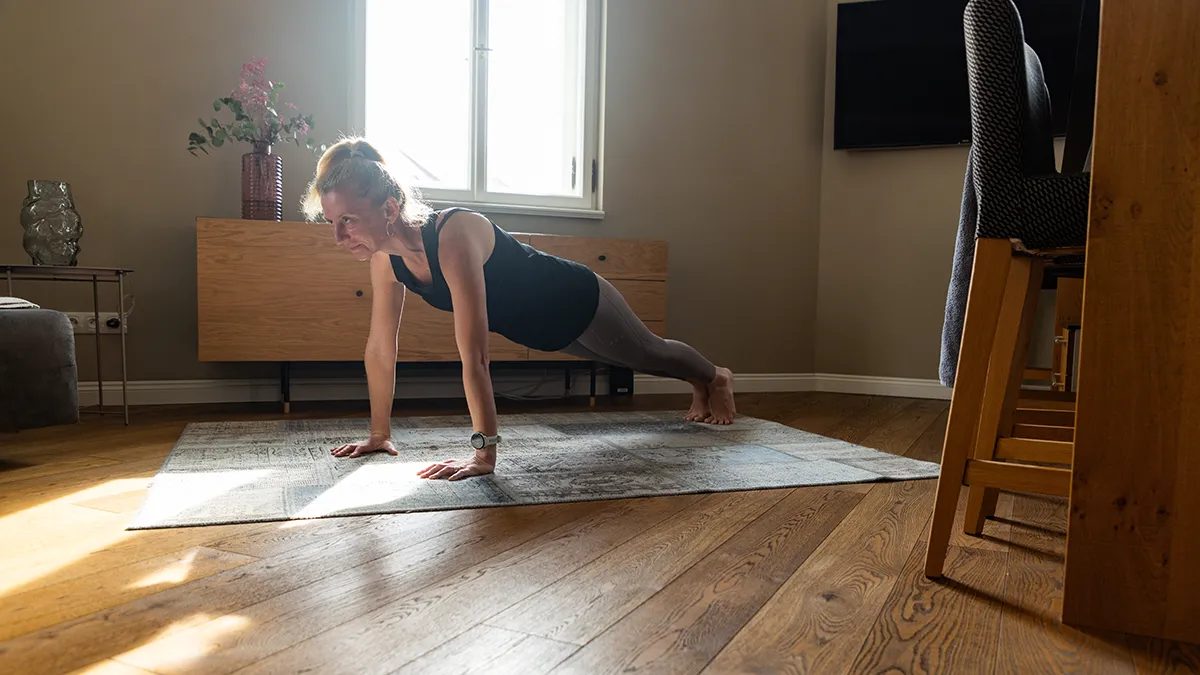
- Weight-bearing exercise, resistance training – by far your best bet and something you should incorporate into your routine even before perimenopause and menopause.
Take calcium and vitamin D regularly, be it via diet or perimenopause or menopause supplements, to help keep bones strong.
A good article to read up on some beneficial vitamins and minerals for women’s changing bodies: What are the Best Supplements for Women?

- Avoid smoking, and keep alcohol intake moderate, as all of these cause inflammation that can worsen joint pain. Every “-itis” diagnosis you get is an inflammation. You know that none is best, but we’re all human. If you’re a social drinker, keep it occasional and chase each glass of alcohol with a glass of water.
- Get a bone-density scan, especially if you’re one of the people in premature menopause. Know where you are and what changes you need to make if you're two bends and a train ride away from optimal.
- Eat good food and/or incorporate super high-quality supplements; aim to eat mostly whole foods. An occasional slip-up is not the end of the world, so eat a slice of your grandbaby’s birthday cake, but get back on the program for your next meal. If you notice your midsection expanding, amp up slow, weighted exercise and walking and ease up on carbs. If it doesn’t help, go get your blood sugar and insulin checked.
Perimenopause vs Menopause Shorthand
During perimenopause, hormone levels are all over the place, ovulation becomes less predictable, and menstrual cycles change. No one RSVPs; symptoms come and go, sometimes making it difficult to identify a pattern, and pregnancy may still be possible.
During menopause, the absence of periods reaches the 12-month milestone, and ovarian hormone production has plummeted for good.
In postmenopause, hormone levels remain low, and symptoms such as vaginal dryness or urinary discomfort may persist, while we want to pay more attention to movement and keeping the bones and muscles strong.

Keep in mind that all of our sisters are different. I am not you, you are not me, we are not her, and she is not we. The symptoms may vary and don’t strictly delineate stages of menopause. Someone experiencing frequent hot flashes isn't necessarily closer to menopause than someone who has fewer symptoms. Also, there are no thresholds; the number or severity of symptoms doesn't tell you precisely how much longer perimenopause will last.
Your age, menstrual history, symptoms, and medical background are far more useful to your doctor to identify perimenopause or menopause than a single routine hormone test.
When Should You Speak to a Healthcare Professional?
Some perimenopause and postmenopausal symptoms are frequent, some rare, some are nothing to fret about, some will take a chisel to your sanity, but regardless, there are instances when you should really go seek medical help. This is if you experience:
- Very heavy or prolonged bleeding, bleeding between periods, or bleeding after sex. No matter how rough you like it, there shouldn’t be any blood.
- Any vaginal bleeding after menopause. Any at all. Even a few spots, get it checked out. It may be something easily treatable, or something more sinister.
- Symptoms that continuously disrupt your sleep, work, relationships, or daily life every day on the day. If it is so severe you can’t get a good night's sleep, can’t function at work, or are getting venomous with people who love you, no point in waiting for it to get worse.
- Persistent anxiety, low mood, or symptoms of depression. Figure out if you’re living a messy life (like poor sleep habits, bad diet, daily alcohol intake, smoking, sedentary lifestyle) and if your low mood could be coming from that. If you’re doing everything right and are still low and depressed, maybe you need some medication or therapy. In perimenopause and menopause, the problem is often chemical in nature, due to the shifting hormones.
- New or worsening urinary symptoms. You don’t have to wait to be fully incontinent to ask for help. We all carry some sort of shame of having to step into an office and say we peed on ourselves 4 times last week. It’s a medical issue: a weakened bladder and pelvic floor.
- Menopause-like symptoms before age 45, especially before age 40. This is considered premature, and it may very well not be menopause, but something else is going on.
- Unexplained fatigue, worsening memory problems, or other persistent symptoms. Anything that’s sudden and feels really out of character: get it checked out.
THE TAKEAWAY: You don't have to wait until symptoms become overwhelming to ask for help! This is the only body you have to live in.
Moving Through Menopause With Confidence
Understanding perimenopause vs. menopause issues, symptoms, and relief strategies is about so much more than knowing when your periods and natural fertility might stop and having a strict checklist of problems and solutions. It's literally about becoming someone else and reinventing yourself for a new era of life. The menopause transition is just one of the many masks that drop to the floor in the opera of womanhood.
And once again, something that I can’t stress enough. There is nothing wrong with you. Absolutely nothing. Your amazing body is doing what I was designed to do, ironically, perfectly functioning by seeming to plummet into dysfunction. Most symptoms you’re feeling are, in a way, a hormone withdrawal, since you’ve been used to a certain level.
Stages of menopause will look slightly different for everyone, but I’ve tried to share some common issues you’re almost certain to experience to some degree, and all of these experiences are equally valid and true. I didn’t go into weird fringe experiences like itching ears.
Personally, I’m tired of signaling martyrdom and showing off my battle scars to be considered a woman, of being a full-time caretaker for others but also a girl boss, being flirty but virtuous, of socializing when I'd rather finish that book alone, of peeing every time I sneeze but pretending that childbirth was magical, of smiling so I don’t make others uncomfortable. I know it feels like menopause irrevocably takes something away from you, but it is a balance. You’ll also be given things like a greater sense of self and clearer boundaries, disregard for the eyes of beholders, and a disillusionment with the current brand of womanhood being peddled. I somehow expect that our sisters from the caves and villages long, long ago found similar gems at the end of this road, and you will too. There’s nothing wrong with you. You’re in the process of deconstruction only to be reassembled on the other side.
You don't have to suffer in silence, to have all the answers today, or to make “what if” scenarios. Take the symptoms and moods as they come, be kind to yourself, allow things to come and pass, let them go, mourn your fertility if you have to, and step into your new role wholeheartedly. It is kind of empowering when a young girl seeks your advice, and you notice you can see so much more clearly, not mangled by the wild desires and lusts of your 20s.
I truly hope you’ll, like me, find deep joy in getting older. Hopefully you’ll have more money for better shoes and wine (which we won’t drink before bed, because night sweats), and you’ll look back on your life and accept the mistakes and triumphs alike, and you’ll move forward into the future with a feeling of excitement for what’s to come. And I wish you a pack of some fantastically funny and witty postmenopausal friends sitting around the table and trying to remember words while laughing their (slightly saggier) butts off.

For reliable, evidence-based information about menopause and symptom management, explore:
- NHS: Menopause and perimenopause
- Australian Government Department of Health: Perimenopause
- UC Davis Health: Perimenopause, menopause and postmenopause
There you have it, ladies. Stay cool, curious, and curvy, and enjoy living in your gorgeous perimenopausal skin. This too shall pass.





Leave a comment