24 min read
Does Red Light Therapy Really Work?

Does red light therapy work? Should you embrace it as the (not-so) new, non-invasive, omnipotent treatment, or squint your eyes in disbelief, banging your fists and demanding proof? Ideally, you’d lean towards hopeful but careful optimism, with some fist-banging because you’re considering investing your time and money (which is basically the same thing). This is why we’re here today, to rock the table and make sure it’s stable, before you rest your anti-aging and wellness hopes upon its surface.
There is a solid chance that your feeds have inadvertently turned into a Sci-Fi glowing collage of at-home LED masks, wands, and red light panels, whether you were looking for it or not. Red light therapy has been gaining ever more traction over the past decade, transitioning from an experimental to a medical and, finally, an aesthetic treatment. The large, clumsy, and bulky (and expensive) devices of the past have also changed and trickled down into the democratized hand-held devices you can use at home, and change multiple investment and upkeep expenses into a single-investment option for those who care about cellular, health, youthful skin, and faster recovery and inflammation resilience.
But is it so simple and straightforward? Are all touted red light therapy benefits corroborated by scientific insight? What about red-light safety, and do we have enough data to claim a wide range of benefits and advantages? Yes and no. Some effects of red light therapy are better studied than others; some show promise, and others are anecdotal but seem to have merit. The overall judgment is yes: red light therapy works, but there is nuance, as with all things in life. We need to understand the gray area before fully enjoying the light (or dark).
We’ll learn to think about red light therapy science, teach you to understand what is happening on a cellular level in terms we can all understand without a biochemistry degree, and why it works for certain conditions, and we’ll also weigh whether using in-clinic treatments or at-home devices is very different. We’ll also discuss the proof and share some experiences, and consider safety and groups that may be better off abstaining from red light therapy despite its general safety for most of the population. So, let’s begin and explore: Does red light therapy really work, and if it works for everyone under all conditions?
How did red light therapy enter skincare?
Red light therapy has had a long liftoff runway for something often dismissed as a fringe and ditsy wellness trend. But far from a fad, LED (a fancy abbreviation for a Light Emitting Diode) arrived in skincare from the medical and aerospace settings (shhhh, yes, NASA), first into salons and clinics, and then to your very own bathroom shelf.
In the 1890s, a Danish physician, Dr. Niels Ryberg Finsen, had an idea. Smallpox was ravaging skin, leaving it scarred and mangled. So he started using light to treat active smallpox and realized that by filtering out harmful UV rays, he could stop scar formation. The treatment worked! It worked for Dr. Niels too, as he later won a Nobel Prize for using light therapy, establishing the foundation of the notion that certain curated light wavelengths can be used for healing purposes in medicine, which he also applied to diseases like lupus vulgaris.
Some 90-ish years later, we had another jump. If asked about Semmelweis Medical University in Budapest, Hungary, you'd probably draw a blank, unless you're a Hungarian or an alumnus (or both). But now you know that that's the place where, in 1967, Dr. Endre Mestner tried to recreate the success of a college in Boston (McGuff), who used a new ruby laser to destroy a tumor. Mestner failed spectacularly, not knowing that his laser had a lower-level energy source. He unfortunately did not kill cancer cells, but had healed the wound much faster than expected, and even regrown the rat's coat. LLLT (Low-Level Laser Therapy), aka LED or photobiomodulation, has become increasingly popular for skincare, fertility, autoimmune conditions, hair loss, and hair-thinning issues. But before all that, there was some space salad (we promised some) involved.
Way, way above the head of a man who shaved mice before the Summer of Love on Earth, NASA had some other plans for those stuck beyond the stratosphere. They considered LED therapy an excellent choice for non-invasive medical and botanical support for astronauts orbiting our planet. The thing is, if you get a cut or infection in space, you and your team are the only ER you have. You’re on your own. Red light therapy was used to successfully speed up minor wound healing and to help raise some greens and optimize photosynthesis in gardens detached from the mother planet, so that astronauts on prolonged flights can get a valuable food source (since their green grocer missed them back on Earth).
A medical doctor and an astronaut alike, red light, with its many benefits, was soon adopted by the beauty industry, which realized its potential for tissue regeneration and fading signs of aging without a syringe in sight. This was a very attractive option for people who abhorred unnecessary medical procedures, but were still honest enough to admit they wanted to look young and beautiful, despite the virtue-signaling around very expensive plastic surgeries. So, red light therapy became a staple treatment in clinics, dermatology offices, and spas. But we people are strange and got kind of annoyed of having to make appointment after appointment to get and keep red light therapy results, so a new branch of beauty tech budded on the anti-aging tree and new, future-oriented companies started producing at-home LED light therapy devices, ranging from masks, wands, red light panels, and hand-held spheres. This is how red light therapy entered mainstream skincare, and its benefits and unobtrusive, gentle nature will most likely be the reasons it stays.
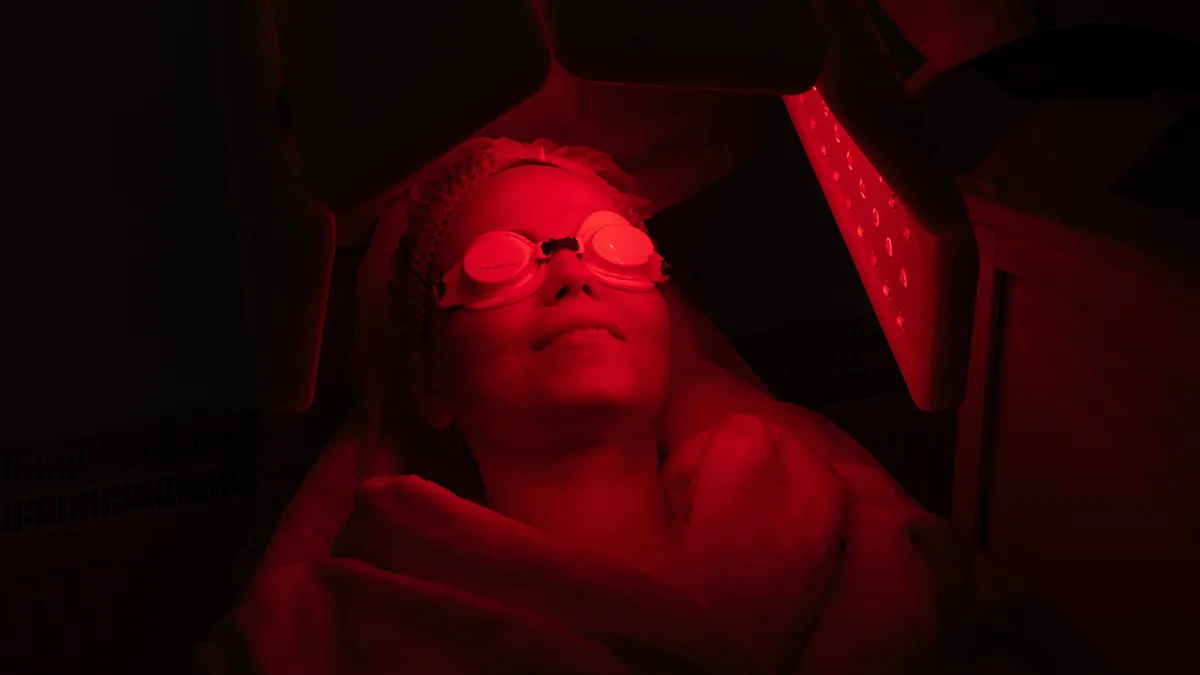
It is a whole new world out there than just 10 years ago, but a world that claims it can give your skin that decade back. Is it true? It is true that red light therapy is biologically active, clinically promising, and effective, but only in specific, well-defined contexts at specific wavelengths and power outputs. It is not magic, and it is not universally transformative. Understanding the difference is where the value lies.
What Is Red Light Therapy and How Does It Work?
What you now know (and are still unsure if you should love) under the name red light therapy (RLT) goes by many other names, depending on the context and purpose of the therapy in question. You can recognize it under the names:
- Low-level laser light therapy
- Low-power laser therapy
- Non-thermal LED light
- Soft laser therapy
- Cold laser therapy
- Biostimulation, photonic stimulation
- Photobiomodulation and phototherapy
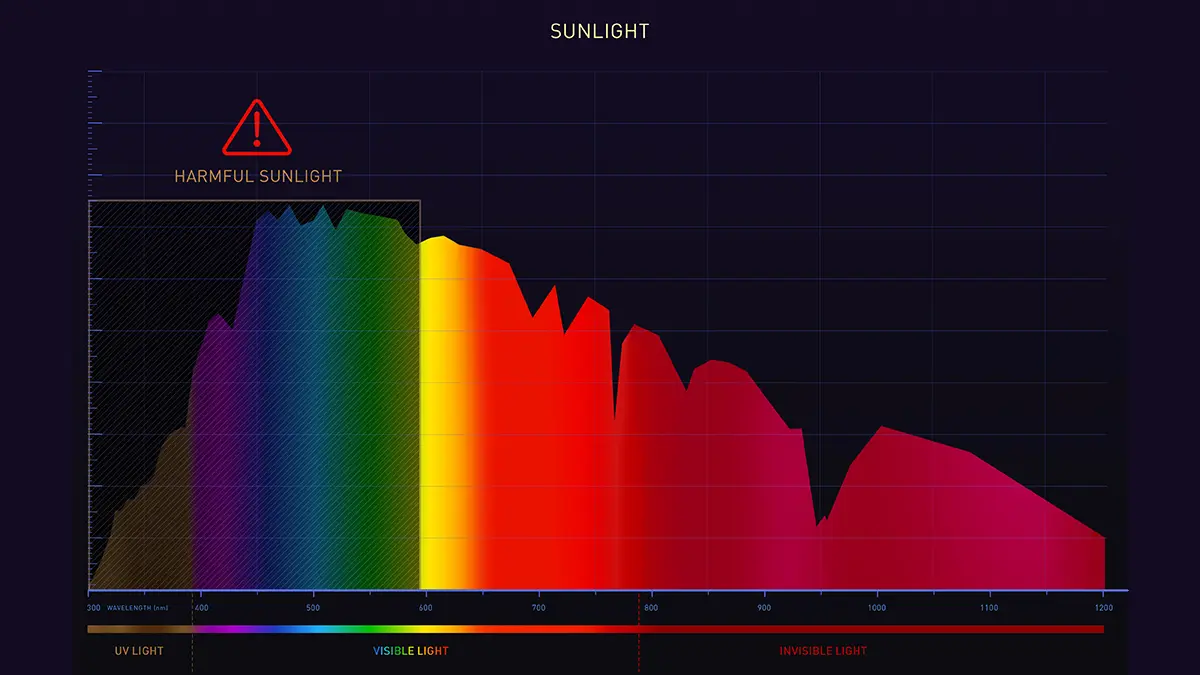
Often sparking some fear due to the collectively assimilated information about the DNA-damaging effects of UV radiation (ionizing), red light therapy offers non-ionizing light in the red and near-infrared (NIR) spectrum. The red spectrum (600–700 nm) is mainly focused on improving skin health, while near-infrared (NIR) light (700–900 nm) penetrates deeper, supporting tissues, muscles, joints, and even brain health. Red and NIR light are not the same as sunlight. Our regular sunlight, straight from our star, is a mix of all wavelengths, and we use it primarily to not trip over stuff, regulate circadian rhythms, dry our washing, or generate electricity. Red and NIR wavelengths are the beneficial parts of the spectrum, light that influences cellular processes and metabolic functions that power all the cells of our bodies.
The heat we feel from the sun comes partly from the UV spectrum and partly from visible light, but it is mostly the invisible infrared (IR) radiation that warms your tissues. It is not that the heat itself traveled so far to get to us through the vast coldness of space. The radiation travels, and once it hits our skin, the skin's cellular processes convert it into energy, which we experience as warmth. Something akin to what you’d find in an IR sauna.
You asked: Does red light therapy work through clothes?
Ha! That’s a good one and a very important point to cover. And the answer is no. Textiles block meaningful light penetration, so you’ll need to have the skin areas you wish to treat fully exposed, even with stronger light sources, such as red light panels. Direct skin exposure matters. In contrast, infrared (IR) and near-infrared (NIR) wavelengths can pass through clothing fairly efficiently, up to 80%. Interestingly enough, lighter colors allow more IR to pass through than darker colors, and you will feel it as heat. That is why you can feel the sun's warmth through your clothes and why your towel in an IR sauna does not prevent the covered parts from getting some rays.
You Asked: Does any red light work for red light therapy?
No. Color alone is irrelevant on its own. Without correct wavelength, power density, and exposure time, results are unlikely.
The Science Behind Red Light Therapy
Wavelengths
We’ve done a real deep dive into red light science already, so for those more scientifically inclined, the info is there if you need it, but for us, less lab-coat-ish, we’ll do a quick common-sense review of the science here.
Many LED therapy wavelengths (colors) have shown promise in treating various concerns, but red and NIR light wavelengths have the most research-backed data. In that realm, studies consistently center on wavelengths between 630 and 850 nanometers as the ones that get the most physico-chemical response:
- THERAPEUTIC RED RANGE (630–660 nm): optimal for skin, collagen synthesis, surface inflammation, circadian rhythm resets
- THERAPEUTIC INFRA-RED RANGE (810–850 nm): deeper tissue penetration (muscle, joints, systemic inflammation)
The name of the game here is precise calibration. You may have an insane-power panel, but if it is not in the therapeutic wavelengths spectrum, you might as well enjoy a stage spotlight with the same results. Wavelength precision matters more than brightness or heat. Heat is actually a byproduct of the wavelengths brought forth by converting light energy into heat in the skin, not the property of the light source directly (unless the device is overheating, but that’s a whole new set of problems). Keep in mind that a red-looking light that doesn’t fall into these ranges won’t produce the same effects, which means - Do your research. Don’t just buy the first or cheapest device you see on the market. Choose the best red light therapy device for your needs. We don’t all need every functionality under the sun. If your goal is prevention in your mid-20s, you’ll need something completely different than someone who’s 45, or someone else with tons of sun damage. Calibrate life and skincare to yourself.
Mitochondria, cytochrome c oxidase, and ATP
Let’s put on a common-sense hat to explain this. Every cell (except red blood cells) has mitochondria. They were once bacteria, but we adopted them to make energy for us by burning oxygen and nutrients (fat and sugar; not protein unless we’re starving, because protein is mostly used as building blocks). So mitochondria are basically power plants (that also breathe for our cells). Less breathing and energy mean a sluggish, less effective cell that struggles with basic functionality, let alone bother itself with the repair and respiration of systems and functions. Broken cell metabolism and respiration, taken to extremes, result in a rogue cell we can call cancerous. Rogue cells ferment sugars for energy because they can’t make energy by burning nutrients in the presence of oxygen.
In normal cellular respiration (breathing), an enzyme called cytochrome c oxidase absorbs red and NIR wavelengths. This boost in energy improves electron transport efficiency and increases production of the energy currency of the body, ATP. For example, low ATP in reproductive cells (which have the most mitochondria) means fertility challenges, and no ATP means no life, literally. That’s what arsenic does. Kills you in minutes just by preventing ATP production. In practical terms, better ATP production means:
- Cells repair more efficiently
- Inflammation resolves more quickly
- Tissue regeneration improves
This is why red light therapy shows up everywhere. Because it goes right down to the cellular level, if the cells work better, the tissue composed of these cells also looks better, in addition to having improved function. Therefore, red light therapy is beneficial in everything from wound healing and inflammation to dermatology, anti-aging, and pain research. Does red light therapy work? Yes, it works because it targets energy availability rather than a single symptom. In the realm of solutions as concepts, the one that goes to the root cause is absolutely superior to a partial solution.
Proven Skin Benefits of Red Light Therapy?
The proof that red light therapy works is that its benefits are consistent and reproducible across groups. You may claim that falling fast enough when bungee jumping can transport you into a parallel world because it happened once. But, if you can’t consistently push people through that wormhole in free fall, you don’t have proof, but personal experience of a single person (far more likely to be a result of their own psycho-pathology or idiosyncrasy than the objective reality of wormholes downstream bungee cords).
Today, we look at the most well-established benefits of red light therapy, focusing on skin health and anti-aging.
Skin Health & Anti-Aging
Wrinkles, scars, and rosacea are amongst the most thoroughly studied and best-understood applications that have been shown to be effective across all age brackets and skin states. So let’s explain each concern in turn.
Does red light therapy work for wrinkles?
- Yes, red light therapy works for wrinkles. But it is not an instant miracle, mocking time in a single treatment. Red light therapy works on lines and wrinkles gradually and modestly improves the skin's state with each use. Controlled trials show increased collagen (your most important structural protein, holding you together and taut) density, improved dermal thickness (as we age, skin gets thinner and we lose the supporting layer of fat and muscle), and enhanced skin elasticity over time (loss of elasticity makes skin fragile, easily damaged, and sagging).
But keep in mind that this is a non-invasive therapy (that I’m still in awe with) and not a toxin, filler, or physical stretching and cutting off bits of skin and flesh. So red light therapy does not:
Paralyze muscles (like botulinum toxins, that we often now equate with the brand name Botox, which temporarily block nerve signals that cause muscles to contract; effective but temporary)
You asked: Is red light therapy better than Botox?
There is no comparison, as the mechanisms by which they work do not really overlap. Botox, as mentioned, modifies neuromuscular signaling (basically, the muscle can’t hear that the nerve is telling it to move and stops crumpling up the skin and forming lines and wrinkles on its surface); red light therapy supports tissue health (through mechanisms of improving collagen formation, cellular respiration, and microcirculation). Botox replaces muscle movement temporarily. The other optimizes cellular function over time.- Fill volume (fillers designed to repopulate the volume loss in a certain area that makes us look tired or drooping; most popular are hyaluronic acid (HA) fillers, typically lasting 6–18 months)
- Erase deep structural folds (there is no chance that a non-invasive procedure will ever fully erase extreme signs of aging; don’t fall for these claims). If you’re of advanced age, only some proven cosmetic surgeries can be relied on for significant results with red light therapy.
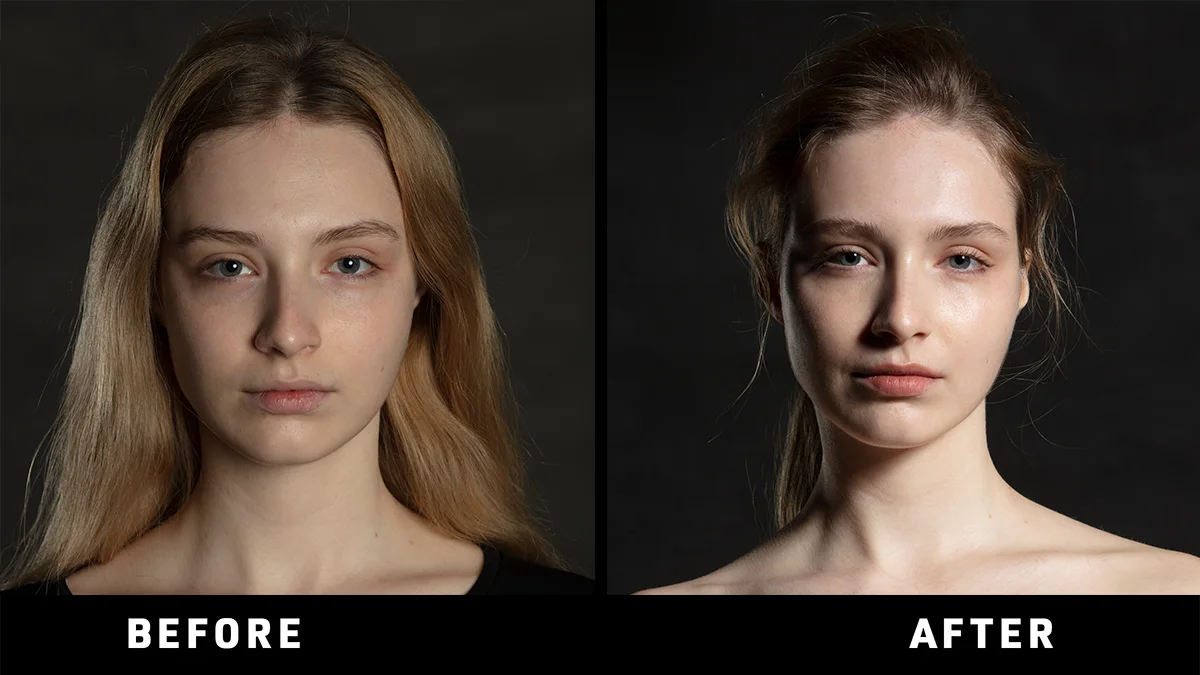
Therefore, wavelengths of red light therapy will definitely improve skin quality and will make you look fresher, but they will unfortunately not change the facial architecture. It would be like asking a serum to change the shape of your nose.
Does red light therapy work for scars?
To live is to do damage to the body. Zero damage is impossible. And if you live well and unafraid, you'll collect an impressive set of scars to show for your years of not knowing better. Facial skin also has a life of its own: hormones fluctuate, we eat unhealthily, we don't wash our face properly, we use overly comedogenic products, we break out or have a bout of adult acne (damned be), and we get scars. Well, scar tissue is special. It is the body’s emergency patch, a sort of biological superglue that rapidly seals wounds and prevents infection.
It is not the perfect tissue replica, although it is made of exactly the same protein (collagen). Instead of a random weave pattern, scar tissue lays down denser, parallel collagen fibers of a visibly different appearance. And we don't want that. We want a uniform skin surface. Red light therapy can support scar remodeling by:
- Improving circulation to the affected area to speed up healing and scar fading
- Reducing chronic inflammation, especially while the scar is forming, makes it appear less visible once it is formed
- Supporting fibroblast activity that forms extracellular matrices and organizes how the cells and collagen will be organized, acting as a sort of scaffolding
Ideally, you’d start treating right as the scar is forming or if you’ve got a post-procedure scar site. This will yield better fading results than on old, well-established scar tissue.
Does red light therapy work for rosacea?
For some individuals, yes. As a chronic skin condition, rosacea has caused many a fist raised to the sky angrily. It is characterized by persistent facial redness, extreme sensitivity, visible blood vessels, flushing, and even bumps that resemble acne. The biggest problems are constant inflammation, irritation, and a compromised skin barrier that cannot keep up.
For someone with such a reactive skin problem, non-invasive is the way to go, and red light therapy is a great addition to a comprehensive treatment regimen or as a single intervention, but there is no guarantee that any one treatment will be effective. You may have to try multiple roads to find what works for you. Red light (as opposed to heat-based or blue light therapies) is usually better tolerated. Heat sources may further aggravate the condition, as skin is already weakened, and blue light is more appropriate for surface-level acne, while rosacea requires a deeper anti-inflammatory care that red light therapy provides; but red light for acne can help speed up healing and lower inflammation on the breakout spot.
Beyond Skin: Other Applications
When we use a method that works right down to the cellular mechanisms, we’re bound to have some downstream (overwhelmingly positive) effects. We may have been investigating light therapies for anti-aging purposes (because we’re human, sort of vain, and like to feel pretty), but it is important to note that red light therapy is also studied for various health effects, such as:
- Inflammatory pain
- Joint stiffness
- Muscle recovery
- Circadian rhythm support
- Wound healing

Effectiveness: What Research and Results Actually Show
Clinical Evidence and Dermatologist Perspectives
Oh, if only everything in this wide world would be so low-risk, non-invasive, safe (and fun) as red light therapy. A large body of evidence from reputable authorities confirms these conclusions, particularly when red light therapy is used for skin, hair loss, and pain management.
- Researchers investigated the safety of high-level (high-fluence) red LED light on human skin and found it safe up to 320 J/cm² for all skin types and up to 480 J/cm² for non-Hispanic Caucasian individuals. While some side effects (temporary redness/pigmentation) occurred at higher doses (than the recommended), there were no serious adverse events. Do consider that darker skin is more prone to hyperpigmentation and melasma at high intensities and should be careful with intense red light therapy.
- This 2014 study focusing on skin safety and particularly anti-aging has a catchy title: "A Controlled Trial to Determine the Efficacy of Red and Near-Infrared Light Treatment in Patient Satisfaction, Reduction of Fine Lines, Wrinkles, Skin Roughness, and Intradermal Collagen Density Increase", used 611-650 nm and 570-850 nm light and came to the conclusion that red light therapy provides is a "safe, non-ablative, non-thermal, atraumatic" treatment. There were no severe adverse events and it is a "mild and pleasant" rejuvenation method.
- The American Academy of Dermatology shared a 2021 study, "Role of low-level light therapy (LLLT) in androgenetic alopecia, " which reviewed randomized controlled trials and concluded that LLLT is a safe, non-invasive, and effective treatment for genetic hair loss. There were also zero adverse effects reported.
- WebMD cites a review of 11 studies looking at the effect of red light therapy on pain, 2021, which aimed to determine the impact of red light on chronic states, such as musculoskeletal conditions and arthritis. Red light therapy was once again deemed a helpful, safe, short-term treatment for reducing pain and inflammation, also with no adverse side effects reported, but authors said that more studies are needed for using red light for these chronic issues.
The studies up to date agree that red light therapy:
Provides no UV damage: Unlike the so-beloved but not very healthy tanning booths, red light therapy does not contain ultraviolet (UV) light, which means there is no risk of skin damage, cellular aging and mutation, or subsequent skin cancer associated with its use.
Has minimal side effects: When used in ranges that were agreed upon as safe, side effects are really rare and far in between. If side effects occur (usually at very high intensities, misuse of the device, or overexposure to red light therapy), they are quite mild and temporary, such as slight skin irritation, tightness, or temporary redness. They will soon pass, and you will have gotten the benefits.
FDA Position and Evidence Gaps
The FDA clears red light devices for general wellness and cosmetic use, but not for many conditions outside dermatology, yet, and requests long-term, large-scale studies. That doesn’t invalidate existing evidence; it defines its boundaries.
Red light therapy is FDA-cleared: Many red light devices from reputable brands have received FDA clearance. This means the FDA considers them low risk to the public when used for their intended purposes, such as wrinkles, acne, and hair loss. If you choose to hit yourself upside the head with the device or shine a strong light beam right into your eyeball, no one can guarantee your safety with anything. We can get hurt with a cotton ball if we don’t use it properly.
Authorized Uses: The FDA has cleared devices for temporary pain relief, increased blood circulation, muscle relaxation, and the treatment of mild to moderate acne. It has been used to treat skin conditions, promote wound healing, stimulate hair growth, and treat musculoskeletal disorders.
The American Academy of Dermatology says that most dermatologists will agree on some fundamental points of red light therapy:
- Effectiveness & benefits
Red light therapy of specific wavelength ranges (roughly 630–660 nm for red and 810–850 nm for near-infrared) helps cells make more usable energy. Translation: calmer skin, less visible redness (yes, even rosacea for some), and a gentle nudge to collagen so fine lines soften instead of staging a coup. Dermatologists also agree that red light therapy is one of the more evidence-backed, non-drug (do the fewest drugs possible) tools for supporting skin health and hair growth.
- Consistency over magical thinking
You can say what you’d like, but we’re all sort of spoiled and still somehow hope for that magic pill, powder, device, or gadget that is going to make it all right, make us fit into our decade-ago jeans while we eat junk, and erase those years from the face. There is no such thing. Growing up is realizing the only thing that will save you is yourself, and that it’ll take consistency. I know, it sucks, and we’d all like to opt out of this grown-up gig from time to time. But derms agree, the results of red light therapy are cumulative, subtle, and usually show up after a few weeks to a few months of steady use (cca 3–5 sessions per week, depending on your device, how you use it, complementary anti-aging supplements or topicals). If you’re looking for overnight drama, you’re in not on the same wavelength with red LED.
- Safety
Done correctly, RLT is non-toxic, non-invasive, and - importantly - not UV, which means no DNA-damaging or cancer-risk increase; in fact, it might mitigate some skin and mucosal side effects of cancer treatments. That said, more is not more: overdoing it can lead to mild redness, temporary swelling, or irritated eyes. Some at-home devices have built-in eye shielding, but if your device requires protective goggles, they aren’t optional; they’re common sense.
- Home vs. Office Treatments
Ah, yes, the dilemma. Should you go to a pro, or get one of the very popular at-home red light units? Well, it depends on how much money and time you’ve got to spare. Professional salon or clinic treatments will require you come in up to a couple of times a week and will also require an occasional upkeep treatment. The cost will add up. The difference between pro and at-home red light therapy may lie in the intensity of the light, the guaranteed therapeutic wavelength purity, and the trained movements of your professional during the therapy.

But does at-home red light therapy work? Yes, when devices meet the therapeutic wavelength interval and output thresholds that work best for your concrete purpose (and are used consistently; there is no use in buying a device that will end up in a Neverland drawer). At-home red light masks and panels work. They’re just designed to be gentler and slower than clinic-grade devices, so you might need 4-5 weekly sessions instead of 2 professional ones. Yet, you’ll have a quality device forever, so do your own math and find what fits your lifestyle and budget. So, the short version: Professional treatments deliver greater power and faster timelines; home devices win on convenience and consistency. Pick your personality.
Best Practices
Dermatologists recommend starting with clean, dry skin and skipping strong actives like retinol or other chemical exfoliants right before your red light session, as these can make the skin more sensitive. Once done with the treatment, lock in hydration with a good moisturizer. Water is necessary for innumerable functions, especially when you’re healing or trying to optimize cellular reactions. Think of light as the prep and a part of your comprehensive skincare, not the entire routine.You asked: Is microneedling better than red light therapy?
For collagen induction, yes, microneedling may be superior. For inflammation control, healing, and maintenance, red light therapy plays a different long-game and often works well when used alongside other therapies, such as microneedling.
- Limitations (a.k.a. Reality Check)
Red light therapy really does improve skin quality over time. Still, it does not behave like fillers, injectables, or aggressive lasers. You can expect refinement and rejuvenation, not reinvention or changed facial features. Also, because red light speeds up cellular processes, skip sessions over active infections, open wounds, or compromised skin, like cancerous lesions. Don’t do more damage under the guise of healing.
Timeline for Results
Please remember that in all things worth achieving in this life, consistency matters more than intensity (like loving, exercise, learning, healing...). Overuse of red light therapy does not accelerate progress, and we can’t wish it into being. It just unnecessarily leaves you open to the consequences, like irritation and discomfort, and may even slow down your advancement. If you get professional red light therapy, listen to the professional doing the treatment and follow instructions. If you’re getting your own at-home device, read the manual and figure out things like whether your red light therapy device can be used every day. A few minutes can give you valuable information on using and caring for the device you’ve probably paid a pretty penny for (which a quality, FDA-approved device will demand). So here is the breakdown.
How long does red light therapy take to work?
- Inflammation calming / glow: 2–4 weeks; these will be the most obvious changes, like a change in redness and flushing, and you’ll notice your skin looking more radiant and healthier due to better microcirculation, more energy production in skin cells, and improved cellular debris cleansing. You’ll have gotten back some of the freshness from days gone by. Don’t settle here; keep using the therapy.
- Texture & firmness: 8–12 weeks; this will mostly be the work of improved collagen production that will begin to fade lines and wrinkles etched on your face and tighten the lax structures.
- Pain relief: sometimes days, often weeks; most connected to improved cellular function and anti-inflammatory actions of red light therapy, as chronic low-grade inflammation damages and depletes cells and therefore tissues.
Real-World Experiences: What Users Actually Report
Most credible user experiences follow a similar pattern: improved skin clarity, reduced redness, a more even tone, and fewer inflammatory flare-ups. Please remember that the absence of instant results and radical transformations is not a failure. It means that the mechanism of red light therapy is metabolic, not cosmetic, so we should all manage expectations and not fall for the retouched images of reality. If something seems too good to be true, it usually isn’t. Red light therapy tends to reward people who treat it as long-term maintenance, not a quick fix, so think of it as such, almost a lifestyle intervention more than a treatment.
Safety, Side Effects, and When to Pause
When misused or overused, common side effects include:
- Mild irritation
- Dryness
- Temporary redness
- Headaches
There are also some groups of people who should skip red light therapy or at least seriously discuss it with their physician if they’re considering it. These include people who are:
- Pregnant
- Using photosensitizing medications
- Have known light-sensitive conditions
- Have active melanoma or are undergoing oncologic treatment
Criticism, Comparisons, and Context
Placebo or Powerhouse?
It is impossible to make everyone happy (without going mad). Hey, there are people who don’t like kittens. So it is no wonder that red light therapy has its critics, too. But we must agree with them on something - Red light therapy has definitely been overmarketed. As it became trendy, all sorts of mollusks latched onto the high-traffic keyword, claiming everything from facelifts to third-eye-opening. Claims in this oversaturated climate often exceed evidence. You may get some reasonable percentage improvement in skin firmness and get some solid wrinkle and line fading, but you’ll not look 20 again if you’ve started your red light therapy at 50. Listen to the body of cellular and clinical research, and refuse to trust overly boastful snake-oil success stories. It is definitely not a placebo, nor a smoke-and-mirrors showman.
Final Verdict: Does Red Light Therapy Really Work?
Yes, red light therapy works - when applied correctly and understood honestly. It is a quiet, cumulative biology and not the spectacle it has been touted to be. Yes, the red light before-and-after photos look great, but now we understand what it does.
Red light therapy works really well and consistently, but not overnight. The science is real: specific wavelengths can support cellular energy, calm inflammation, and gradually improve skin quality and recovery. Still, results live in the realm of real biological time, it takes for the skin to recover. A daily hopeful selfie will not show you a lot, but a selfie a month apart will.
When used properly, red light therapy is a safe, non-invasive tool that fits beautifully into long-term skin health, anti-aging, and wellness goals. Clinical evidence and dermatologists' opinions generally agree on its benefits for skin health, hair growth support, and inflammation reduction, while also reminding us that more large-scale studies are needed for some more serious conditions. At-home devices can be effective when they meet therapeutic standards and are used consistently, while professional treatments offer stronger output and faster timelines, but you’ll most likely have to pay out of pocket for quite a few treatments.
The verdict is that red light therapy is very supported, useful, and we love it. But to play the devil’s advocate here, critics aren’t entirely wrong either. The marketing hype often outpaces the available data, which is why we love our readers informedly skeptical. It is healthy to weigh things from multiple sides and think for yourself.
As the sun sets on our subject, we conclude red light therapy is neither a fad nor a cure-all; it’s a scientifically grounded cosmetic tool that delivers gradual, meaningful improvements for many people. So yes, red light therapy really works, just not by bending time, only by working patiently with your very own body's pace. So pick your pace, hold some space, and go with grace. We hope you’ve gotten some useful info that will motivate you to dig deeper. Stay cool, curious, and enjoy living in your gorgeous skin.





Leave a comment