10 min read
Expert Opinion: What Dr. Raj Says About FAQ™ Pure Star Ingredients

What is FAQ™ Pure?
What is FAQ™ Pure? It is an all-in-one supergreens supplement and the real-life fulfillment of the wish to have everything you need in one cup a day. It is what you’d ask your fairy godmother to give you - beauty, health (physical and mental, we’re not sure how powerful that wand is…), balance, and vital old-age - if she fluttered down right there, smack in the middle of the room just now.
Decievingly simple when you try to say what it is, Pure is actually the brain baby of some Swiss-engineering precision, 5 years in the making. The goal was to create the perfect anti-aging and longevity supplement in doses and combinations of ingredients your body can actually use. Everything you need, nothing you don’t, no gray areas, just perfect dosing and bioavailability. It’s a nutricosmetic dream, designed to be seen now, and felt as vitality and wellbeing in the weeks, months, and decades to come.
The components of FAQ™ Pure were chosen specifically to be a symphony of synergistic effects and leg-ups to each other, no competition, just collaboration for a way better bottom line. No noise, but clarity amongst the clutter of opposing advice and individual supplements flooding us daily. All this in one cup, rather than a dozen pills and powders. FAQ™ Pure replaces the cost, confusion, and cognitive overload of countless separate supplements with one formula.

Officially, FAQ™ Pure would be presented before the king and queen as: a "beauty-tech" supplement that features 85 perfectly calibrated high-quality active ingredients, including clinically-proven NAD+, CoQ10, Quercetin, Creatine, Magnesium, Enzymes, and Super Mushrooms, and a whole lot of vitamins, minerals, antioxidants, probiotics, enzymes, botanicals, and adaptogens. It was designed to support:
✔ Immune health
✔ Cellular protection
✔ Healthy skin, hair, nails
✔ Energy levels
✔ Metabolism
✔ Digestion
✔ Blood sugar levels
✔ Healthy brain function
✔ Joint health & Muscle function
✔ Hormonal regulation
✔ Bone health
✔ Eye health
✔ Heart health
✔ Healthy blood formation
Today, we bring you an interview with a global expert, Dr. Raj Arora, who we asked about the star ingredients of FAQ™ Pure - NAD+, CoQ10, and quercetin - that will be the main focus of our talk. We wanted to know her thoughts and her clinical, real-life experience working with patients. Is there any aesthetic value in these anti-aging compounds, and what is their role in revitalization and the prevention of future age-related issues?
Who is Dr. Raj Arora?
Dr. Raj Arora, known to the adoring social media and people she’s helped simply as Dr. Raj, is a UK-based GP, women’s health expert, and Founder of the private clinic The Facebible focused on aesthetics and female health issues. She earned her diploma from Barts and the Royal London Medical School with an MBBS and a BSc in Medical Education. She is what happens when a traditional medical training meets an extrovert and a passion for patient education and preventive health. The best doctors are not the ones who just know how to help you when things go wrong, but the ones who can teach you to understand your body and help yourself to prevent possible issues down the road.
Widely recognized for her work in women’s health, skincare, and public health education, she spends her time seeing patients and educating people on topics such as endometriosis, hormonal health, mental health, and well-being. You’ve very likely seen this smart, kind, and gorgeous lady on ITV’s This Morning, and in Vogue, Tatler, and Harper’s Bazaar. She also serves as a medical ambassador for several charities, including The Endometriosis Foundation and the Berkshire Community Foundation, and has built a large online following by simply addressing myths and sharing evidence-based health advice across digital channels.

All of this is why she seemed like the right person to ask the following questions. So, just sit back, grab yourself something to sip on, and let’s learn something today. Whether you choose to go with FAQ™ Pure or not, this is something we should all know about health and longevity. I don’t know about you, but I’d much rather look good because I’m healthy than constantly cover up and divert attention from the failing parts. Let’s jump in, but first, here is a quick catch-up on what mitochondria do and what ATP is, so you can better understand the facts below.
Pre-interview catch-up session: Mitochondria and ATP
All cells (except red blood cells, which are not allowed use the oxygen they carry) have organelles called mitochondria. These little bean-like structures were once separate one-cell organisms that collaborated with cells of early life forms, and somewhere along the way, the synergy of bartering food and oxygen for energy with your cell partner became so important that mitochondria were assimilated into the cells as a standard part of them.
As you'll probably remember from school, mitochondria are called cellular power plants, literally keeping us alive. If they all stopped working, even for a while, you'd be dead very fast (that's how arsenic works BTW). That's how important it is that they are robust and healthy, with an optimal flow of nutrients and oxygen delivered, which they then burn to create energy. Mitochondria will mostly burn carbohydrates and fat, as protein is a far better building material than fuel. Protein will be used only in emergency situations such as prolonged starvation (not occasional fasting, mind you).
If you've ever wondered how kids have so much energy, a seemingly endless supply, and how they just turn that second piece of cake into extra miles to run, the explanation is that their mitochondria are pristine, undamaged, and very effective. Ours have gotten gunked up and sluggish due to our date of production. So basically, no mitochondria, no life. As we age, mitochondria malfunction and lower their output, so we get fatigued, tired, and feel foggy and depleted. Mitochondrial dysfunction is one of the top contenders for many age-related chronic diseases today, including the rampant malignancies, where a cell reverts to an older evolutionary form, where it ferments glucose anaerobically (without oxygen), rather than burning it with oxygen, as a normal cell with healthy mitochondria would.
The cell currency of energy is called ATP (adenosine triphosphate). The name you can forget, just remember it is cell energy. If we can help mitochondria function better, they'll do a better job of using available nutrients and oxygen and will produce more ATP, which helps the cell move out of sluggishness and barely surviving mode into thriving. More energy revs up the cells' back into optimal function. In a skin cell, that means extra energy left over for repair, recovery, and collagen synthesis; for your eggs, it means improved fertility; for your heart, better heart muscle function… Bottom line: Anything that helps mitochondria helps you get healthier, look better, and live a longer, more vital life. And this is one of the goals behind a well-made supplement like your all-in-one FAQ™ Pure.
What Dr. Raj says about NAD+, CoQ10, and quercetin?
Why are NAD+, CoQ10, and quercetin so popular
From a medical perspective, why are ingredients like NAD+, CoQ10, and quercetin gaining so much attention in preventive and longevity medicine today?
They sit at three points of ageing biology that clinicians/researchers can actually measure and try to influence:
- Cellular energy + mitochondria (ATP production): NAD+ and CoQ10 are central to how mitochondria turn food + oxygen into usable energy (ATP). If mitochondrial function dips, fatigue, poor exercise tolerance, cardiometabolic risk, and slower recovery often follow.
- Cellular repair + stress resilience: NAD+ is required for enzymes involved in DNA repair and cellular stress responses (sirtuins and PARPs). Ageing and chronic inflammation tend to push NAD+ downward.
- Oxidative stress + inflammation modulation: Quercetin is a polyphenol with antioxidant and anti-inflammatory signaling effects.
NAD+ for cellular energy and repair
What is NAD+ and why is it considered essential for cellular energy and repair?
NAD+ (nicotinamide adenine dinucleotide) is a coenzyme found in every cell. It’s essential for:
- Energy metabolism: NAD+ (and its reduced form, NADH) shuttles electrons through glycolysis, the TCA cycle, and the mitochondrial electron transport chain, core steps in ATP production.
- Cellular repair and signaling: NAD+ is “consumed” by enzymes like PARPs (DNA damage response) and sirtuins (metabolic/mitochondrial regulation and stress responses).
How do NAD+ levels change with age, stress, or lifestyle factors?
A consistent theme in the ageing literature is that NAD+ availability often declines with age, but the size and consistency of the decline can vary by tissue and by study. Lifestyle factors that plausibly influence NAD+ status (directly or indirectly) include chronic inflammation, poor sleep, heavy alcohol intake, sedentary behavior, and metabolic disease - largely because they increase oxidative/DNA stress or shift NAD+ demand.
In your clinical experience, who may benefit the most from NAD+ support and why? Why is NAD+ often described as a cornerstone molecule for healthy aging?
In real-world medicine, the people most commonly considered for NAD+-support strategies are those where NAD+ biology is plausibly stressed, and we have at least some human data for raising NAD-related biomarkers:
Groups, often discussed as higher-likelihood candidates, are:
- Older adults or those with cardiometabolic risk, where NAD decline/altered NAD metabolism is frequently implicated.
- People with low energy, poor recovery, high inflammatory burden, or sleep disruption, where the goal is often “resilience” rather than treating a disease endpoint (but evidence for symptom improvement is mixed).
- People are exploring NAD+ boosters for mechanistic rationale (DNA repair/sirtuins/metabolic flexibility), not because we already have strong longevity-outcome trials in humans.
The strongest human finding is that oral NAD precursors can increase NAD-related biomarkers; whether that reliably translates into meaningful improvements in lifespan/healthspan endpoints remains unproven.
CoQ10 antioxidant for heart and muscles
Why is CoQ10 especially important for heart health and muscle performance?
Because it’s a hub: it links energy production, stress-response signaling, and DNA repair, all of which collectively shape how well tissues maintain function over time. CoQ10 (ubiquinone/ubiquinol) is a fat-soluble compound concentrated in mitochondria and cell membranes, and it matters for heart health and muscle performance
Role in mitochondrial function and energy production:
- In mitochondria, CoQ10 is a key electron carrier in the electron transport chain, directly involved in ATP generation.
- It also functions as an antioxidant in membranes and lipoproteins.
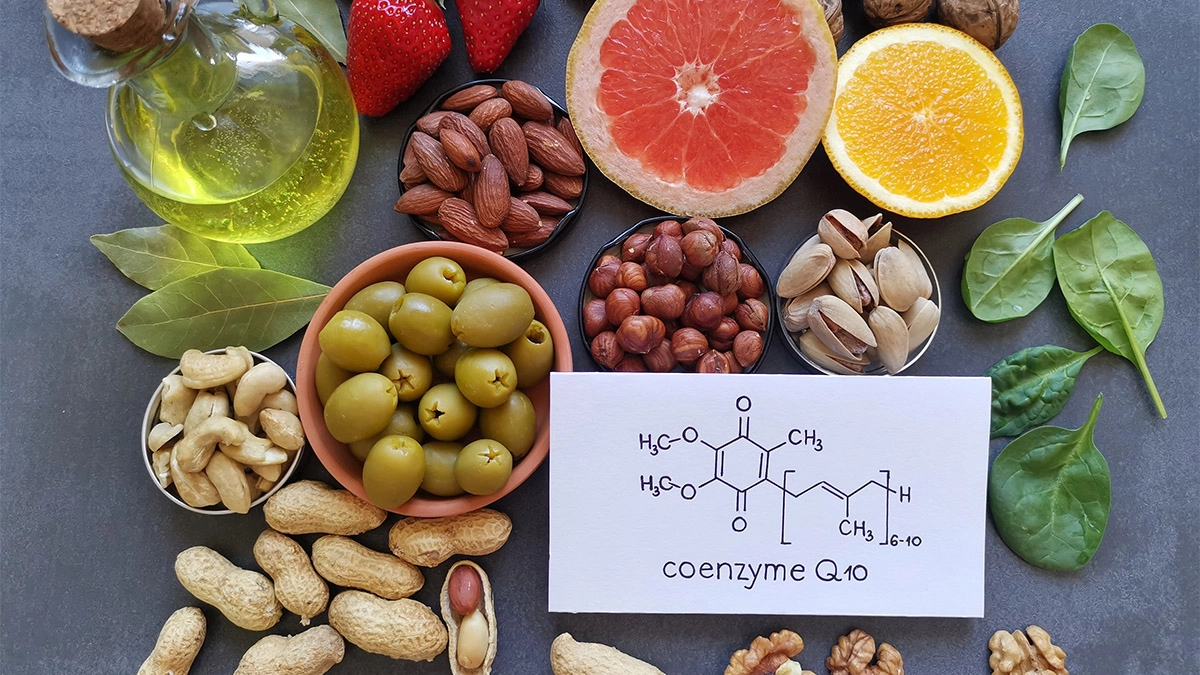
What role does CoQ10 play in mitochondrial function and energy production?
- The heart is one of the most mitochondria-dense organs and runs continuously, so even small improvements in mitochondrial efficiency can matter clinically.
- Evidence signal (strongest here among the three): heart failure
- Recent meta-analyses suggest that CoQ10 supplementation in heart failure is associated with improvements in measures such as LVEF/functional status, and may reduce hospitalisations and mortality (results vary by trial quality and regimen, but the overall signal is notable).
Quercetin to modulate oxidative stress
Quercetin: why it’s viewed as a powerful antioxidant?
Quercetin is a plant flavonoid found in foods like onions, apples, and berries.
From a medical standpoint, it’s interesting because it has multiple layers of activity:
- Direct antioxidant/free radical scavenging (in test systems)
- Anti-inflammatory signaling effects (modulating pathways involved in oxidative stress responses)
- “Senescence” research angle where quercetin is a part of the dasatinib + quercetin (“D+Q”) senolytic research program, and early human studies focus on feasibility/tolerability and exploratory outcomes rather than definitive clinical benefit.
Important: quercetin’s exciting biology is far broader than its proven clinical outcomes. Human evidence for major, reliable improvements in “longevity” endpoints remains limited.
Working together
How do NAD+, CoQ10, and quercetin work together at a cellular level?
Think of a cell as having three linked problems: fuel flow, conversion efficiency, and damage control.
NAD+ = fuel-flow and repair signaling
Helps maintain redox balance (NAD+/NADH) and supports enzymes tied to repair/stress adaptation.
CoQ10 = conversion efficiency in mitochondria
Helps move electrons through the respiratory chain to efficiently generate ATP.
Quercetin = damage control/signaling modulation
May reduce oxidative/inflammatory signaling load, potentially lowering the “wear” that drives higher NAD consumption and mitochondrial strain.
What does current scientific evidence tell us about the role of targeted supplementation in energy, resilience, and overall vitality?
NAD+ precursors (NR/NMN/NAM)
Reliable finding: they tend to increase NAD-related biomarkers in humans.
Clinical outcomes: effects on metabolism, vascular function, performance, and symptoms are mixed and often small or context-dependent.
Intravenous or intramuscular NAD+ in wellness/anti-ageing: there’s growing use, but high-quality outcomes evidence is limited, and reviews note a lack of eligible outcome trials for “anti-aging/wellness.”
CoQ10
Best-supported for heart failure adjunctive care, with meta-analyses suggesting benefits in function and possibly hospitalization/mortality.
Other areas (blood pressure, statin muscle symptoms, general vitality): signals exist but are generally less definitive.
Quercetin
Strong mechanistic and preclinical rationale; early clinical explorations in senescence-related conditions exist, but it’s not (yet) proven longevity medicine.
Conclusion
Dr. Raj Arora is not speaking of miracle cures but rather of good preventive care that supports the biological systems that keep our cells functioning well over time. Ingredients such as NAD+, CoQ10, and quercetin are gaining attention because they target three measurable aspects of aging biology: cellular energy production, mitochondrial efficiency, and protection against oxidative stress. When the body has the resources to produce energy efficiently and repair cellular damage, tissues - from the heart to the skin - are better equipped to maintain their structure and function as we age. And we will age, there is no getting around it, and when done right, it is a joy and a privilege to get older and wiser.
From a skin health perspective, this cellular support matters more than many people realize. Skin cells rely heavily on mitochondrial energy to power repair processes, collagen synthesis, and recovery from environmental stressors, which is why compounds that support mitochondrial function may indirectly contribute to healthier-looking skin as an offshoot of your full-body vitality and wellbeing. That’s where an all-in-one formulation like FAQ™ Pure fits into the broader wellness picture. Instead of focusing on a single ingredient, the formula combines multiple compounds with complementary roles: energy metabolism (NAD+, CoQ10), antioxidant protection (quercetin), and supportive nutrients such as vitamins, minerals, and adaptogenic botanicals.
The idea is not to replace lifestyle foundations such as sleep, nutrition, and exercise, but to provide targeted nutritional support for cellular resilience and longevity pathways.

As Dr. Raj highlights, the science around longevity supplementation is still evolving, but the mechanistic rationale behind these ingredients is strong, and compounds that support mitochondrial health, cellular repair, and oxidative balance are valuable tools for maintaining vitality, energy levels, and healthy aging over time. Longevity starts at the cellular level, and we wish you vibrant energy, resilience, and youthfulness. Stay cool and curious, and enjoy living in your gorgeous skin.





Leave a comment