15 min read
Finally, A Detailed Clitoris Nerve Map Diagram!

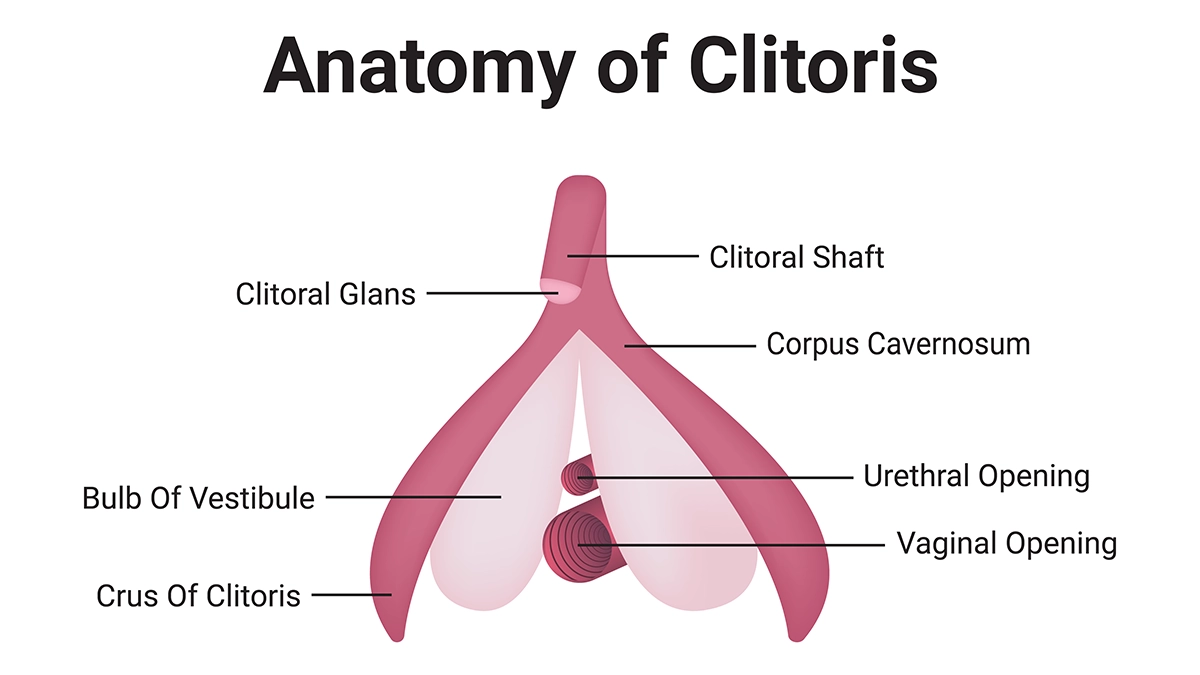
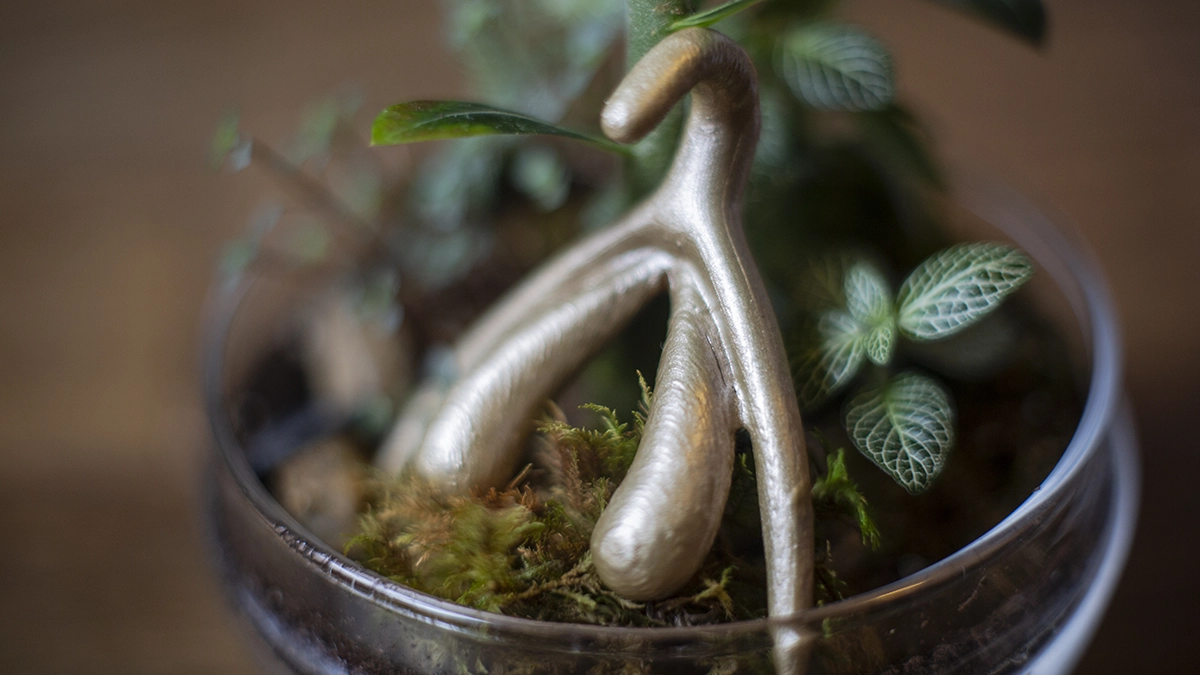
You, my dear sister, were made for deep pleasure (your own), no matter how shameful or morally reprehensible female sexuality was shown through the millennia and centuries. You’ve got a whole organ dedicated to pleasure - the clitoris. The clitoris is not just the outside part you see. Just like the TARDIS, it's bigger on the inside. Inside, it looks like a symmetrical, elegant crane with wings in its lower position, ready to flap and fly off (and testicles hanging below, I’m sorry, it’s true). The visible tip we like to play with resembles the crane's beak.
Behind that climax of leg-shaking, breath-paralizing, whole-body storm of pleasure that we call an orgasm, there stands a whole biological hardware of nerve endings making it possible. New, long-overdue 2026 research on the clitoris nerves finally shows us how deep this nerve network really goes, far deeper than that fun bean on the surface we play around with for some good times would suggest. The study from Amsterdam University Medical Center showed us that the clitoris you can see and directly interact with (the sensitive inner part and a little protective hooded tissue over it) is less than 10% of the organ.
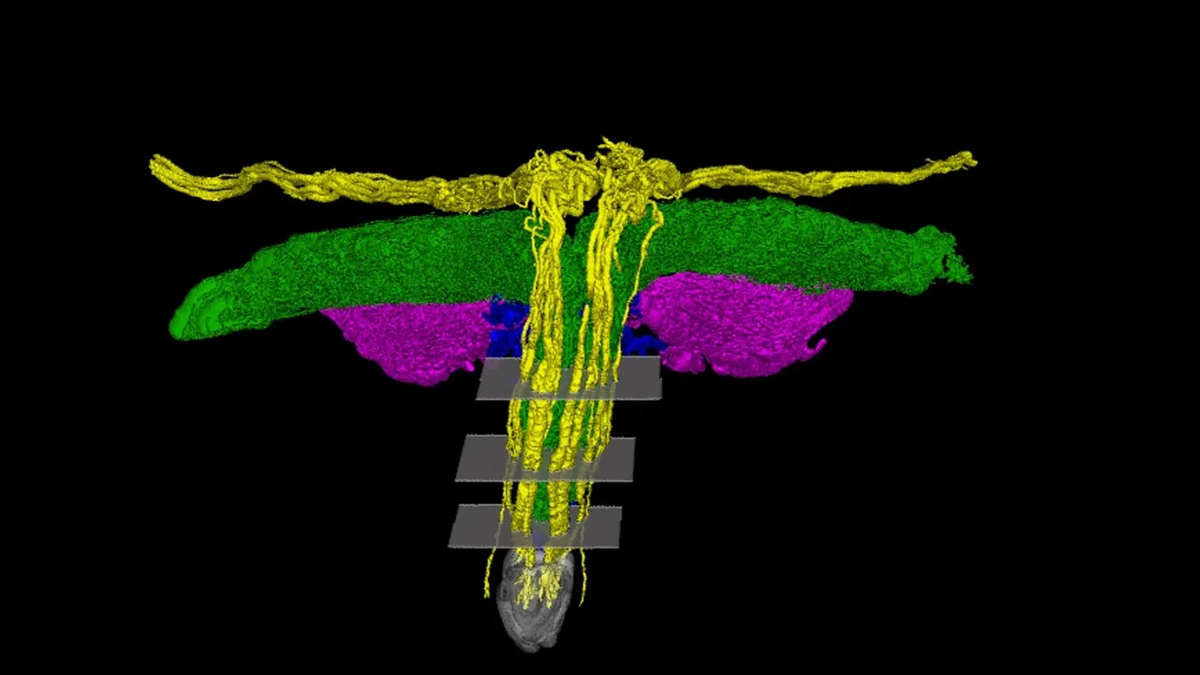
*All HiP-CT map of the clitoris images (like the one above) were taken from the 2026 study from Amsterdam University Medical Center led by Dr. Ju Young Lee
A research team led by Dr. Ju Young Lee published the first-ever high-resolution 3D clitoris anatomy diagram in a study from March, 2026. The study brought several surprises and began rewriting what we thought we knew about the distribution and amplitude of clitoral nerves. It may just be a starting pistol that sounded the beginning of a new race to improve female health and catch up to its male counterparts in knowledge about the anatomy (and therefore treatments and operations) of the pelvis and intimate areas. The results of the study are a step towards improving things like reconstructions of genital mutilations, childbirth damage, vaginal plastic surgery, or gender affirmation surgeries. Regarding the clitoris, we're not yet at the world-is-our-oyster stage (although both are to be sucked), but we're on our way.
Today we’ll briefly go through a historical context of female sexuality, followed by the shunning of the details of female genitalia in medical textbooks for a surprisingly long time, and finally, we’ll analyze what the study from Amsterdam University Medical Center concluded while not ignoring the limitations that it may have, despite its trailblazing character, because we’re here for facts and truth, not fads and hype.
The Historic Stigma
Agh, this is a story far too long for our platform, a beast that can be satisfied only by a library of dedicated books and law changes in chunks of the world, so we'll just set the rough background scene that led to women’s health being continuously shunned.
The historic relationships between sexes immersed in various cultures and religions, with few exceptions we can count on our fingers, stamped a stigma on female desire and sexuality, as a neat little institutionalized device of control.
The very notion of femininity, the essence of what a woman was through eons, was steeped in purity and obedience to the males in her familial, tribal, city, or cultural/religious setup. If you misbehave or step out of this mold where you are asexual (but sexualized), you're a fallen woman, a witch, or the archetypal dark and manipulative feminine, despicable counterpart to the nurturing, self-sacrificing part that made the core of the feminine.
It's hard to say anything with certainty about the very beginnings of our species' history or how things really went down in the depths of cavernous shelters. But the agrarian and industrialized societies, before our current era of individualism, have been very severely influenced by patriarchal structures, where female bodies were not quite their own. For most of our fathomable history, female pleasure came a very distant, unimportant second to early, quick, and ample procreation as soon as the body menstruates and continuing all the way to the end of natural fertility in menopause.
Female loyalty to her husband ensured lineage purity and proper property inheritance. The exploding widespread religions quickly sanctified and codified female purity as a part of their doctrine too and ingrained it as dogma into the traditional communities. Sex was only to be inside the marriage and only for procreation; if a man found himself a mistress, oh, we can turn a blind eye, cause such is the nature of a man. But if a woman did the same (indiscreetly), her position in society was destroyed, since her virtue was the only bargaining chip she had to move up in a man's world. You couldn’t exactly sleep your way to the top either (unless you were a posh working girl like a courtesan), since the most valuable thing you had to offer and leverage was your virginity.
If you were unsatisfied in your strictly procreative marriage sex and expressed any frustration, or sexual needs and desires of your own in the 18th and 19th centuries, you'd most likely end up a drooling, overmedicated or electroshocked fool in some out-of-sight-out-of-mind sanatorium with a diagnosis of hysteria. Extreme cases could end up with hysterectomies, removing the organ that caused the “hysteria, the womb, or removing the clit to avoid masturbatory melancholy. It was believed that the uterus caused about 75 pages of completely unrelated symptoms, so anything they couldn’t explain was thrown under hysteria.
The word "hysteria" comes from an Ancient Greek word hystera meaning a uterus or a womb, denoting "hysterical" as a specifically female condition. Marriage, pregnancy, and regular sex (with your husband) were prescribed as cures, and midwives sometimes helped "hysterical" women by performing a medical vaginal massage, and it is believed that dildos and vibrators were created to help with the medical needs of sexually unfulfilled women. But masturbating was also deemed impure and sinful, so you had to go to a hospital to be “cured” by what was called a “hysterical paroxysm,” aka orgasm. Hysteria remained a legitimate diagnosis in the DSM until the 1980. To put this into perspective, that was the same year Client Eastwood escaped from Alcatraz, Mel Gibson was Mad Max, Sylvester Stallone was in Rocky II, and Margaret Thatcher became the first female Prime Minister of the United Kingdom. This is not a medical relic of a backward time; it was relatively recent.

There were a few instances in history where female sexuality was deemed as high as male (but interestingly none where women had more freedom than men). Some examples are Kama Sutra, which considers her pleasure paramount and acknowledges female desire as something beautiful, and also scattered matrilineal or matrilocal societies where lineage is traced through the mother, and there is no stigma on premarital sex or multiple partners. But for most of history, female pleasure was taken (and in some parts of the world still is) as so irrelevant that women have their genitalia mutilated, including cutting off their clitoris (there are 4 main types of mutilation) so they cannot feel pleasure. The logic was, no pleasure means no desire and therefore no need to stray from the marital bed. Procreation is the only purpose of a woman, and female orgasm is not neccesary for procreation.
Genital mutilation is the fate of about 230 million women worldwide, mostly in Africa, but also in parts of Asia and the Middle East. An increasing number of women undergoing reconstructive surgeries after the mutilation will benefit from the high-quality 3D map of the clitoris that extends into the pelvic area, because a surgeon doing the reconstruction will be better able to navigate the intricate network of tissues and clitoral nerves blooming from the clitoral glans inward, into the pelvis. This means a better chance for the quarter of women and girls who have reduced sensitivity after the surgery, because we've never had such a detailed clitoral model before, and surgeons were working blind.
But basically, a broad stroke of female sexuality through history split women into the Madonna-Whore dichotomy - a nifty religious and societal institutionalization of shame for having desire. You must be one or the other; there is no middle ground recognizing the complexity of a human being.
If you're the modest asexual mother that takes care of everyone's needs (including your husband's sexual ones) before your own, you're a saint, a Madonna that is praised for destroying and sacrificing herself for the benefit of others. If you show any desire at all, you're hyper-sexual, a fallen woman, a harlot, a nympho, and all that is wrong with decent society.
You're destroying the fabric of a nuclear family... keep in mind that brothels have been freely operating through most of the history in some way, shape, or form (and in some parts of the world even financing the church), and it is quite normal for your husbands to frequent the establishments, especially if you’re highly pregnant or freshly postpartum. His sexual desire is considered a natural force in the male.
Art, media, and history - because they are produced by societies of their time - echoed this skewed, disproportionate view, portraying the sexual freedom of a woman as something to be punished. If you were reading a book or listening to an opera up until the mid-20th century, chances are that a sexually liberated heroine would have almost certainly been killed off as a punishment for her "sin" of desire or promiscuity. Her death would be tragic, but approved by the public. Yet, still there was a spark; the tragicality of the death insinuates that maybe her desire is as real and right as a man's (just not accepted… yet).
We are undoubtedly freer today, but remnants of a double standard still lie deep beneath our skin, a prickly discomfort reminding us that old habits and rules die hard. Males's sexual prowess and "body count" are something he celebrates, but if a woman does so, she's slut-shamed (while being objectified; effectively being told two different things at the same time). Everyone wants a virgin but also someone who knows their way around the equipment.
Male vs. Female Body Knowledge Gap
Far before the diagram of the clitoris shook the research community, female anatomy was sort of censored out of the medical textbooks. There is not much of an activist left in me after long days to wave my fists and preach equality. The truth is we are not equal; our bodies, beyond basic functions, are not the same, and women are not just smaller men with a few extra shameful, uncomfortable parts to be edited out of the conversation.
I am still in awe of how freely advice and insights gained through centuries of studying the male body get applied to female physiognomies, which are governed by a complex dance of major hormones that change everything. Finally, justice is ringing ever louder, righting some wrongs. For comparison, an equally detailed map of the penis that can measure up to the new clitoral anatomy diagram was made about 30 years ago.
The clitoris, as a part of the female anatomy, was noted already in ancient texts, such as those left by Aristotle. But due to the heavy curtain of taboo surrounding female sexuality, the diagram of clitoris nerves was never an option. In the 16th century, the clitoris was even called "a shameful member" by a French anatomist, and was erased from medical anatomy textbooks up until the 20th century, when it reappeared in the 38th edition of Gray’s Anatomy (1995) and was called ‘a small version of the penis’. Thanks to previous modern researchers who took it upon themselves to create a clitoris model, we now know that it is more sensitive than the penis, has 6-15 times greater innervation than the penis, and that its visible tip has over 10,000 nerve endings, as concluded by the study by Uloko M, Isabey EP, Peters BR, called How many nerve fibers innervate the human glans clitoris: a histomorphometric evaluation of the dorsal nerve of the clitoris.
But male and female genitalia do share some similar tissues, like erectile tissue. In a penis, these are wrapped around the urethra and make an erection possible. In a vagina, they separate into two prongs alongside the vaginal wall from the outside and consist of corpus cavernosa and corpus spongiosum. These can also engorge during arousal, swelling the tissues around the vaginal opening as they fill up with blood, adding physical pressure, narrowing the vaginal opening, increasing lubrication, and heightening the sensation. That’s why we heat up the oven first, because sex is better for both participants with some foreplay, and the clitoris is really, really good at spreading the word through the neighborhood.

The clitoris is now back big time, and finally, we understand that the internal structure of the clitoris is about two times bigger than previously shown in medical textbooks. But why is this study so special?
3D Clitoris Anatomy Diagram, 2026 Study
The method, conclusions, and caveats
The method
In the past, the pathway of clitoris nerves was studied via gross dissection on cadavers, which has limited potential since a lot of the clitoral structure is inside the pelvis and you have multiple organs in the way. But this has given us an understanding of the primary sensory pathway of the clitoris nerves, while imaging techniques like MRI provided some spatial orientation and a deeper look at the structure that explained the erectile tissue position and nerve density.
But the research team led by Ju Young Lee at Amsterdam University Medical Center did something remarkable: they gave us more detail at micrometer-scale resolution. They used a Hierarchical Phase-Contrast Tomography (HiP-CT), a synchrotron-based X-ray phase-contrast microtomography method. Now this is a mouthful that would take a fortnight to deconstruct for a laywoman.
I copied the imaging method's name straight from the study, and I'm not even going to pretend I fully understand anything beyond the fact that it's basically a particle accelerator collaborating with X-rays. The X-rays are in phase, sort of like a laser is regular light in phase (wavelength peaks and valleys align). So shorthand: particle accelerator + laser X-ray. This interplay provides enough contrast to distinguish biological compartments and structures from surrounding soft tissue, providing the first detailed nerve map of the clitoris so far in March 2026.
The key conclusions on clitoris anatomy
1) The dorsal nerve of the clitoris along the clitoral body
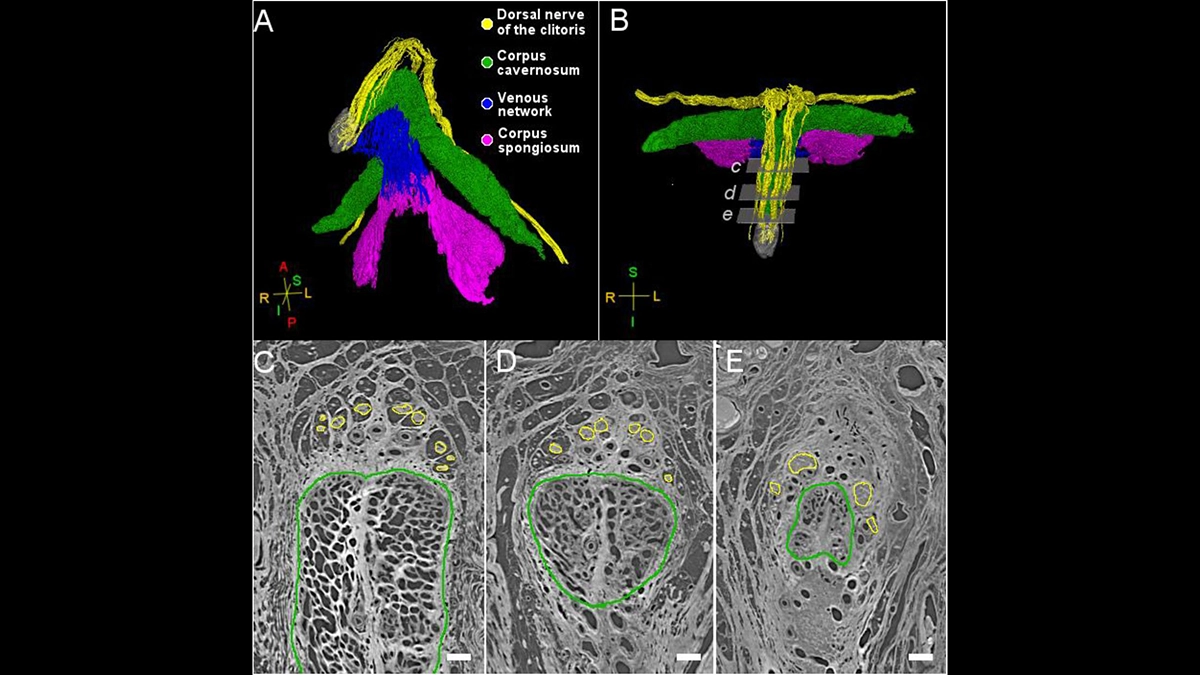
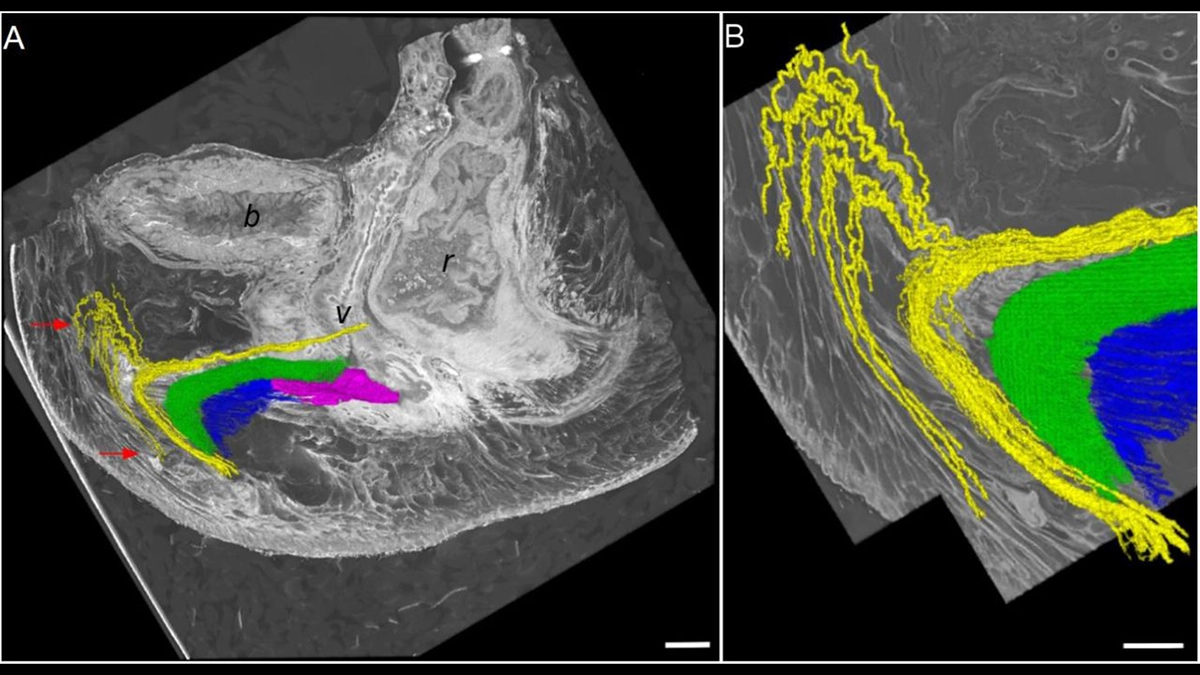
The dorsal nerve of the clitoris (DNC) is the main sensory nerve of the clitoris. This is the main reason right touch feels so good. It runs along the clitoral erectile tissue that we’ve mentioned flanking the vaginal wall from both sides, from the two crura (the parts that extend into the pelvis) towards the clitoral body, where they join. Dorsal means the upper part, such as with the shark’s dorsal fin, denoting the fin on its upper back.
The study found that nerves from the left side follow the upper-right side of the clitoral body, while nerves from the right side follow the upper-left side. The DNC continues towards the clitoral glans, the external part of the clitoris you can stimulate directly.
2) The dorsal nerve of the clitoris inside the glans
The study found that the dorsal nerve of the clitoris continues into the clitoral glans (the fun bean), where it divides into several smaller branches. Using advanced imaging, researchers identified five main nerve bundles in the glans.
These nerves spread from the center towards the outer surface of the glans. Nerves from the left and right sides remain on their respective sides rather than crossing the middle. This reveals how extensively the clitoral glans is supplied with nerves.
3) The dorsal nerve of the clitoris in the clitoral hood
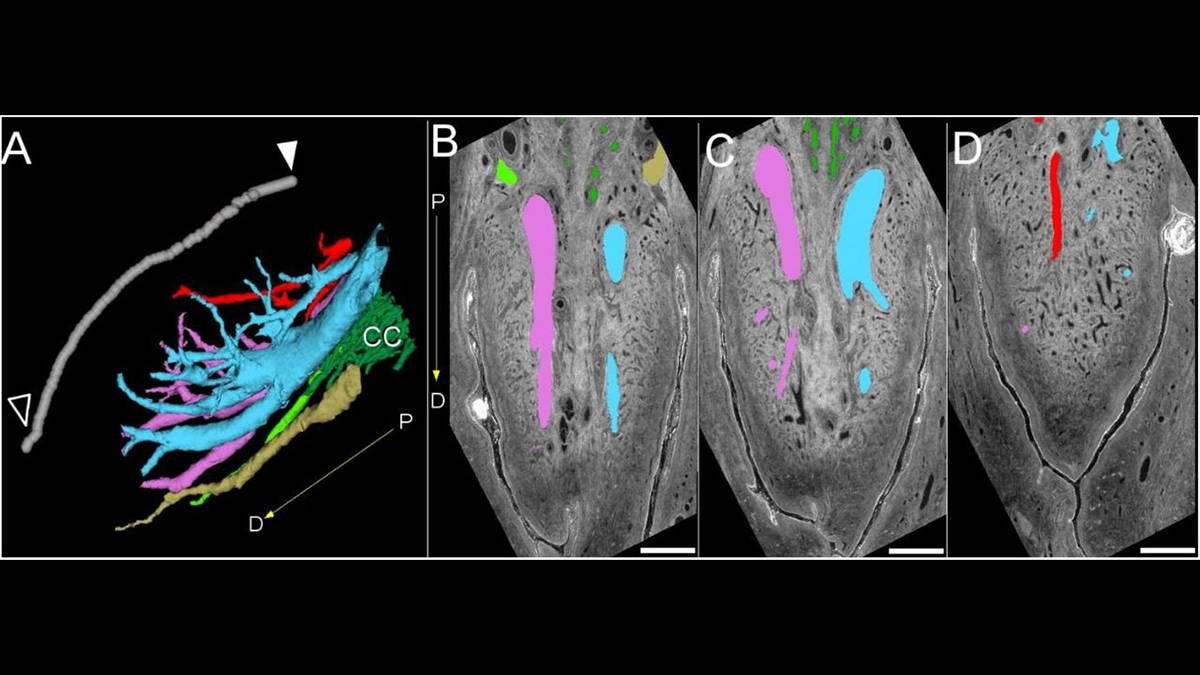
The study found that branches of the dorsal nerve also extend toward the pubic area and the clitoral hood in a curved, upside-down U-shaped path near the pubic bone before turning back toward the surface.
They end in different areas of the mons pubis (the soft, fatty area above the pubic bone) and the clitoral hood that’s hiding the clitoral glans. This shows that the dorsal nerve supplies not only the clitoral body and glans, as previously thought, but also surrounding external areas.
4) The posterior labial nerve supplies the labia and areas around the clitoris
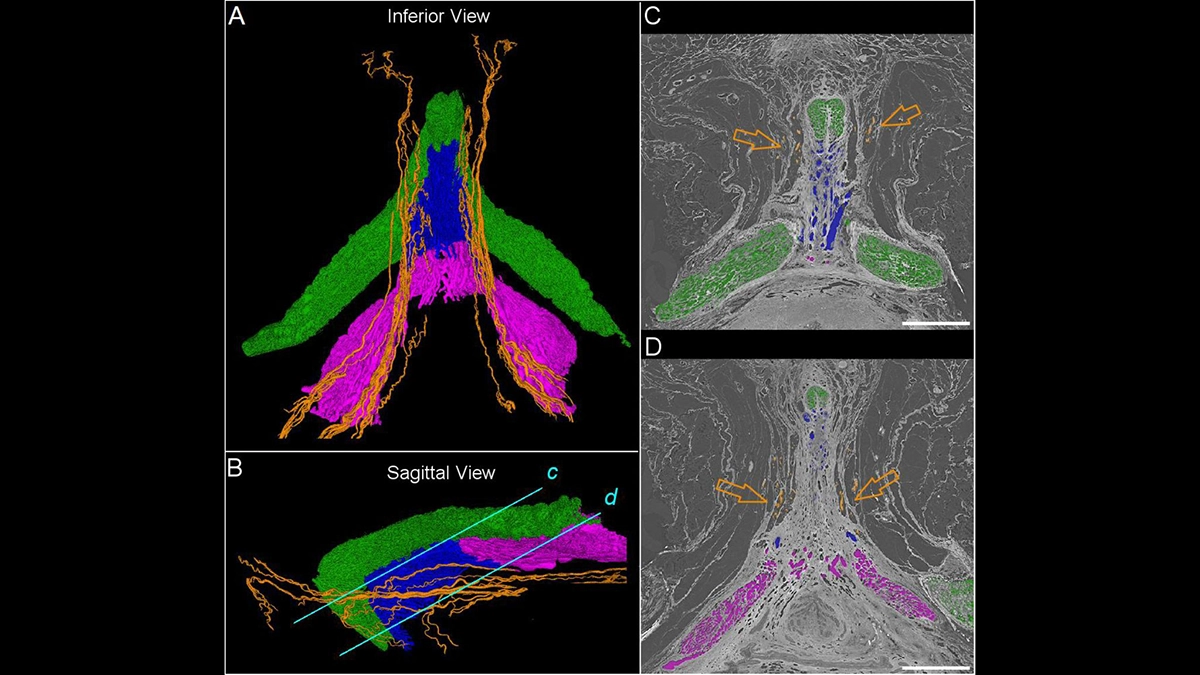
The study giving us this new clitoris anatomy diagram also studied the posterior labial nerve (PLN), posterior meaning in the back, which branches off from the perineal nerve (perineum is the soft tissue located between the vaginal opening (vulva) and the anus). PLN supplies the labia majora and labia minora (the outer and inner lips). The nerve also reaches the outer sides of the clitoral body.
This means that the nerve supply around the clitoris is more extensive than previously described, with the posterior labial nerve also contributing to sensation in the surrounding area. It’s an actor, not a background extra.
IN SHORT:
- The study’s better imaging method provides a more detailed picture of the nerves in and around the clitoris than we’ve ever had before.
- It shows that the dorsal nerve extends beyond the clitoral body into the glans, clitoral hood, and mons pubis.
- The posterior labial nerve also supplies areas along the sides of the clitoris and is not passive but contributes to the sensation.
The caveat
Dr. Ju Young Lee, a postdoctoral researcher at Amsterdam University Medical Centers, and her collaborators conducted the study using images of two pelvises donated postmortem to the university. The 3D clitoris anatomy project was part of the Human Organ Atlas endeavor, which aims to create detailed maps and 3D images of the human body and individual organs.
The project is fantastic, but still, given the sample size of only 2, the concrete study of clitoris nerves has limitations. Moreover, both pelvises came from postmenopausal donors, and the study focused only on nerves involved in sensation, leaving out autonomic nerves that also play a role in arousal.
Alexandra Dubinskaya, a urogynecologist at Cedars-Sinai Urology who did not participate in the study, tells Smithsonian. “It opens the door, but we need larger studies to really understand the full picture,” and adds, “As a field, bringing this kind of knowledge into everyday practice and education has real potential to change how we care for women.”
The climax (of the story)
For centuries, female sexuality was misunderstood, stigmatized, pent up, and treated as something to control rather than understand and enjoy. The clitoris, an organ dedicated to pure pleasure, was neglected in medical research and left out of anatomical education, resulting in a knowledge gap that affects not only how we understand female pleasure, but also how we approach women's health, surgery, and recovery.
The 2026 study from Amsterdam University Medical Center is an important step towards closing that gap. Using advanced 3D imaging, researchers led by Dr. Ju Young Lee created a remarkably detailed nerve map of the clitoris. They showed that the dorsal nerve extends into the glans we all know and love, the clitoral hood, and the mons pubis, this greatest of hills, while the posterior labial nerve also supplies areas along the sides of the clitoris. In other words, the sensory network is more extensive than previously understood. Turns out, the pleasure department has quite an extensive wiring system.
And this is about much more than finding new ways to make your toes curl. A better understanding of clitoral anatomy could help surgeons perform more precise procedures, from reconstructive surgery after female genital mutilation to repairs following childbirth injuries and gender-affirming surgeries. Better maps mean fewer blind spots, and hopefully better outcomes for women.
But let's keep our excitement grounded in the evidence: the study examined only two postmenopausal donors and focused on sensory nerves, not the full network involved in sexual arousal. Larger studies are still needed before we can understand the complete picture. Keep in mind this is a brilliant beginning, not the final chapter.
Still, two donors are enough to show how much remains to be learned. This research is not the final word on clitoral anatomy, but it is a meaningful step towards better knowledge, better care, and a medical world that takes women's bodies as seriously as men's.
So here's to more research, better medical education, more informed surgery, and a future in which women's bodies are studied with the same curiosity and dedication as men's. Because pleasure is not a dirty word. It is one of the things that makes this life so beautiful. Pleasure matters, health matters, and neither should be an afterthought.





Leave a comment