24 min read
Hairy Stories: Hair Loss Stats & Historical Hair Growth Recipes

From silky-haired women gathered around a caldron cooking up secret concoctions, traditional women with elaborate hairdos warming up essential oils by wood fires, to rubbing onion juice into the scalp, and collecting precious goat pee or pigeon poop (yes, really!), historical hair growth recipes pendulum between something we'd consider smearing over scalps in our privileged era and the horror-laden, unhygienic practices we may think of as superstitious, backwards of darn right gross from our high chair.
Whatever stance we decide to choose here, reveling in the ingenuity of people who’ve had far less than ourselves or smirking, there are some tips worth their salt that will put you into your hairstylist’s chair much faster with intense hair growth. Others were just fads of their time. Humanity has been following the latest popular beauty thing since forever, and (minus the www speed and global telematics mega communications) we’re not that much different than our counterparts centuries or millennia ago. We all want to look good and have dreams and desires on how we wish to be perceived, putting our best foot forward and finding ways to use what’s available to achieve our mission. The difference is that we, today, are far less concerned with survival and can funnel more time, energy, and income into playing with the superficial image we present to the world. We’ve also got the means to mass produce and market throughout the planet, so the fashions (in hair and scalp care and clothing alike) change so much faster than before the industrialized and post-industrialized times, and we’ve also got a whole world of choices to choose from, rather than just the local fashions.
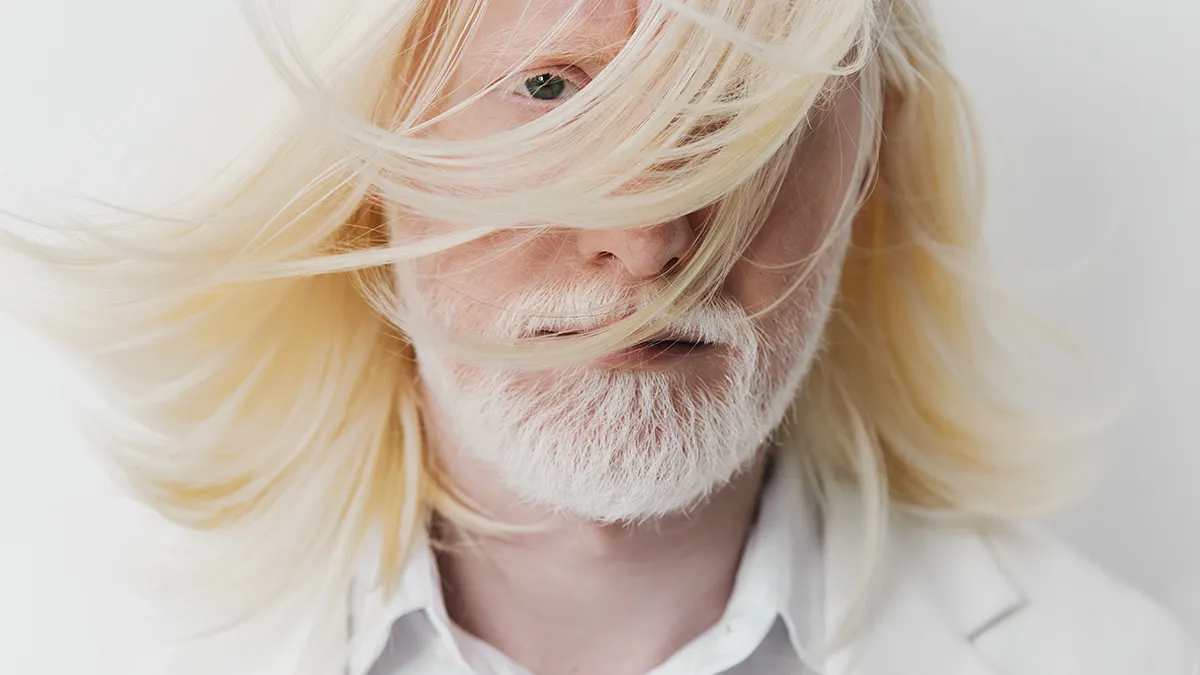
Today, we’re here to go through some of the interesting historical recipes and remedies for hair loss and increasing hair growth by combining easily available ingredients of the time. We’ll be touching on the ancients, the medieval period, the Victorian era, and high-tech alternatives that have sprouted in our modern era, helping us set up a stimulating hair growth routine by delivering professional salon and clinic technologies into the privacy of our homes. But first, we’ll go through some statistics and discuss if the world is truly going bald, we’ll discuss the historical significance of hair, and if people of days gone by really cared as much as we care today. Was a good hair day always basically a synonym for a good hair day in general? Were we always vain, or is this a new development? We hope you’ll learn something new, have fun, and perhaps pick a trick or two to try out (please, leave the pigeons alone).
Is hair loss an epidemic?
Is the world hurling towards George Costanza-ing itself in a perfect storm that is killing the hair shafts left and right? Is it genetic, circumstantial, or did we just raise the aesthetic bar?
Hair loss is so common today that we're surprised to see an old person with their hair count intact. If you keep your mane, you're the odd man out. Sure, we consider it no big deal to see an older person with thinning hair, and that purely theoretical over-combed hair aureole is sort of expected as a rite of passage into the golden years, but what about young people?
Hair loss statistics say that up to 85% of men and 33% of women will experience hair loss at some point in their lives, be it temporary or permanent. You can explore types of alopecia (baldness and hair loss) here, so as not to repeat ourselves.
Some hair loss is normal, and that doubting spine snake has nothing to say here. On any given day, we'll lose about 50-100 hairs, and the follicles will push out new hair in time. This 100 doesn't seem like a big deal, considering we have 80,000-120,000 hairs on our heads. There will be periods when we might lose more or less, such as the change of the seasons, but the problem is when this completely normal shedding spirals into long-term hair loss.
The absolute dread of a chilled snake burrowing its way through your spine and slithering through your soul once you realize that hair part is widening. The deeply personal blow and silent scream as you glimpse the hair brush traitorously lingering about as a cemetery of once vibrant strands, while the receding hairline mocks you from the bathroom mirror. This kicks our bottom in so many ways, because we can't help but perceive our hair as an important part of our identity and a playground for creative experiment, self-expression, social signaling of status, cultural richness, and heritage. Now, reasons why you're reaching out for hair growth treatments may be as varied as our own personal experiences, from hereditary patterns like androgenic alopecia, to lifestyle habits such as smoking or aggressive styling methods.
The population of the planet is rapidly aging according to the WHO (World Health Organization). While we were running away from salivating sabretooth tigers (not always successfully) or leaving this earth due to (now easily solvable) banal infections, the species mostly didn't reach the lifespan to worry about hair loss. Today, the median age globally is about 31 years, with about a quarter of people under 15 (Sub-Saharan Africa has 41%) and about 10% over 65 (Europe has 20%), and it seems that the oldest group will double by 2050.
As the clock keeps ticking for all of us and we're hurrying towards the most advanced population age the planet has ever seen, we must feel some gratitude towards the improvement in life conditions, opportunities, knowledge, and medical care that have raised our life expectancy so. We’re quite resourceful. But this advancing age is one of the reasons why hair growth solutions are taking over the beauty market. By age 65, an estimated 53% of men and 37% of women will go bald(er). This is no big news (if it's not happening to you). We know that as we grow older, the processes in our bodies inevitably slow down, no matter how many times the face is lifted. We become less able to perform the regular daily fix and repair, so mistakes and damage accumulate. Hair production also slows until it eventually closes shop forever.
Aging also means more chronic disease (but slower progression due to the slowed-down processes; silver lining) that can affect hair growth, like type 2 diabetes or autoimmunity. We're also more likely to be regularly using some medications to manage conditions, so keep in mind that high cholesterol, high blood pressure, and heart arrhythmia medications may cause hair loss. And please, please keep a balanced diet as you age, because a lack of protein, iron, or B12 (as in long-term vegan diets) can get your Dr. Evil on far faster than you'd expect.
Men and women do show some differences here. Hereditary hair loss is more frequent in men, amplified through the actions of hormones like testosterone. A quarter of men will start thinning even before they're old enough to knock a few back in the bar at 21, while only 12% of women will notice some thinning by the age of 30. For women, who are much more at the mercy of the hormone disco blazing inside, the problems get more pronounced around perimenopause and menopause, and can be temporary during postpartum.
Remember that there is a whole cult following of women adoring bald men. You can pretend you didn’t have ants in your pants when the FBI Assistant Director Walter Skinner was all strict on screen. Would you send Terry Crews or Mr. Statham away? I don’t think so. You’d oil up that bald spot and get creative. If it happens to you as a woman, you take that offence from nature much more personally, as you consider hair a larger part of your aesthetic. But there are many things you can do to boost hair growth before you get to the point of no return, much more than the people of the past had. If you do reach that no going back point, now you’ve got a whole world of wigs waiting to be discovered, and have been given the chance to live your G.I. Jane or Lupita Nyong era, reinventing yourself as you go.

Did people of the past care about hair loss?
Yes, they cared. Appearance has always mattered to a social animal like ourselves, and hair was a great social communicator. Cultures across the globe independently came to see lush hair as a symbol of youthful exuberance, opulence, and vitality because your body had so much energy it could waste it on vain pursuits, such as hair, in an era when life was much more physically straining and food was harder to produce and come by. Men and women were equally interested in hair growth as it signified masculinity just as strongly as feminine wiles and fertility. Hairdos communicated social or marital status, and it was even associated with moral and bodily strength.
From Thor's wife’s golden hair glimmering way past her feet, over Medusa, a wronged mortal woman cursed and turned vengeful with her gorgeous hair turning to snakes as she stonified those who stare, all the way to Samson's superhuman power, lost after a seductress took his mane away by trickery - hair carried some serious prime real estate in mythology and religion, the stories which shaped the cultural landscapes of the time the same as global masterpieces and digital media shape ours today.
So yes, people in the past noticed hair loss and often worried about it, trying to get their youthful, thick strands back with ingenious hair-growth recipes. What changed for humanity isn’t so much the concern, but the context and the methods we use.
How did people think about hair loss in the past? Something interesting happened as we moved into modern and postmodern societies. In the past, ruled by the Parthenons of gods and goddesses, and the concept of fate and the reliance on the whole community, we were not as singular. If you were, for example, to have something bad happen to you, you were called an “unfortunate”, meaning the fortuna (luck) didn’t smile at you. You were not to blame if you were poor, hungry, or ill… maybe you’ve carried some sin of your predecessors, angered the Gods, or failed to sacrifice properly. Today, we’re highly atomized individuals and are taught that we can be and achieve anything we want. We’re told that if something bad happens, it’s because we did something wrong, or didn’t do a thing required to avoid our fate. It’s a much more “fix it” than “feel compassion, and help if you can” environment.
So, in line with this, hair loss was not a personal flaw; it was seen as fate, sealed as inevitable, so you would mourn the loss of hair and would actually worry less about re-growing it, and more about accepting it and trying to cover it up. Hair loss could have been accepted just as a sign of aging, but aesthetics played a significant role once you were older, because if you aged well, you had much more to offer in the wisdom of your years than to be eye candy. Ancient Greeks and Romans valued balance in all things and saw going bald as an imbalance of bodily humours. The humours were believed to be the four fundamental fluids (blood, phlegm, yellow bile, and black bile) and even had the mega famous proponents, the ancient doctors such as Hippocrates and Galen. Baldness could also be attributed to divine will, genetics, or simply “the way things go,” in which case you didn’t meddle, as you would with the humour imbalance.
Just as today, some people were bothered by hair loss, others went all in and accepted their fate. Julius Caesar wore laurel wreaths to hide a balding head, and there is no shortage of kings, philosophers, and highly influential and powerful (mostly) men who experienced hair loss and were not as bothered. In the end, these learned people understood that power, real, genuine power of decision, and to move nations was more important than twirling a lush lock. When it came to attractiveness, women would rather have a bald guy who can move armies by a swing of his hand than an impotent long-haired plaything (or take both). There were (and still are) groups that willingly gave up their hair (and therefore the stress of losing it), such as monks, who would shave their heads as a sign of renouncing trivial pursuits like vanity. Status, authority, survival, and devotion to a higher power outweighed aesthetics.
Why does it feel like hair is more important today? Because it is, in a way (as much as something so trivial can be important in the grand scheme of things). It doesn’t seem we’re any less connected to our hair as a sign of identity than people in the past, but we do seem to adore it as a sign of youth. And, if you’ve been on the planet for more than 5 minutes, you’ve figured out that youth is revered as the utmost virtue, to be kept and held on to by any means, although it's given to all, and not something earned by your effort.
We also live basically twice as long now. In ancient times, some lived into their 60s and 70s, and you were mostly ok to get into your 40s and 50s if you survived preadolescence. Still, primarily, people got to their late 20s, early 30s, and that was it. Now, longer lifespans mean we globally average mid-70s, with women consistently living 4-5 years longer than men. A longer life now means we have way more time to lose our hair and worry about it.
Before, we talked only to our tribe, neighbors, people from our village or city, or those from nearby places, but now we have the entire planet's population to compare ourselves to. In addition, the media machine constantly reinforces hair as a marker of attractiveness, making you once more guilty of defeat or laziness if you don’t invest in hair growth devices and methods once the jig is up. But in addition to being highly individualized and “responsible for our own fate,” we also now expect solutions for hair loss, such as the now very popular finasteride, minoxidil, transplants, or light therapies for hair growth.
We’re, therefore, a bit more anxious about hair loss, because when a (foolproof) solution exists, not fixing a problem feels like a choice, and not taking care of ourselves opens us up to judgment. In essence, yes, people didn’t enjoy losing their hair before. Still, aging was not demonized as a character flaw; survival outweighed looks, and no one had an illusion of being able to control every single aspect of their life, and in the end, hair was put on our heads to remind us of that.
Ancient & Traditional Recipes
Overall, people of the past were savvy and had skills that have largely been lost or forgotten, meaning we couldn’t really walk a mile in their animal-skin shoes. Most were not educated in any significant formal way (up to a few generations ago), but learned how to use what was right in front of them to solve life’s various problems. So, they also experimented with thinning hair using ingredients found in their surroundings. Historical recipes for hair growth relied heavily on precious natural infusions, oils, and animal fats, featuring ingredients like coconut oil, olive oil, or castor oil, herbs like rosemary, amla, nettle, hibiscus, and eggs, which were recognized as a good protein source for the body and hair. But we’re not the only ones raising an eyebrow to the strange trends of our time. Sometimes the ingredients were quite unexpected and unusual, like goat urine, pigeon droppings, or bear grease.
The ancient wisdom and observation of Egypt, Greece, India (Ayurveda), and medieval Europe heavily relied on scalp massage to stimulate follicles and promote thickness and strength. They may not have known all we know today about why this regular massage worked, but they knew it did, and it was enough for simple and practical people.
Ancient Egyptians
The aesthetically-inclined innovators who gave us hair extensions and wigs, Ancient Egyptians also used natural oils like castor and almond oil, and animal fats (crocodile, hippo, lion) to boost hair growth. These oily bases were often combined with other nature’s plenty like the precious honey, beeswax, and wild herbs. These were combined to form something as a mask to be massaged into the hair and scalp to moisturize, strengthen, and stimulate the scalp for thicker, shinier hair. Egyptians also used concoctions from dates, dog's paw, and donkey's hoof to prevent baldness, and wigs were as much a fashion statement as they were protection for natural hair. They were secured in place by using beeswax as glue.
Ancient Greeks
If there was ever a capital of olive oil, it’s Greece. Ancient Greeks used olive oil for various gastronomic and non-gastro purposes, including haircare, often using the precious olive fruit extract, often infused with widely available herbs like rosemary or lavender that dotted the wild fields and hillsides. The primary function of these hair pomades was to be a deep hair treatment for nourishment, shine, and strength. The Greeks believed these promoted growth and employed the power of herbs and honey.
Although we know olive oil and some frequently used herbs really do have scientific proof behind their efficacy, some practices were shadier. Would you rub other people’s sweat on your head (accidental bedroom fun time aside)? The Greeks did. They were really big on sports and praised athletic prowess and achievement. Gloios was the name for the very valuable, oily mixture made out of sweat, dirt, dead skin, and olive oil. Using a curved tool called a strigil, the mixture was scraped from athletes' bodies to be used as a “potent” (yet gross) cosmetic and medicinal tonic for scalp health and hair restoration. Gloios was expensive, and people believed that touching greatness would somehow make them great too, sort of like chasing celebrities today. They hoped that touching the sweat would transfer the athlete's vigor, used for everything from skin treatments to aphrodisiacs and muscle rubs, in addition to nearing the top of the grossest hair growth recipes.
In addition to pretty straightforward stuff like horseradish and beetroot, Hippocrates, ahead of the curve as he was, and going bald himself, (unsuccessfully) experimented with adding opium and pigeon droppings into the mixtures. Aristotle went even stranger, rubbing goat urine on heads. How he convinced goats to go along with this plan, we’ll never know.
Ayurveda (India)
An ancient holistic Indian system of medicine, ayurveda, would translate as "science of life,". The goal of Ayurveda has always been and still is balance, and using natural approaches like eating better, utilizing herbs, yoga, and meditation practice, and lifestyle changes.
Ayurvedic recipes for hair growth rely on the power of herbs and warmed natural oils and will most often take the form of masks and infused oils. Key ingredients like coconut, Bhringraj, Amla, and Fenugreek are celebrated for their ability to strengthen hair follicles and stimulate circulation, and are also believed to prevent graying.
Native Americans
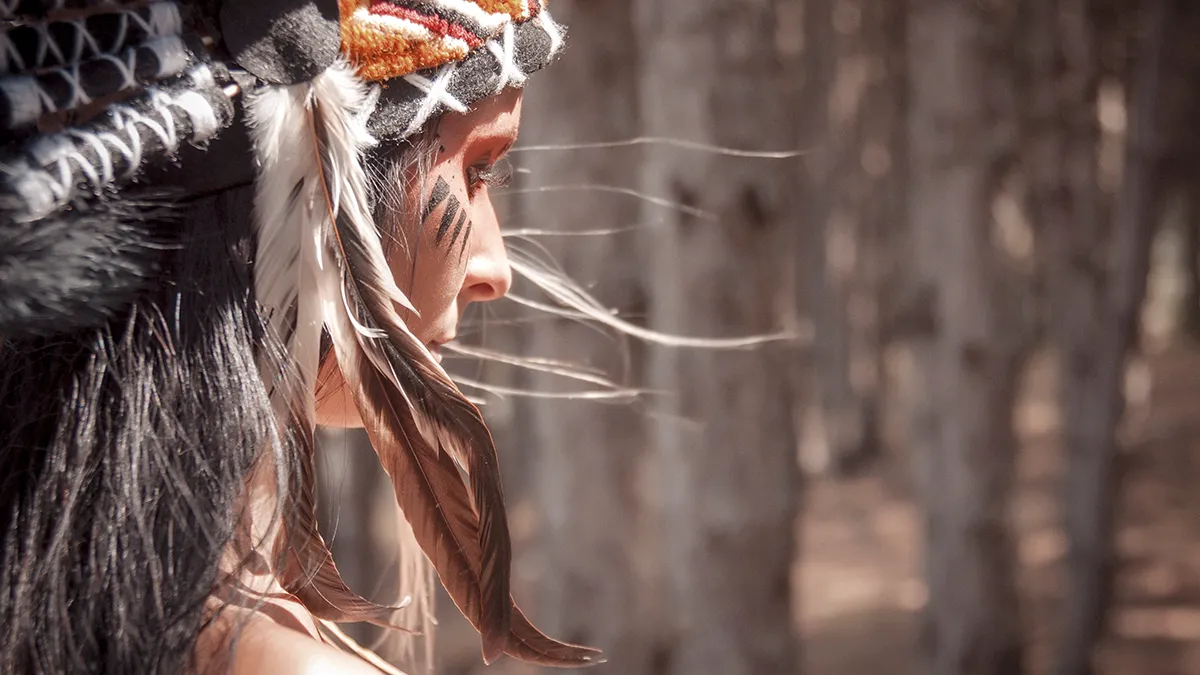
We, non-natives, got our perception of Native Americans from movies and shows, playing cowboys and Indians, or marveling at the exotic animal skin-shrouded, dignified, wild, and self-sufficient people with gorgeous, long, dark hair that reached the ground, free-flowing or braided. Research is limited, but it seems that Native American and Inuit populations have a much lower prevalence of hair loss or baldness than other populations and ethnic groups, and their hair is not just a superficial vanity, but a connection to their self, tribe, soul, and spirits. The three strands of the braid represent mind, body, soul, and the connection of the ancestors, yourself in the now, and future generations you will help build.
So, having your hair long, strong, glossy, and healthy is important for natives on so many levels, as it is a social communication of personal spiritual significance. Hair grew and lived with you and was usually cut only after some significant personal loss. Since baldness is uncommon in the tribe, the Indians mostly focused on prevention and protection rather than reversing existing baldness. They figured out the benefits of aloe vera early on and have been using it since forever. Some favorites were also the Yucca plant leaves and stinging nettle (eaten or applied), which you can still find in good shampoos today, and they practiced regular vigorous scalp massages with homemade brushes. So pretty straightforward and still considered good practices today.
Medieval & 18th-Century Methods
Medieval recipes had no shortage of delulu, yet creative and eclectic, hair growth methods so one recipe called for the ashes of a Land Hedgehog, burned barley bread, horse fat, and boiled river eel, as Victoria Sherrow shared in the “Encyclopedia of Hair: A Cultural History”. Mmmm, this seems like it smelled just gorgeous and got all the boys to the (castle) yard.
Recipes included poultices of crushed chickweed and featured the beloved, seemingly omnipotent goats again, but this time the dung, much easier to collect than Aristotle’s pee plan. Recipes also frequently featured sheep's fat, butter, and all sorts of dung cooked with meadow-sweet and plantain, as detailed by Maynooth University.
One of the more macabre recipes includes mice carcasses in an advanced decomposition stage (I don't really know how to process this). It goes like this (in case you’ve got an afternoon off and want to try it). You catch some mice and put them in a clay vessel with a lid. They are never to see the light of day again. But just leaving them on the mantle would be silly. You bury the clay pot for A YEAR (so plan ahead if you're balding, m’kay?!). You guess the rest. A year passes, and you're to apply the remains on your head. The manuscripts warn that you should wear gloves. Not because you're handling decomposing meat, but because this is such a potent recipe that you must prevent hair growing from the tips of the fingers... which have no hair follicles, but we threw reason out the window here a while ago, so yeah, gloves.
Not everyone was crazy, of course; there were some moderate recipes for making hair "shoot out", such as boiling southernwood with red wine, sweet oil, and bear grease three times, writes Kate Dolan. Two times just won’t do. Don’t be lazy.
Victorian & Early 20th Century
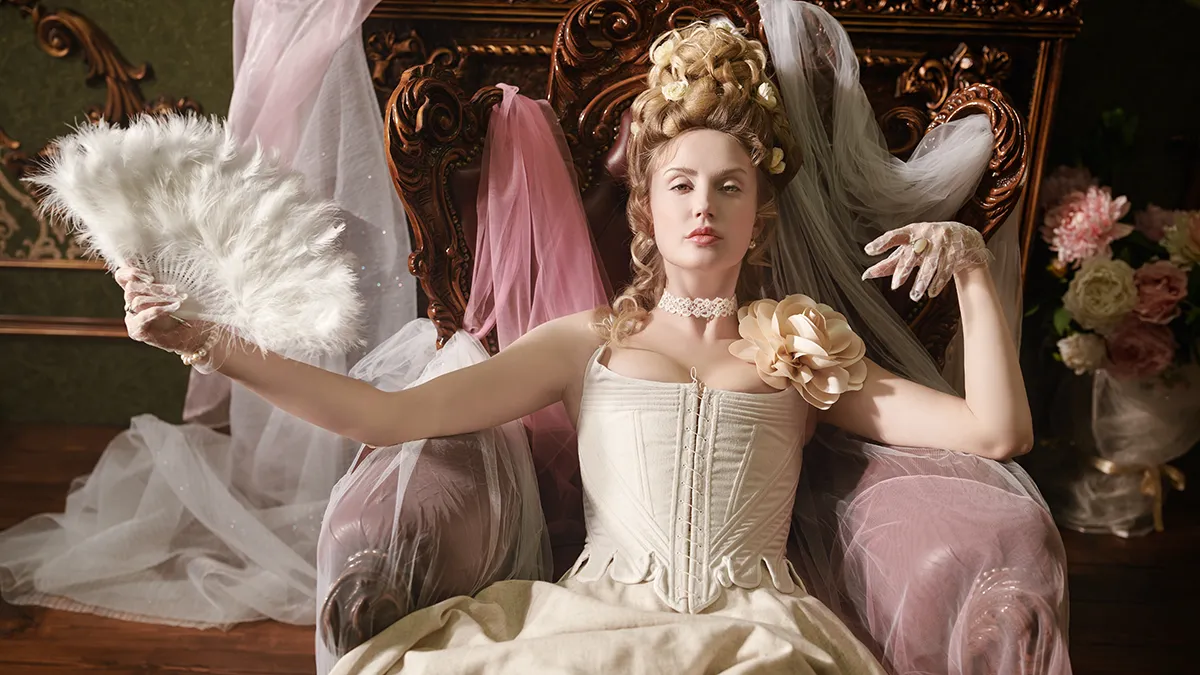
Were you to look at a Victorian woman's portrait, you'd be picking your jaw off the floor, looking at the hair that often reached floor length. The Victorians had general haircare practices that helped them maintain this ridiculously long hair. Some were pretty straightforward, like brushing hair with a clean brush for 100 strokes twice daily. This distributes the natural scalp oils all over the strand, softening, conditioning, and protecting the strand from environmental damage. Hair was washed, but nowhere near our current rate. You'd wash your hair every few weeks, by using gentle shampoos, sometimes just a beaten egg, and doing water and vinegar rinses, which we still use today. The Victorians wanted the natural oil in, so even after this gentle wash, they put on pomades and oils to prevent damage and loss of the hair they praised so much.
For better hair growth and strength, people use a boxwood (or black tea) and rosemary tonic that is kept well mixed with a bit of alcohol. They would rinse their hair off with this weekly, not necessarily washing it prior.
For hair loss, the recipe was as follows: Steep boxwood shavings in alcohol for two weeks, strain, then add rosemary spirits and nutmeg spirit; rub into the scalp twice daily. The alcohol would evaporate, and there was no need to wash it out. Every couple of weeks, you'd use a bran-and-soap wash, which was water from the boiled bran and a bit of soap. If you've used any kind of soap, you were supposed to follow with an egg yolk mask. Edwardians loved a mixture of Bay Rum, Witch Hazel, Glycerin, Rose Water, and tinctures of Cantharides and Ammonia.
The 19th century saw a bit of cosmetics go into mass production, a lot of it rubbish. So bad were the scams that we literally dub the deceptive practices of over-hyped today as "snake oil selling". The real snake oil was made from omega-3-rich water snakes, introduced in the 1800s by Chinese workers on American railroads. But the real snake oil that was actually beneficial for pain and inflammation soon got mega faked with cheap mineral oils and lard, and was, amongst its cure-all claims, marketed as a cure for baldness.
Modern hair growth technologies
Most effective hair growth topicals include the FDA-approved darling, Minoxidil, also known under the name Rogaine. You can easily get this over the counter as a foam or liquid. With consistent use, it will stimulate follicles for more lush hair growth and slow down loss. Other high-tier and effective proven-to-work topical is finasteride, which is prescription-only and meant for men. Various serums and solutions also feature the scientifically proven peptides, caffeine, biotin, and natural oils like rosemary to support follicle health, blood flow, and hair strength.
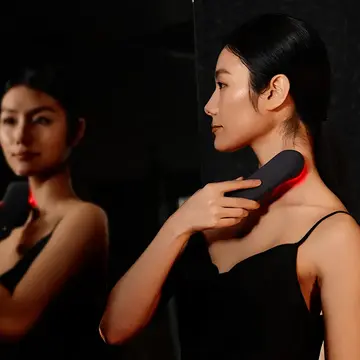
But maybe the most prominent innovation in the lives of modern us is the uproar of new technologies that have changed the face of beauty routines forever, and pushed us into historically uncharted territories, and opened up possibilities never before available to humans. Skin tech, once only available to the privileged few, has been democratized and has undergone the process of miniaturization, moving from its bulky initial designs in the clinics into an elegant, handheld form that can be used in the comfort of our homes. If you sit on this branch to explore, you'll also see infinitely smaller branches forking off the main tree into all sorts of devices. Rather than wondering and getting decision fatigue, we'd recommend going for a scalp massager with extra perks for hair growth. One of the most proven technologies to prevent hair thinning and stimulate new hair growth is red light therapy, and if you'd really like to go intense, laser technology. There are several scalp massagers and LED detanglers out there that feature red light therapy and even some that have lasers, so if you're scratching your thinning head of hair, it's worth it to consider two brands, FOREO & FAQ™ Swiss, and the relatively new addition to their extensive portfolios.
FOREO LUNA™ 4 hair
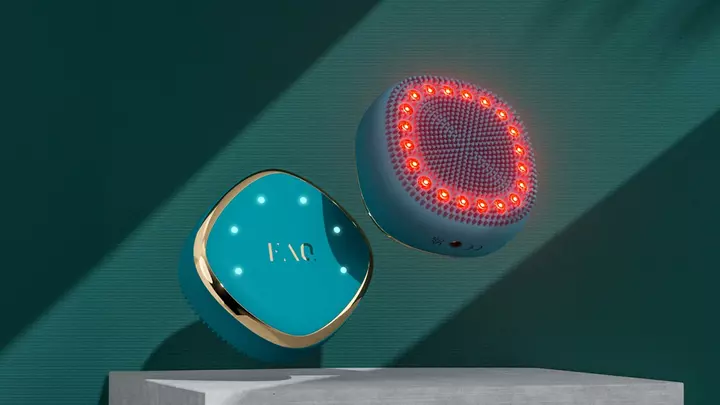
Boasts two technologies in an ultra-hygienic silicone body - FOREO’s famous and globally beloved T-Sonic™ massage and clinically proven red LED therapy. Perfect palm fit, LUNA™ 4 hair features 16 red LED lights, each operating at a wavelength of 650nm to wake up tired hair follicles and ensure your scalp is clean, healthy, and in optimal condition to support healthier hair growth while setting a new standard in hair care. 395 ultra-hygienic silicone bristles that sweep away any buildup loosened by the T-Sonic™ pulsations. They also have a secondary, but no less critical, function of parting hair so the red LED light can reach hair follicles uninterrupted while also evenly distributing the product along the hair surface.

The device line includes a fantastic topical serum packed with natural-origin ingredients: LUNA™ Dual-Peptide Scalp Serum with Cica and Portulaca Extract, with anti-inflammatory and antioxidant powers. It calms the scalp, shields it from oxidative stress, and keeps it moisturized, as the Peptide Complex boosts scalp and hair health by ramping up collagen production and fortifying the hair shaft to reduce breakage and improve hair texture.
FAQ™ 301 and FAQ™ 302
There is a world of difference between annoying slight thinning to needing to regrow larger sections of obvious bald(ing) spots, and the difference is - laser. A Swiss biotech innovator, FAQ™ created two luxury devices, each catering to a different hair thinning and hair loss level, because there is no need to pay more if you do not need the most intense treatment right now.
The initial FAQ™ 301 was designed for people who are dealing with mild to moderate signs of hair loss and thinning and features 20 top-quality red LEDs that can be customized through 6 intensities, also calibrated to 650 nm, ideal for stimulating hair follicles. A deep massage features 6500 pulsations per minute to supercharge microcirculation and get those fresh oxygen and nutrients right to the struggling follicle. If you've never had this massage touch your scalp, you haven’t lived.
The more exclusive sister in the 300 collection is FAQ™ 302 - the most powerful hair regrowth at-home solution, combining red LED and 6500 pulsations per minute with 20 powerful lasers. Technology fusion delivers a targeted treatment that helps regrow your hairline, temples & crown by reactivating dormant hair follicles with natural cellular energy, coaxing them into optimal performance. Fancy and fabulous.

The device best suited for you will depend on your needs and the stage of your hair loss or hair thinning. LED alone will give some solid results, but laser energy is coherent rather than dispersed, as with red light therapy, forming a narrow and concentrated beam of light. The narrow beam penetrates directly into the core of each hair follicle to treat it individually, while the red LED alone will stimulate a larger area. FAQ™ 302 decided to test what would happen if we used both diffuse and concentrated energy simultaneously and realized that the interactions yielded better outcomes.
Clinical trials conducted by a 3rd party over 112 days confirmed that regular use of FAQ™ 302:
- Increases hair growth & density by up to 47%
- Increases hair glossiness by 46% in just 1 month
- Reduces hair loss by up to 46%
- Results in up to 109 additional new hairs/square inch in just 4 months

The collection also brings a topical for a dual approach above and below the surface, FAQ™ Scalp Recovery & Thick Hair Probiotic Serum. This lightweight skincare-inspired scalp serum is formulated with microbiome-balancing Probiotics to combat flakiness or an oily scalp, hair-strengthening Red Clover Extract for added volume, and follicle-repairing Centella Asiatica to revitalize the hair.
Our relationship with hair loss hasn’t actually changed all that much through the ages. What has changed are the methods. From goat pee, deceased mice, and pigeon poop, we evolved to peptides, red light, and (freakin’) lasers.
Across centuries and cultures, hair has always mattered. This is not because humans are inherently shallow, but because hair is deeply symbolic. It speaks of vitality, identity, belonging, power, youth, grief, devotion, rebellion, and self-expression. People of the past cared too, but simply worked with the tools, beliefs, and knowledge available to them and got swindled sometimes, just as we do. Some of those remedies were surprisingly smart. Others were… well, hair-risingly gory.
What feels different now is the context of hair loss and the need to find hair growth solutions. We live longer, compare ourselves to more people, and are constantly reminded that solutions exist and that we’re to blame if we don’t take advantage. That can turn a normal, natural process into a personal failing unless we zoom out and remember the long, tangled history of hair growth recipes. The good news? Pigeons can keep their poop. Modern hair-growth science builds directly on the few ancient practices that actually worked - circulation, stimulation, nourishment - and then amplifies them with clinically proven actives and technologies that reach deeper, act smarter, and respect the scalp as a living tissue that needs time to recover and restore follicle function.

So whether you’re experimenting with rosemary oil, upgrading to red light or laser therapy, or simply learning to care for your scalp a little better, you’re not chasing vanity, you’re participating in a ritual as old as humanity itself. You’re just operating with cleaner ingredients, better data, and not spending your afternoon convincing goats to pee on command.
Look, there are no guarantees in life. You may try the same thing your sister tried and had great results, and get nowhere. You may succeed with a bit of scalp red light therapy or need the full-blown laser treatment. Rosemary oil or a scalp serum your brother used may do nothing for you, while a massage will change your life. Try various things, be consistent, and if something doesn’t work, try again. We hope we’ve given you something to think about (and a few laughs). Here’s to strong roots, informed choices, and remembering that hair, just like life, has always been a little wild and unpredictable, but the right trainer can tame any beast (or die trying). Stay cool, stay curious, and have a good hair day, dear friends.
FLIP™ plus LED Detangling Hairbrush Pre-order
1-15 Sept
Looking for the best red light therapy for hair growth? Do you want less breakage? Fuller hair? A healthier scalp? That Hollywood shine? And all of that for zero extra effort a day? Pre-order a FLIP™ plus LED Detangling Hairbrush (1-15 Sept) and get the best buy.
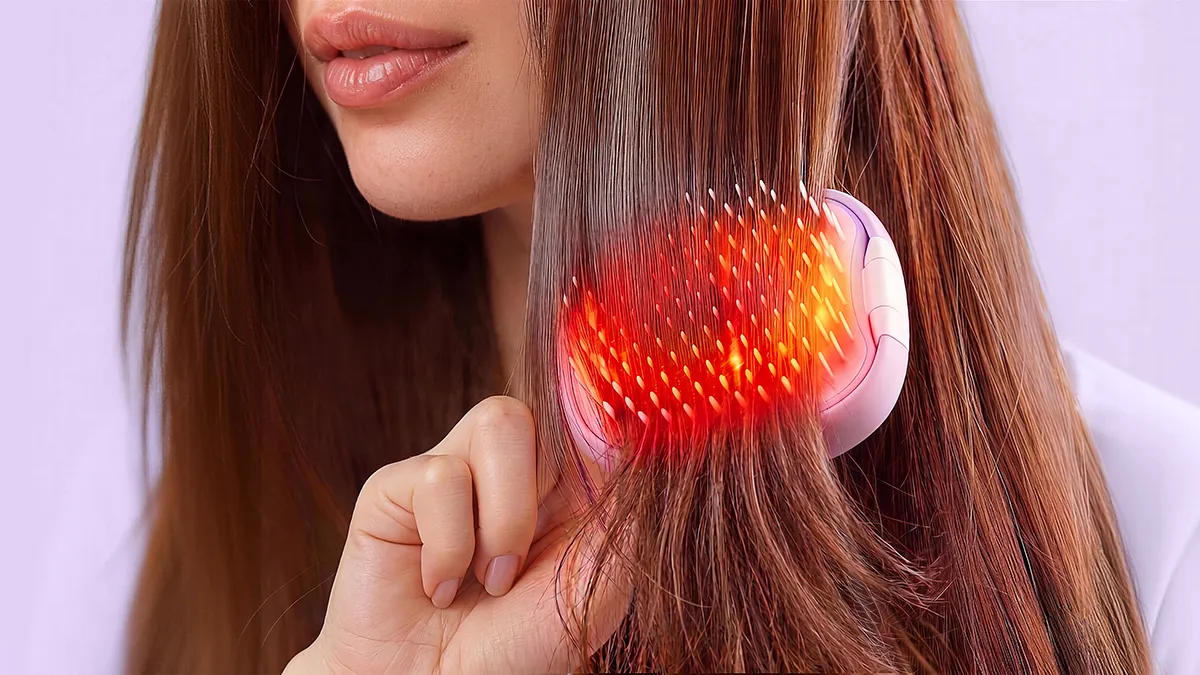
FLIP™ LED Detangling Hairbrush pre-order comes with two gift tiers:
- FLIP™ LED Detangling Hairbrush + FLIP™ hair SPRITZ & SHIELD Detangling Spray
- FLIP™ plus LED Detangling Hairbrush + 2x FLIP™ hair SPRITZ & SHIELD Detangling Spray
Stay cool, curious, and may you have a fabulous hair day.






Leave a comment