14 min read
A Needle in a Health Stack: Combining Red Light & IV Therapy

IV infusion therapy near me. The search term jumped up 4000% over the past three months. Is IV therapy such a thing now? Yes. And not only that. Wellbeing and healthcare treatments are increasingly stackable in modern clinics.
Stacking IV therapy with red light therapy? Can it be done? Should it be done? Does one and one here equal something far more than the sum of its parts? Why are the professionally administered and tailored IV drips the new non-invasive, zero recovery standard in personalized, preventative medicine that we hope to see flourish in the centuries to come? What is light therapy, and why is its red wavelength so useful for skin and tissue recovery? What is a mitochondrion? What does NASA have to do with anything? What red light mask has ideal characteristics for treatment stacking with IV therapy? We’ll answer all of these questions and so much more in the paragraphs to come.
Some lab coat jargon will be involved, but our goal is to use common sense and clear cause-and-effect to help even non-scientists understand why well-thought-through, personalized treatment stacking delivers better health, recovery, resilience, and aesthetic results in the same time frame. You can use your time and resources better and be deliberate about your longevity and well-being, keeping the potential problems of an aging body and an ever-accelerating life tempo at bay with clinically proven methods to look and feel better after 30-60 minutes. No downtime, no days off, no postponed engagements, and no hiding chemically burned skin or healing incisions.
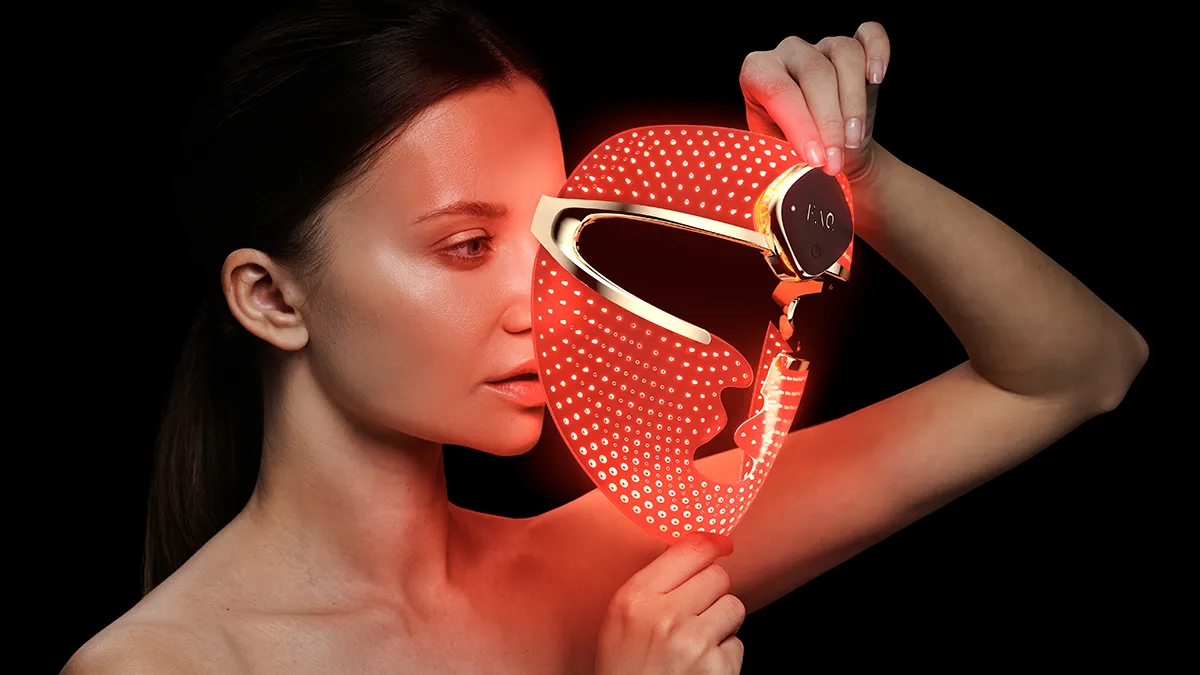
Stacking IV therapy with red light therapy devices, like our absolute favorite FAQ™ 202 plus LED face mask, is a holistic healing approach rooted in preventative healthcare, and as it’s been seared into all of our consciousness by the words of mothers and grandmas globally that an ounce of prevention is far more valuable than metric tons of cures.
Preventative healthcare is a new direction budding away and up from the standard healthcare model, which may as well be called sick care. The current system ignores a healthy person, partly due to an overwhelming number of the sick needing attention, although it is far easier to prevent many chronic diseases from forming by early lifestyle intervention than spending decades and thousands on (mostly unsuccessful or partially successful cures). You become of interest to healthcare only when trying to regain health, which wasn’t protected when it was supposed to be.
Sure, your emergency room may be good at setting mechanical trauma like a broken bone, and your GP may not have more than a few minutes with you if you’re seeking prevention advice, but if you believe there are natural ways to shift your health span into vital golden years, you’re in the right place. The IV drip and red light therapy work together to find the coveted needle in your health stack immediately. No guessing, no maybes, no semisolutions. Just professionalism, logic, clean ingredients, and proven photobiomodulation light wavelengths that interact in predictable ways with living cells, tissues, and energy production. So let’s look at how each technology works separately and what happens as they marry in your therapy session.
IV THERAPY
What is IV therapy?
IV is a less fancy abbreviation of the very fancy word “intravenous”, basically meaning something that is delivered straight to a vein or a needle placed within a vein.
We’re very used to seeing the IV drip as a part of the entourage in the hospital setting when something is off, like if a person’s been dehydrated, needs painkillers, antibiotics, extra blood due to blood loss, or cannot feed themselves for any reason. So for most of us the IV carries an uneasy feeling of discomfort and gagged fears, but there is no need for this association. It is just a delivery method, and a much more effective one than basically anything else we know. The tiny prick aside, it is also a much more comfortable treatment than many other wellbeing and beauty options out there (she says as a flashback of the last anti-cellulite massage violently takes over the theatre of her mind).
So IV therapy is a logical way to restore and replenish the body, now living our modern, stressful, fast lives, with software designed eons ago to collect berries and mushrooms, hunt wildebeests, and live by the rhythm of the sun and moon. Now we have more options and wealth than any generation before us. But we also have sleepless nights, fight-or-flight always on, attention hogging by devices in all directions, being always available and reachable, crowds, infinite commutes, booze, dying on a treadmill after 13 hours of sitting…
Feeling constantly drained, passive, burned out, tired, and broken is not normal. This is a signal. The body was designed to feel good and vibrant. Sure, you’ll feel bad sometimes. We all overindulge in stuff, sacrifice sleep for fun or necessity, lug the jet lag around, and eat a dodgy prawn from a street vendor. But our baseline should be vitality. If it isn’t, it's time to put our investigative hat on and see what gives.
Why are people swarming to it?
Because they don’t accept half-solutions or having their vigor sapped out of their bodies to satisfy the machine. Because they no longer want to burn out on the altar of hustle culture and want to take care of themselves, building a future of health and serenity for themselves now.

If it was only about some hydration and nutrients, couldn’t we just find the best super greens supplement and chug it down daily, avoiding the needle altogether? Of course we could, and quality products will affect our quality of life, but there is a catch. Oral supplements need to go through our digestive tract, and the amount individuals can absorb varies wildly due to underlying issues such as gut dysbiosis (rampant in the era when food has become a product to sell more than nourishment for the body) or undiagnosed health conditions that may prevent absorption and utilization of beneficial ingredients. The worst and best anti-aging supplements are both useless in the toilet bowl.
IV therapy is becoming mega popular because it is a bypass, skipping digestion entirely and delivering fluids, minerals, vitamins, and a whole array of beneficial compounds directly into the bloodstream, as ready-to-use health-building blocks. Abundant, no hurdles, immediately available support to body systems –everything from immunity, recovery, energy, metabolism, focus, skin health.
Many top clinics and centers will screen you and run tests to see what you’re lacking, then create a perfectly tailored, personalized IV therapy that is right for you. You’ll know you’re in a good clinic if the IV drip is offered with medical oversight, suitability assessment (you may not be a candidate), evidence-based choice of therapy, clean, traceable ingredients, cleanliness, and a safe and sterile administration procedure, ideally with a follow-up.
Why stack IV and red light therapy?
But how does a red light therapy mask like FAQ™ 202 plus fit into this treatment-stacking tower? Well, both treatments are non-invasive, and red light therapy or photobiomodulation (using therapeutic wavelengths of light to modulate responses of living cells and tissues) is a very good sport. It pairs well with many beauty, health, and medical treatments, ranging from facial rejuvenation to reducing inflammation and wound healing.
Red light therapy (including NIR near-infrared wavelengths that penetrate deeper into tissue) complements IV therapy. While IV treats the body from the inside out, affecting deep intra- and intercellular processes and delivering key compounds to help you feel and look your best, red light therapy works from the outside in. It improves microcirculation and energy production by using abundant fresh oxygen and IV-supplied nutrients to help the skin recover and rejuvenate. So you’ll not only feel better after your treatment, but objectively look better and more vigorous. There are no contraindications to using these treatments together, and you can cut your treatment time by doing two treatments at once.
LED light therapy
What is LED light therapy and how does it work?
LED means Light Emitting Diode, and it arrived in skincare via the medical and aerospace regions (yes, NASA). It has many names, but they all refer to photobiomodulation, and the wavelength of light doesn't need to be red (RLT). If you see any of the following names, it is the same principle of light-based therapy:
- Low-level laser light therapy
- Low-power laser therapy
- Non-thermal LED light
- Soft laser therapy
- Cold laser therapy
- Biostimulation, photonic stimulation
- Photobiomodulation and phototherapy
How did red light enter skincare?
Unofficially, it all started as ancient cultures took their ill people out into the sun to help with healing and recovery, called heliotherapy. They knew it worked, but didn’t know why. We do. Sunlight contains all wavelengths, including therapeutic ones, but it also contains ionizing radiation, such as UV, that can mutate DNA and cause melanomas.
Officially, work with filtered light started in the late 19th century with a Danish physician, Dr. Niels Ryberg Finsen, who realized he could stop scar formation from smallpox and later grabbed a Nobel Prize for light therapy. In Budapest in 1967, Dr. Endre Mestner gave his all to find a cancer cure, but ended up healing scars and regrowing hair in mice.
Way, way above the head of mice and men, NASA had some other plans for the technology, using it for non-invasive medical and botanical support for astronauts to successfully speed up minor wound healing and to help raise some greens and optimize photosynthesis in gardens detached from the mother planet, so that astronauts on prolonged flights can get valuable food.
The exploding beauty industry found it harder to ignore the healing, hair recovery, and visual improvements in the treated skin and appropriated the technology for its own “forever young” purposes, and here we are. Everything from large clinical red light therapy devices to LED panels, red light masks, wands you can use by yourself, and all in between.
Wavelengths, mitochondria & skin benefits
Many LED therapy wavelengths (colors) have shown promise in treating various concerns, but red and NIR light wavelengths have the most research-backed data. In that realm, studies consistently center on wavelengths between 630 and 850 nanometers as the ones that get the most physicochemical response:
- THERAPEUTIC RED RANGE (630–660 nm): optimal for skin, collagen synthesis, surface inflammation, circadian rhythm resets
- THERAPEUTIC INFRA-RED RANGE (810–850 nm): deeper tissue penetration (muscle, joints, systemic inflammation)
Some of you may remember mitochondria from school. For those who need a refresher, these are the bean-shaped organelles in cells that produce the energy of life, ATP.
Every cell (except red blood cells) has mitochondria. They were once bacteria, but we adopted them to make energy for us by burning oxygen and nutrients (fat and sugar; not protein unless we’re starving, because protein is mostly used as building blocks). So mitochondria are basically power plants (that also breathe for our cells). Less breathing and energy mean a sluggish, less effective cell that struggles with basic functionality, let alone bother itself with repair. Broken cell metabolism and respiration, taken to extremes, result in a rogue cell we can call cancerous. Rogue cells ferment sugars for energy because they can’t make energy by burning nutrients in the presence of oxygen.
In normal cellular respiration (breathing), an enzyme called cytochrome c oxidase absorbs red and NIR wavelengths. This energy boost improves electron-transport efficiency and increases production of the body's energy currency, ATP. For example, low ATP in reproductive cells (which have the most mitochondria) means fertility challenges, and no ATP means no life, literally. That’s what arsenic does. It kills you in minutes by preventing ATP production. In practical terms, better ATP production means:
- Cells repair more efficiently
- Inflammation resolves more quickly
- Tissue regeneration improves
This is why red light therapy shows up everywhere. Because it goes right down to the cellular level, if the cells work better, the tissue composed of these cells also looks better, in addition to having improved function. Red light therapy works because it targets energy availability rather than a single symptom. In the realm of solutions as concepts, the one that goes to the root cause is absolutely superior to a partial solution.
Red light therapy effects are most obvious on skin health and anti-aging; wrinkles, scars, and rosacea are amongst the most thoroughly studied and best-understood applications that have been shown to be effective across all age brackets and skin states, but if you’re going to be using a larger device like a red light panel or professional targeted red light therapy, you may also notice various health effects, including:
- Inflammatory pain
- Joint stiffness
- Muscle recovery
- Circadian rhythm support
- Wound healing
For those who want to know more, you can find way more details and scientific support for various wavelengths here: The Science Behind Red LED Light Therapy and Its Benefits
FAQ™ 202 plus with IV therapy
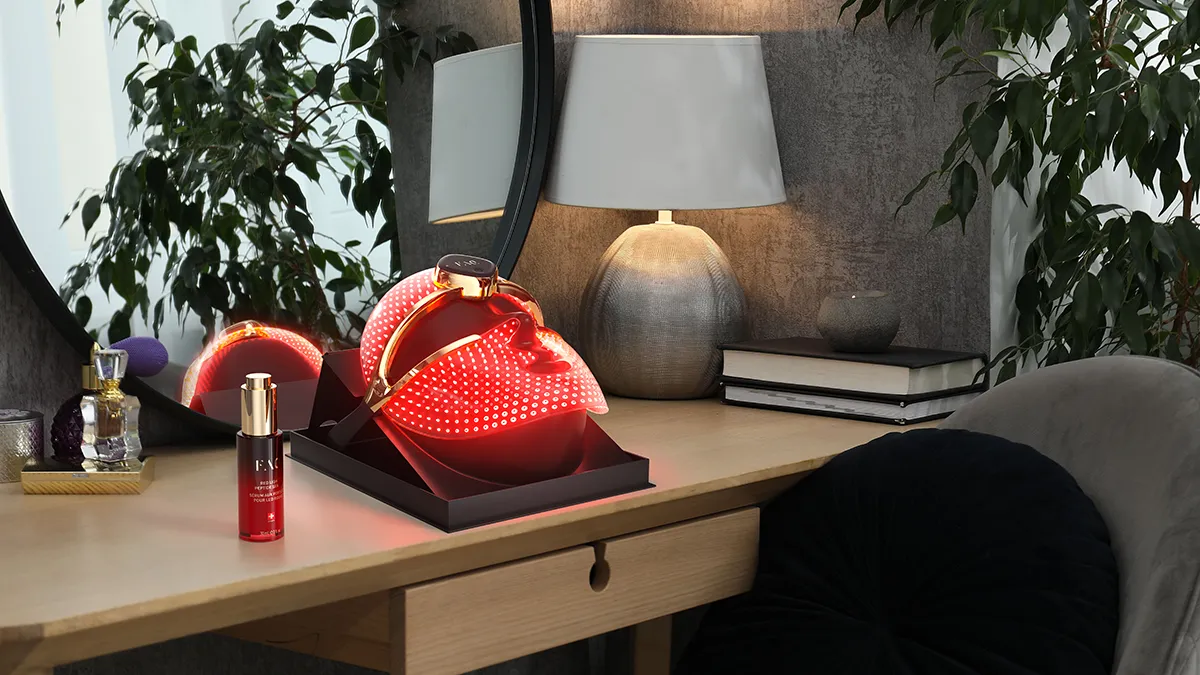
Why do we recommend stacking FAQ™ 202 plus NIR and red light face mask with IV treatments? Because FAQ™ Swiss, the most trusted name in luxury LED therapy and FOREO's sister brand dedicated to premium anti-aging products, revolutionized what an LED facial mask can be by putting users' comfort and real-life considerations first. This successfully merged form and function into a spectacular, new IV clinic in-office or at-home LED mask.
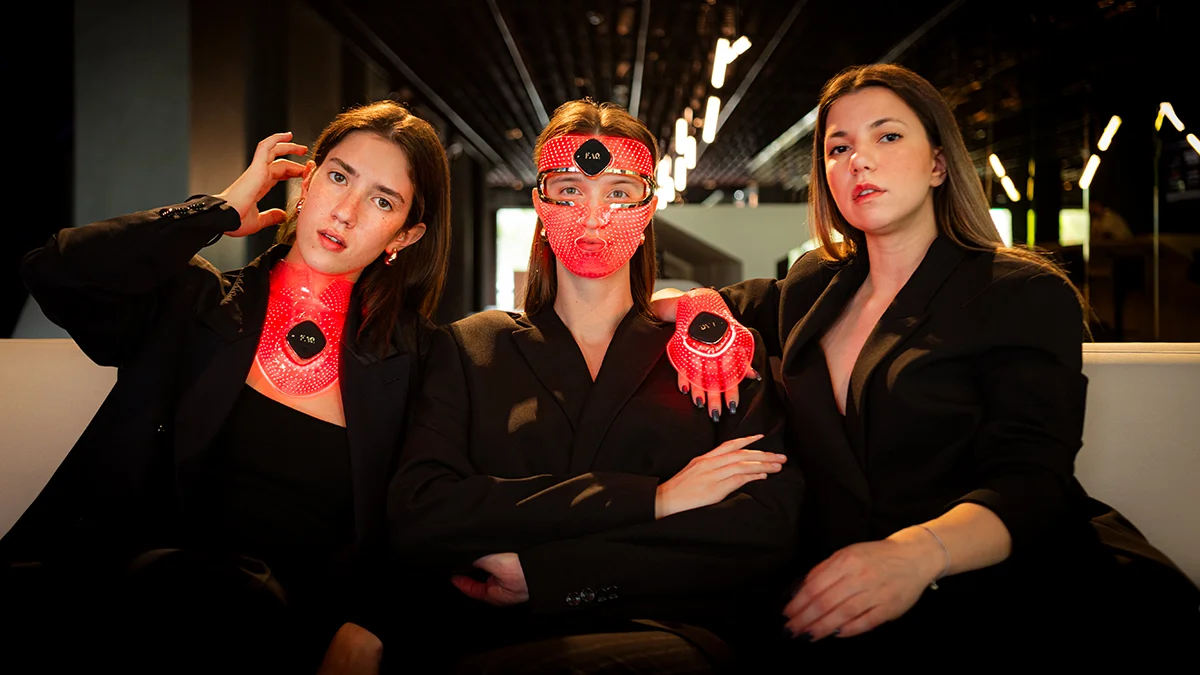
The FAQ™ Swiss portfolio is large and covers face, body, and hair care, but the FAQ™ 200 Collection consists of 5 devices for face, hands, and neck and décolleté areas, 2 topicals, microneedling patches, and a glass skin sheet mask. You can use the topicals, patches, and the sheet mask as is or pair them with the devices for a synergistic effect to boost light therapy or microcurrent effects:
Devices
- FAQ™ 201 Silicone LED Face Mask (basic red, green, blue LED therapy)
- FAQ™ 202 Anti-aging Silicone LED Mask (full-spectrum + NIR)
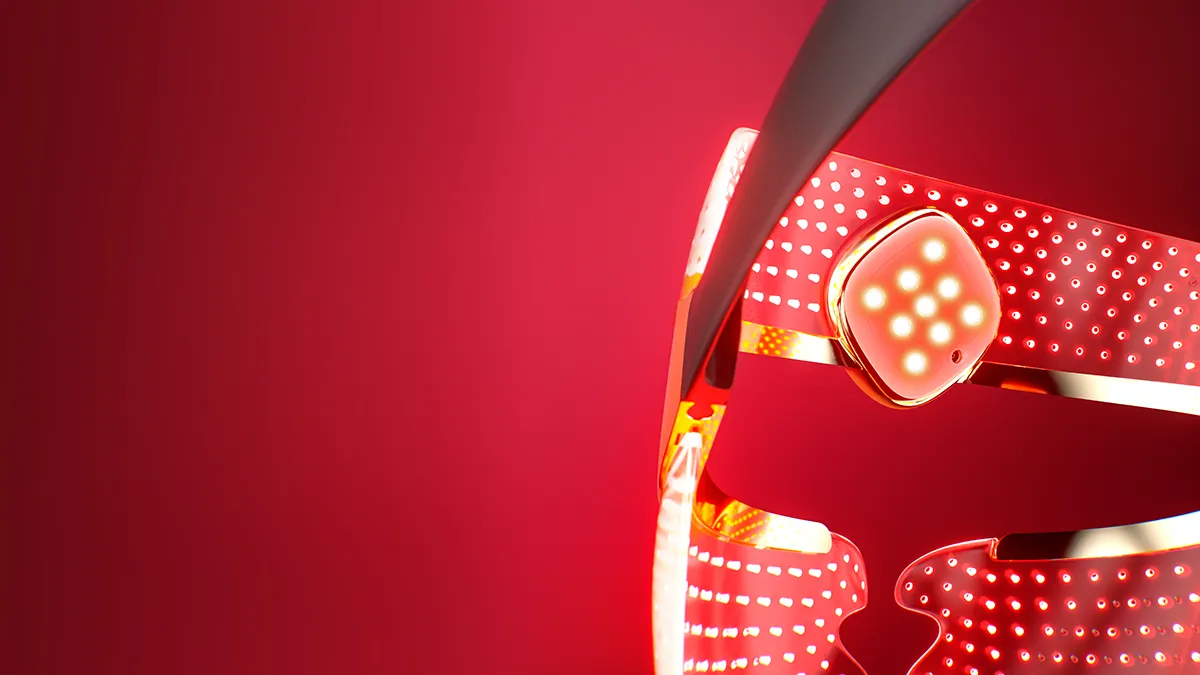
- FAQ™ 202 plus LED face mask (full-spectrum + NIR, 34 more LED points and LEDs in the forehead diamond)
- FAQ™ 211 Red Light Neck & Décolleté Mask (reversible, can be used for backne too)
- FAQ™ 221 Anti-aging Red LED Hand Mask (a translucent semi-glove device to rejuvenate hands)
But our focus is the crown jewel of the collection, FAQ™ 202 plus, as the most advanced device that will give you the biggest bang for your buck and deliver more light points, targeted treatments to problem areas, and stronger irradiation, which translates to more power and faster results. The genius of the 202 plus, in addition to clinically proven action, is the design that puts the human first.
Most masks are rigid and claustrophobic, like you're the man behind the iron mask. The lack of flexibility may make them uncomfortable and harm the light distribution, as the mask surface will not sit the same on different facial features. With LED light, you want contact with the skin, as efficacy and penetration drop exponentially when it is shone above the skin rather than in contact with it. You can afford this power wastage with something as powerful as an LED panel meant to be used on the whole body at a distance, but not on a face mask. This is a major pain point, so the engineers at FAQ™ Swiss scanned over 10,000 faces to develop the very first LED mask that fits every face perfectly.
The mask material is a unique translucent, soft, yet resilient flexi-fit silicone that ergonomically adapts to your face. They mold to your face like a transparent second skin, and every millimeter gets equal concentration of LED light.
The silicone is also ultra-hygienic by design. It is non-porous (won't absorb gunk), easy to clean, and quick-drying. It is way more resistant to microbial contamination than plastic.
FAQ™ 202 plus LED face mask was designed for life, for real people, and schedules that may sometimes slap us right across the face. The mask adapts to you, not the other way around, so it's ultra-lightweight; you'll barely know it's there while you’re doing our IV therapy.
The featured wavelengths and their benefits
- NEAR-INFRARED LED (850 nm)
Penetrates more deeply than red LED. Is said to help improve fine lines, sun spots, wrinkles & sagging. - RED LED (650 nm)
Is said to combat signs of skin aging for a more youthful look. - BLUE LED (420 nm)
Is said to reduce the appearance of blemishes. - GREEN LED (519 nm)
Is said to brighten a dull complexion and even skin tone. - ORANGE LED (590 nm)
Is said to revitalize skin and help improve skin texture. - PURPLE LED (450 nm)
Is said to reduce the appearance of age spots and hyperpigmentation. - CYAN LED (463 nm)
Is said to calm and relieve stressed skin - YELLOW LED (570 nm)
Is said to reduce the appearance of redness and soothe skin.
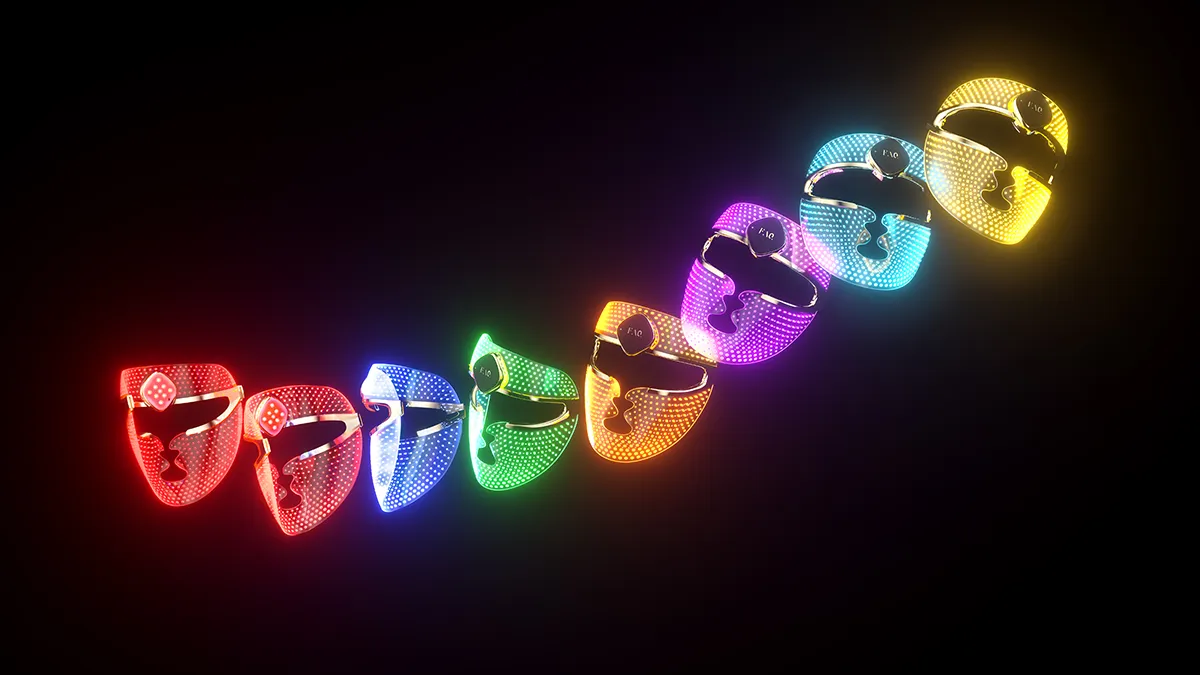
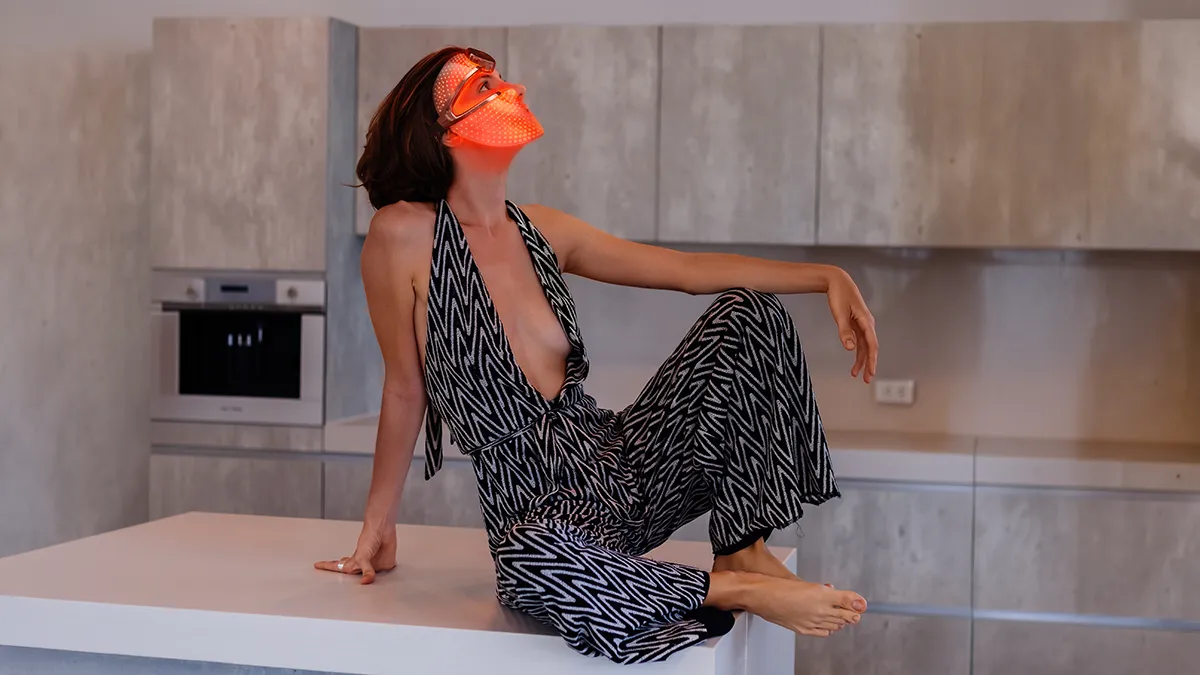
The mask also has an open-eye and mouth design, and the eye area has an inbuilt shield that protects it from LED light spillage. The rechargeable, wireless mask lets you move freely and get on with your day without being tethered to a cord, if you’re considering getting one for at-home use after your IV treatment. This is highly recommended because red light therapy results are cumulative and depend on consistent use. It features a non-slip headband to keep the mask in place for 15-20 minutes as you do your thing.
FAQ™ Swiss app allows you to customize, choose pre-programmed treatments, personalize all of the tech settings, and set treatment reminders, because life gets too busy to keep track of everything.
FAQ™ 202 plus upgrades on the 202
- Features 50% stronger light and more LEDs, bringing the total to 634 LED light points, compared to 600 in FAQ™ 202
- More power, which means better penetration; the brighter light intensity reaches the skin around your eyes more efficiently, while the gold frame still protects your eyes.
No more "blind spot" under the forehead diamond containing the mask mechanism. It is no longer wasted space, but an enhanced area with 9 extra LEDs focused on those very prominent angry 11s.
FAQ™ 202 plus clinically proven benefits
On the skin, all of these improvements reflect as clinically proven benefits*, such as:
- Reduced wrinkles by 32% in just 2 weeks.
- Significantly increased elasticity in just 2 weeks.
- Significantly increased skin firmness.
- Reduced acne by 48% in just 2 weeks.
- Reduced sebum by 18% in just 2 weeks.
*Based on 3rd-party clinical testing with 30 female subjects, aged 20-45, over 28 days.
Conclusion
Beauty tech doesn’t need to feel cold or clinical. Healthcare cannot be the one-size-fits-all box we’ve been given. We can achieve so much more with early interventions and prevention before the problems arise. Health and beauty can be intuitive, elegant, and designed for the way we actually live - between deadlines, coffee cups, and stolen moments of self-care rituals. That is why treatment stacking works; that is why preventative and recovery IV therapy is only going to grow in the decades to come. That is why investing years into creating a perfect red light mask that fits the lives and needs of real people will keep propelling our favorite mask forward, and allow the brand to keep creating things that make our lives easier and more beautiful.
We hope we've offered some useful insights and answered your questions. For more info on the entire FAQ™ Swiss portfolio, slide on over here, and for more on IV therapy, explore some of the options available in renowned IV clinics. Stay curious, stay beautiful, healthy, wealthy in what counts, and enjoy living in your skin.




Leave a comment