10 min read
Microcurrent Device Professional vs. At-Home Facelift Routine

Once upon a time, there was an era of budding new technologies leaking in from medical sciences into a growing niche of high-tier skincare. How did we get to professional microcurrent treatments and at-home facelift devices? Well, although the first reconstructive surgeries were reshaping broken noses as early as 3000 BCE, it was 1901 when Dr. Eugen Holländer picked up a scalpel to carve out excess skin around a posh Polish aristocrat's ears. It is called the first facelift ever, a "proto-facelift" that consisted of crude excising and reattaching of the skin as you were sort of taking in a dress, just with skin, instead of fabric. But 15 years later, in 1916, Dr. Erich Lexer (also a sculptor) performed the first true facelift, where he lifted and redraped the skin over the muscle, rather than just snipping off the excess.
Statistics show that in the period from 2000 to 2023 alone, plastic surgery increased 115%, where the last 4 years account for 33%, and the last year alone 8%. But in addition to the rise of surgical procedures such as body lifts by 4000% since 2000, there is also a rising interest in minimally invasive anti-aging procedures (soft tissue fillers increased by 274% since 2000, and Botox injections by 759%) and completely non-invasive zero down-time solutions such as at-home microcurrent devices.
Microcurrent, which we now adore in our aesthetic pursuits of fresher and more youthful-looking faces, came from medicine, where it was used for everything from pain management, physical therapy, wound healing, and muscle rehabilitation. When it comes to facial treatments specifically. Dr. Thomas Wing reversed Bell’s palsy facial paralysis, but it was soon noticed that not only did people regain muscle functionality, but the skin above the muscle also looked fresher and younger. Now, microcurrent therapy is a staple of modern skin-tech as a non-invasive facial, be it a professional in-clinic session or an at-home microcurrent device you use in the privacy and comfort of your bunny slippers. We are here to discuss details so you can determine which option is right for you and to give an objective pros and cons for both microcurrent facelift methods so you can discern what best fits your needs, lifestyles, and resources. We’ll compare professional microcurrent treatments and at-home devices by looking into effectiveness, cost, necessary frequency of use (if you don’t use it, nothing works), and safety. Let’s go into some important questions you must consider.
Do microcurrent devices really work?
And how do they work? Yes, yes microcurrent devices work, if you use them consistently. This is not an impulse buy if you’ll be going for an at-home microcurrent device or a once-a-year professional microcurrent treatment. It is an investment in a lifestyle change, and becoming that person who will take caring for your skin seriously, long-term.
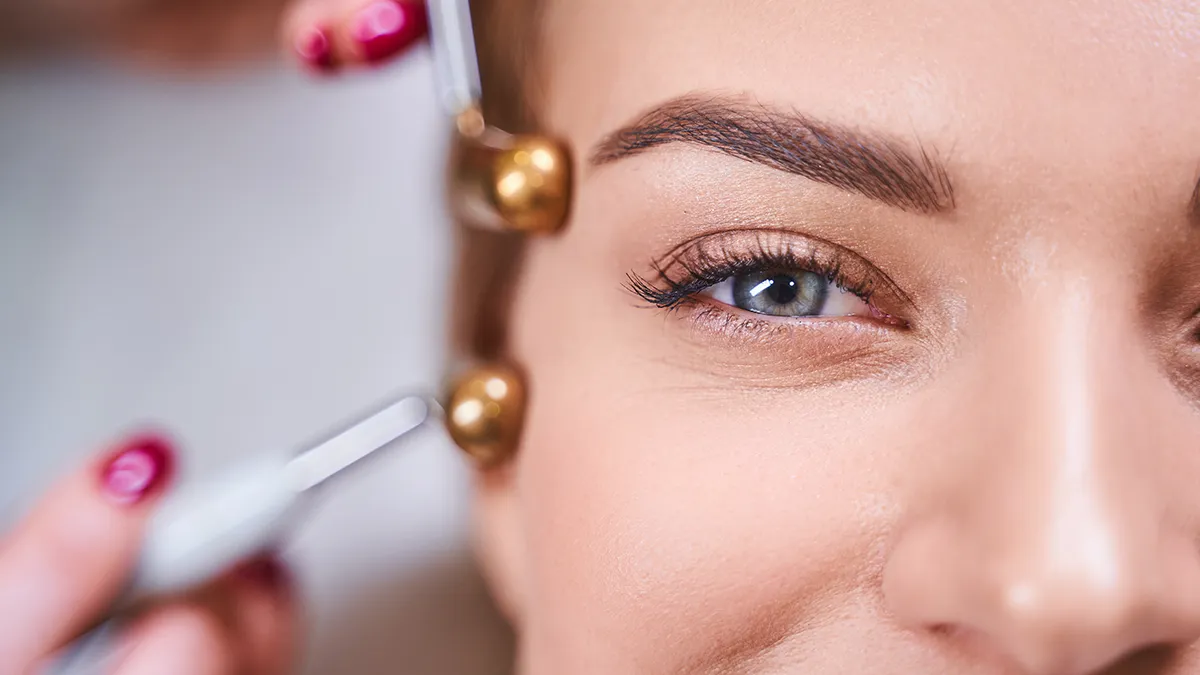
I don't know about you, but knowing the basic fact that something works is enough only in a pinch. On a regular day, I'd like to know why, so this is what we'll explain now. Microcurrent works by delivering low-level electrical currents, not unlike the body's natural currents that govern brain function, muscle movement, and the heartbeat. In a microcurrent device with aesthetic purposes, the current is calibrated to stimulate facial muscles, toning them as exercise would any (s)trained muscle in the body.
This results in an imperceptible increase in muscle volume that results in skin tightening above the muscle while also revitalizing skin cells themselves, boosting ATP (cellular energy), and increasing collagen/elastin (collagen gives strength, elastin, elasticity). There are some immediate benefits like reduced puffiness and improved circulation, but you'll need to be consistent to see a long-term lifted and rejuvenated look, which will be most obvious once the cells have turned over and the old ones are replaced by new, energized ones and supported by more structural proteins for optimal function.
We can’t just willy-nilly use any old current on our face (unless you’re into electrocutions). We need a proper conductive medium (a serum or a microcurrent gel) between the skin and current, and to seriously consider the strength of the device’s current, customization of the treatment to your specific skin type and current needs, and frequency of use. All of this will influence how noticeable and lasting the microcurrent results will be.
How often should you use microcurrent?
There are things that work best when used once in a while, there are those where if a little is good, more is better, and those where megalomania will come to bite you on the behind. Lucky for us, we all have some common sense (kudos) and believe in moderation and efficacy, working smarter, not harder. If you’re blessed by a full schedule and life, you’ll appreciate something where little goes a long way. So how often should you use microcurrent?
Professional treatments
Weekly or bi-weekly as you begin. You will go through a series of sessions with a goal of achieving a tighter, younger-looking face (or body). The goal is to improve muscle tone and collagen response. After the initial phase is done, maintenance will require visits every 3–6 weeks or monthly, depending on your age, level of deterioration, and specific condition. Spa protocols vary based on age, skin condition, and treatment goals.
At-home microcurrent devices
To maintain or gradually improve skin tone, experts recommend incorporating at-home microcurrent into your skincare routine 3–5 times/week during the first couple of months, then tapering to 1–3 times/week to maintain. Still, not all devices are created equal, and make sure to read the instructions for your specific device. The manufacturer put specific timeframes in there for a reason, regardless of whether they fit into our general ballpark here. There is no use in being consistent for a few weeks and then losing your device in the pile of other unused stuff. Results will fade if you stop using microcurrent as the muscles loosen and the aging skin’s capacity to produce collagen drops again.

Time commitment in professional vs. at-home microcurrent:
- Professional sessions will last 30 to 60 minutes per visit, but you need to count in travel/time scheduling.
- At-home microcurrent treatments last anywhere from 2 to 20 minutes per session, and can be done whenever it is convenient for you. You just need to make sure you’ve got enough conductive gel and a charged device.
What is the price of a microcurrent facial?
Professional microcurrent treatments
A session at a spa or medical aesthetics clinic typically follows a Bell curve, averaging anywhere between $80–$200+, depending on the region and the salon, but can be a bit less or significantly more. If you choose to go for an in-clinic microcurrent, you’d get the best deals on package deals of 6–10 sessions, averaging from $500–$1,500 or more (if you’re gonna get real fancy about it).
Most well-known establishments will have some seasonal discounts you can catch or packaged deals where you can get a better price per session if you pair it with some other offer from the spa.
At-home devices
The good news is that an at-home device is a one-time investment. The only repeat cost you get (presuming you chose a quality, clinically proven microcurrent device with no buy-separately attachments) will be the serum or microcurrent conductive gel of your choice.
The pricing of at-home devices varies widely, with entry-level devices starting around $150–$300 and serious devices or kits going over $500+. It seems like a hefty sum to hand over at once. Still, in reality, it is much cheaper than repeated professional treatments (if used regularly, as they are supposed to be for achieving and maintaining results).

Who should choose professional treatments?
For someone who just wants to firm and refresh their face and has no advanced signs of aging or a specific problem, a home microcurrent facial (or body toning device) may really be all they need for some non-invasive lifting that will make you look fresh, well-rested, and vital. If you’re one of these (pre) middle-aged people with undefined sag-zygotes on real faces, you can get great results with a single investment in a good device.
But we all have different life stories and are at different points in our journey, so some may really need (or want, if they’re unsure of what to do) professional help. Professional microcurrent sessions will be a better fit for you if:
- You have really visible deep sagging, some of that hard jowl action going on, loss of muscle tone, or pronounced skin laxity that is really troubling you. All of this means your skin needs stronger, targeted stimulation, which may not always be achievable with at-home devices.
- You want expert guidance for a particular problem, customization to your individual needs, or advanced techniques where microcurrent is combined with treatments like LED, masks, or serums.
- You’ve been on the planet long enough to know with 100% certainty that you’re not going to be consistent with an at-home microcurrent device. You are sure that you won’t commit daily or weekly time at home, and are sort of charmingly spoiled and prefer someone else doing the “heavy lifting” here.
- You care about the speed of visible results because you have some important event that will produce forever-pictures or networking. You need dramatic results fast and are comfortable with a higher cost.
Difference Between Professional and At-Home Devices
There is a difference. Anyone who says there isn’t is either lying or trying to manipulate your perception of reality for their own purposes. What is the difference between professional and at-home devices?
Strength & Precision
If you prostrate your pretty self on a clinic or a spa bed, the bulkier professional machines will typically deliver higher-intensity microcurrents and allow estheticians to create settings that perfectly fit your skin’s needs. Chances are that the power and customization will result in more dramatic, longer-lasting results. At-home devices may take 5 sessions to achieve what a professional one will get done in one.
Convenience
This one is a no-brainer. Whichever of the options offered does not require putting on pants or making ourselves presentable, cutting out a slice of our precious relax-time, is a more convenient option. At-home devices are smaller, very light, compact, portable, and totally user-friendly. They may not give you a radically new face in a week or two, but they are perfect for maintenance of pro results or gradual improvement on your own schedule.
Customization & Treatment Scope
This point is neither here nor there nowadays. The game has changed. A few years ago, a professional treatment may have won by a landslide in the category, but the advent of new skin tech has pushed this problem aside. Before, only spas and clinics combined microcurrent with other treatments (LED, masks, exfoliation), giving a more holistic facelift result, but now you have devices that combine multiple treatments. The most famous one now may be the FAQ™ 400 Collection that combines the innovative new dual microcurrent, creating a power grid, and LED light therapy in a single wand.
The summation would be that at-home microcurrent is great, convenient, a one-time investment for ongoing maintenance, and subtle improvements over time. Professional treatments, on the other hand, are stronger and more suitable for those with advanced aging or looking for fast and dramatic results, but require scheduling, cost, and commitment to keeping your appointments. Thus, if you plan to commit long-term and are starting with mild to moderate signs of aging, an at-home device can seriously be a wiser financial choice. If you have advanced sagging and wrinkling and prefer immediate results and whispers of “having something done pro treatments may be worth the recurring cost.
Can you overdo at-home microcurrent?
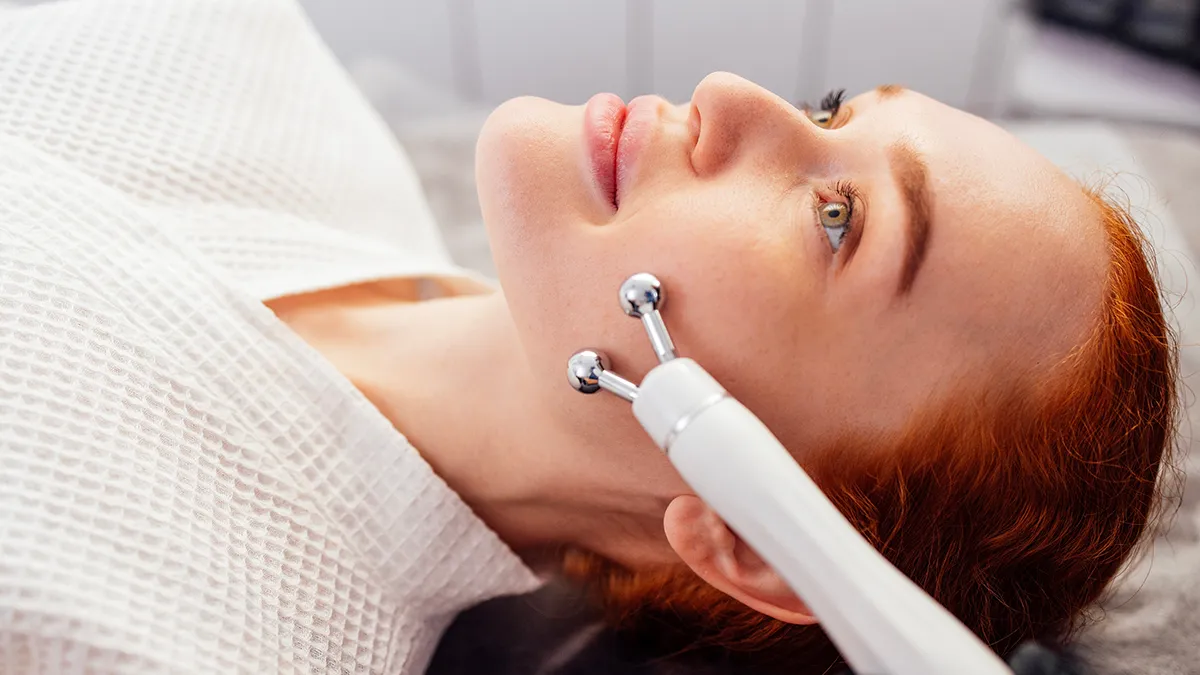
Yes. You can overdo everything, no matter how benign, including water, sleep, and fruit. While microcurrent is generally safe for most populations and has very few contraindications, misuse (meaning not following device instructions, using it “dry” without a microcurrent gel, or overusing) can lead to mild side effects such as temporary redness, tingling, or slight muscle fatigue.
Overuse (be it from too frequent sessions or overly strong settings on the device) may lead to irritation rather than benefit, and using the device on the wrong muscles or with wrong microcurrent movements can potentially make dynamic wrinkles worse. Think of it like overtraining a muscle: too much too soon isn’t good. You’ll end up so sore that you’ll skip regular moderate training and will get lower returns in the long run. Consistency, moderation, and (please!) following instructions if you’ll be doing microcurrent therapies at home.
If you have pacemakers, certain implants, are pregnant, or have active severe skin conditions or cancer, refrain from using the technology without professional guidance.
Conclusion
When all is said and done, a bottom line must be drawn, in skincare and life alike, so we’re drawing one in a glittery crayon. The truth is not a simple this or that. It is a nuanced, multi-pronged approach that recognizes our innate individual differences in body, preferences, body image, and desires. Both professional microcurrent treatments and at-home microcurrent devices hold value and do their job, but cater to different goals:
- Choose professional treatments if you’re after strong, targeted, immediate results, have significant skin sagging, or prefer expert guidance and customization.
- Choose an at-home device if you value convenience, cost-effectiveness, and long-term maintenance.
This is the gist of the thing. We’ve come a long way from the first facelift tries to cheat time out of its pound of flesh, from Galvani’s dancing frog legs and first reversals of Bell’s palsy paralysis. We have the privilege of living in the most advanced era in history, which is coming up with creative solutions to solve problems of aging and decline that have plagued our species since the first alchemists were fiddling around with fountains of youth stories. The fountain may be mythical, but the science and technology that are delivering impressive new results are quite real and changing the face of beauty daily.
There’s no “one-size-fits-all” winner here. Think of microcurrent as skincare fitness: professional treatments are the intense workout classes, while at-home microcurrent devices are your daily walks or gym sessions. Do both, or the one that fits your life, budget, and needs best at this moment. Stay cool, stay curious, eclectic, and electric, and enjoy living in your gorgeous skin.






Leave a comment