20 min read
Tooth Whitening Gel, Whitening Trays & Peroxide vs. PAP

Bleach trays and whitening gels for teeth are exploding in the beauty market for a reason. Because smiles matter in social interactions. Always have, always will. And because teeth-whitening kits are ridiculously easy to use, and they work. Many a romance had fizzled out before ever getting a chance to properly begin due to a yellowing smile in that delicate period of “love at first sight” lightning strike aftermath.
I remember the early 20s me. The guy was 6.5' smart, kind, funny, but all I could see were the yellow teeth when he smiled. It's not like he didn't brush or had a Jenga tower of bad habits. He just had some naturally (seriously) yellowish tint to his teeth. It sizzled for a while, but my silly young self just couldn't get over those teeth, because you’re superficial, immortal, and time stands still in your early 20s. My today self, very (very!) far from his early 20s, would have just plopped a whitening tray in his mouth, watched with glee as his triceps twitched while he did random stuff around the house (without being asked), and called it a day.
We live in the most abundant age our species has ever known, with more options than any prior generation. This includes the at-home and in-office beauty and wellbeing interventions like teeth whitening. Beautiful and healthy (or at least healthy-looking) smiles moved the arrow of history of human interactions and signaled virility and youth. As we’ve gone global with mass media and the www, now we have an entire world of strangers to compare ourselves to, rather than only people in our immediate vicinity. Our insecurity is a golden age for the beauty industry, be it professional dental treatments and augmentations, or the at-home interventions and devices.
You won’t put in your own crown or filling, of course, but teeth whitening sets are becoming so available, cheap, and effective that the hot, gentle giant of my 20s will have had his smile fixed in a week’s time now. You don’t even need to go to your dentist and suffer the smell of despair and pain-filled waiting room as you convince yourself you’re an adult and that you can do this. You can.
Teeth whitening gels used by dentists are usually stronger and are not meant for the general untrained public. At-home whitening gels are somewhat weaker, but they still deliver results over a couple of days or weeks. So, whether you're considering teeth bleaching trays, dentist-supplied dental bleaching, or an at-home whitening tray, here's what you actually need to know. We’ll cover some key questions to consider before choosing your teeth whitening set, usually a bleaching gel and a whitening tray (preferably LED, but not mandatory). So buckle up, make yourself an (unsweetened) drink, turn that frown upside down, and let’s learn.
What Is A Tooth Whitening Gel?
Super easy start. It’s all in the name. A whitening gel for teeth is a gel containing an active ingredient designed to lighten tooth discoloration.
Two main camps of teeth whitening gel are peroxide-based whiteners, usually hydrogen peroxide or carbamide peroxide, and newer peroxide-free alternatives such as PAP, short (really short) for phthalimidoperoxycaproic acid. Try saying that one fast three times. A peroxide teeth bleaching gel has a much longer track record in dental bleaching, and PAP is a newer and potentially much gentler agent that’s rapidly gathering evidence of superiority, especially for sensitive teeth.
Peroxide-based whiteners penetrate the tooth and chemically break down molecules responsible for discoloration. The American Dental Association recognizes hydrogen peroxide and carbamide peroxide as commonly used whitening agents. While whitening trays for at-home use combined with carbamide peroxide gels were safely introduced into at-home use in 1989, hydrogen peroxide was already in use as a teeth bleaching agent as early as 1880.
But as it helped people smile brighter over the centuries, peroxide side effects began to stain the satisfaction of teeth whitening. These problems mainly orbited tooth sensitivity and soft tissue irritation, aka gums that would be red, sore, inflamed, or show white chemical burns for a while. If you used peroxide too often, you risked damaged enamel and a higher chance of cavities down the line. It was also not a good idea to swallow much of this stuff, because in addition to mouth flora dysbiosis, you could get throat irritation, stomach pains, nausea, or even vomit.
PAP is a different type of oxidizing agent. Although often described as "non-peroxide," PAP can still generate some active oxygen during the whitening process, but it has boomed in popularity because research suggests it causes fewer changes to enamel than peroxide formulations while delivering comparable whitening results. But keep in mind that peroxide has been used for centuries to whiten teeth, and PAP has a smaller evidence base because it is a much newer occurrence, appearing as a teeth whitening gel formulation only in 2020 and 2021, and entering commercial use around 2024.
How Do Whitening Trays Work?
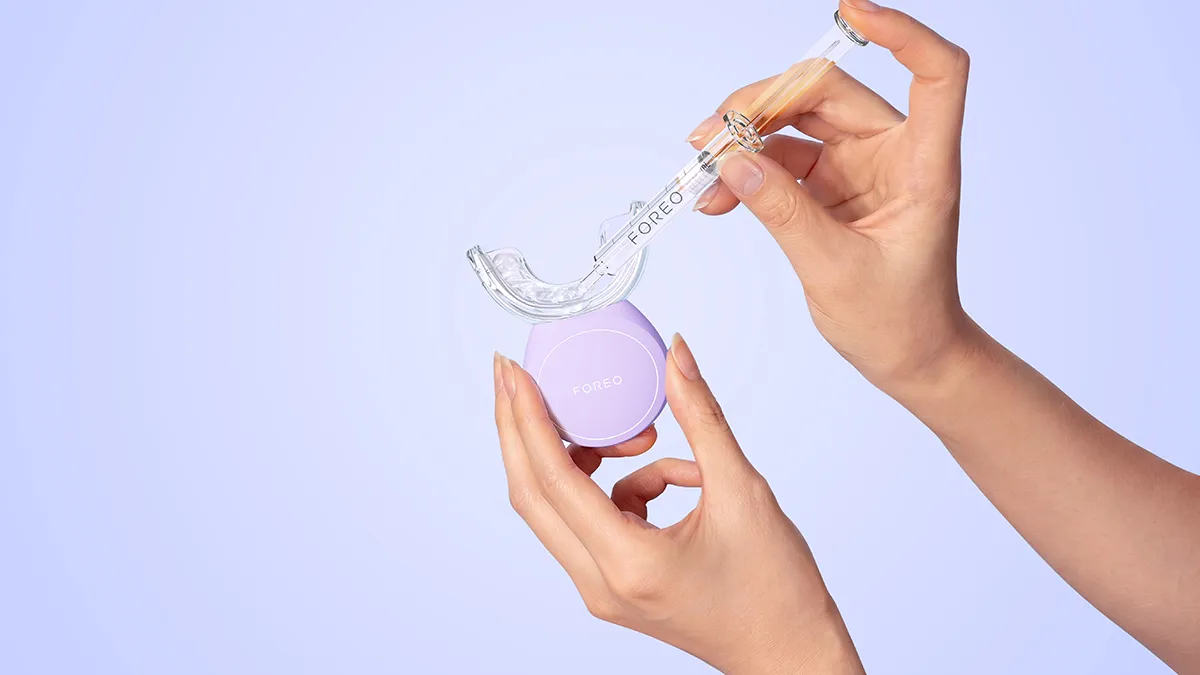
Whitening trays are basically a delivery tool for the bleaching gel, designed to hold it against the teeth for any amount of time needed for the gel to do its job (which can vary anywhere from 15 minutes to overnight). They look like a fancy version of the boxer’s mouthguard with space for upper and lower teeth.
The use is very simple. Apply whitening gel to the tray, bite on it, and leave it on for as long as your brand requires. Then brush the teeth and clean the tray. That’s it.
Dentist-made dental bleach trays are a higher-tier option because they are custom-fitted to your teeth. Everything custom-made is higher tier, from suits and dresses to cakes and kitchen cabinets. Such is the nature of customizing to your own needs.
A custom tray keeps the gel in full contact with your teeth while limiting unnecessary contact with your gums and minimizing side effects. Dentist-supplied at-home systems commonly use carbamide peroxide, and treatment time is determined largely by the concentration of your whitening gel. So don’t mimic someone else’s routine. You may be using different products or have a different level of staining.
Over-the-counter whitening gel trays can also work, but tray fit and formulation vary considerably between products. Ideally, you’ll find a brand with a flexible tray that adapts to most teeth and jaw shapes.
The Difference Between Whitening Trays and Bleach Trays?
The terminology. It’s the same thing.
People use all sorts of names, like bleach trays, teeth bleaching trays, whitening trays, dental bleach trays, and tray teeth whitening, to describe (a bitable) systems in which a whitening agent is delivered to the teeth using a tray.
"Bleaching" is the more technically accurate term when a chemical agent changes the tooth's intrinsic color. "Whitening" is a broader consumer and marketing term that can include removing surface stains as well as chemically lightening tooth color in the deeper layers.
Do Teeth Whitening Gels Work?
Science says yes. Peroxide-based teeth whitening gels (hydrogen peroxide and carbamide peroxide) have substantial evidence supporting their ability to lighten teeth color. Both are widely used in professional and at-home whitening.
At-home tray whitening gels can take longer to work than professional in-office bleaching gels. Professional gels use strong concentrations of up to 40%, but that doesn't mean the weaker ones are not effective. Studies show that using 10% carbamide peroxide for 2-4 weeks can deliver the same results, and the results can last up to 2 years. And there is a far lower chance of hypersensitivity and side effects with slower tooth bleaching at lower concentrations, a randomized clinical trial concludes. The downside? Lower-percentage bleaching agents will take longer to work, and they may not achieve results as dramatic as those from a 35-40% peroxide gel in-office.
A systematic review comparing tray-delivered carbamide peroxide and hydrogen peroxide found both to be effective, with carbamide peroxide showing a slight advantage for one measure of color change but no significant difference in sensitivity or gingival irritation, as found by a systematic review and meta-analysis in Clinical Oral Investigations.
So, yes: the gel works and makes a noticeable difference, up to 10 shades with stronger preparations, but mostly 4-8 with weaker ones, while the weakest teeth whitening methods like strips and over-the-counter gels (3-10%) can go up to three shades with consistent use.
But what about PAP? Is it better than peroxide-based bleaching, or can it barely compete? Is it true that you’ll experience less tooth sensitivity, and can we legitimately think of PAP as an upgrade on bleaching gels entirely, or is it just some good marketing?
Peroxide vs. PAP
Which whitening gel is better if we compare peroxide and PAP side by side? Is peroxide-free, PAP teeth whitening something we should get excited about?
Hydrogen peroxide
Well, in the traditional options of hydrogen peroxide and carbamide peroxide, hydrogen peroxide acts relatively quickly. Carbamide peroxide has an extra step. It breaks down into hydrogen peroxide and other components, providing a slower release of peroxide, but the clinicals agree that both work. There is rarely only one solution to problems in our lives.
PAP whitening gels
PAP, as we’ve learned in the intro, stands for phthalimidoperoxycaproic acid. It is marketed as a peroxide-free alternative to conventional bleaching agents. PAP can produce a bleaching effect, and laboratory research suggests it may cause fewer enamel changes than peroxide treatments.
A 2026 in vitro study compared PAP with high-concentration hydrogen peroxide and carbamide peroxide. All three produced substantial color changes, while PAP produced fewer enamel surface changes in that laboratory model. PAP's clinical evidence is growing but remains limited, so if the edifice of proof matters more than the risk of hypersensitivity and enamel damage, peroxide is the way to go.
As with most discoveries, PAP in teeth whitening trays was born from an industry push to find an alternative when backed into a corner. Limitations often lead to creativity. PAP got onto the scene as a response to restrictions in the EU and the UK. These limits restricted over-the-counter tooth-whitening gels to 0.1% hydrogen peroxide and allowed up to 6% with a dentist's prescription. Logical restriction since you can get chemical burns and a whole array of side effects with higher percentages if used incorrectly.
These strict regulations ground the oral care market growth to a halt, so the market went in search of a powerful "peroxide-free" compound. And they found it: PAP, now primarily the go-to for people with sensitive teeth and gums or those who don't enjoy peroxide in their mouth. From 2026 to now, PAP transitioned successfully into at-home and OTC teeth bleaching products and has since been enriched with nano-hydroxyapatite (n-HAp) and potassium citrate to remineralize the tooth actively during treatment, due to the danger of high acidity causing enamel erosion, a backlash critique that had followed it from the start.
Is PAP Safer Than Peroxide?
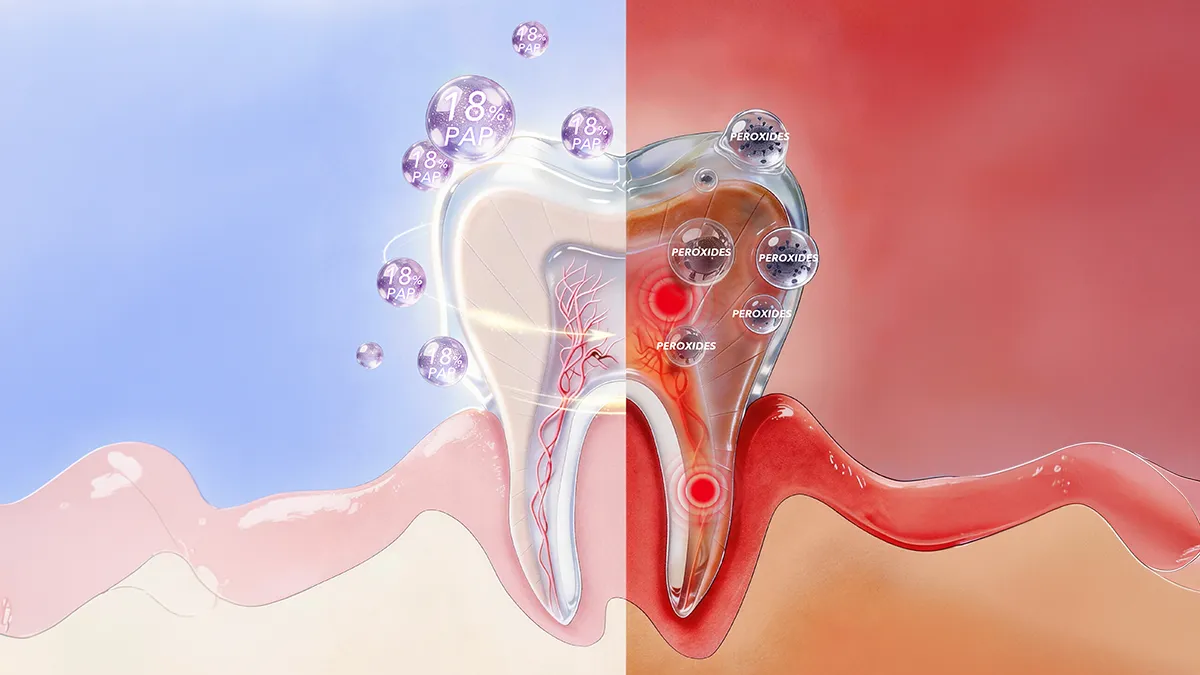
If you use traditional peroxide teeth whitening gel, you get a flashy, a few shades lighter smile by doing some damage, producing a free-radical cascade that whitens and destroys pigment. And we're old enough to know that free radicals, or reactive oxygen species (ROS), are bad news and among the ringleaders of skin and tissue damage and aging. We’ll undoubtedly accumulate some of these just by being alive, breathing, and metabolizing, and the body already spends a lot of resources fighting them (the whole antioxidant story of neutralizing these rogue molecules that steal electrons from balanced, healthy molecules).
ROS will oxidize the stains in the tooth and make it look whiter, but they will also irritate the nerve endings in the dentin layer. This is what causes that sharp, sudden pain when you drink hot or cold liquids or eat something sweet after a tooth bleach. Nerve pain is always much sharper than other types of pain from inflammation, local trauma, etc.
PAP is gentler on the tooth because its technology doesn't rely on creating mega doses of destructive, irritating free radicals, but on a process called epoxidation. This hits the double bonds in stain molecules (chromogens). The breaking of this bond destroys the pigment. PAP also has an added benefit: because it's a larger molecule than peroxide-based whitening gels, it's less likely to penetrate deep enough to reach a tooth nerve, so it stays on the surface and just below it to bleach stains.
So is PAP safer? PAP may have advantages in enamel effects and sensitivity, but the evidence is not yet large or mature enough to declare it universally safer on all counts. Because PAP is a very new development, there hasn't been enough time to produce comparably large studies in real people as those for peroxide-based agents. Much of the encouraging PAP research is still laboratory-based, and extracted teeth in a dish may not behave the same way as a live tooth in our mouths.
The conclusion: Peroxide is the established option. PAP is the very promising, potentially revolutionary newcomer. PAP’s flaw is not the lack of evidence, but the lack of time to accrue it; it is necessary for you to be aware of this gap when choosing your whitening gel.
The Best Teeth Whitening Gel for Trays?
The “best” is very subjective because we are different people with different goals, expectations, enamel thickness, abilities to stick to a program, and sensitivities.
Choose a peroxide-based dental whitening gel if:
- You want decades of established evidence.
- You want predictable whitening.
- You're comfortable with the possibility of temporary sensitivity and teeth and gum pain.
- You're using a dentist-supervised whitening system or getting in-office treatments with stronger whitening gels.
PAP may appeal if:
- You specifically want a peroxide-free formulation due to a history of sensitivity, bad experiences with peroxide, or any other reason.
- You are an early adopter, interested in newer whitening technology, and want to do at-home whitening safely.
- You prefer a gentler approach and don’t mind spending a bit more time to get results.
- You're comfortable with the fact that the evidence is still developing and mostly in vitro (meaning in a tube or a dish, rather than in a live organism, which we call in vivo).
People Also Ask
What Are the Best Teeth Whitening Gels Used by Dentists?
Teeth whitening gels used by dentists traditionally contain hydrogen peroxide or carbamide peroxide, and have been used since the 19th century. Dentists may use higher-concentration hydrogen peroxide for in-office whitening, and mostly carbamide peroxide for custom at-home trays.
Bonus info:
A stronger gel is not automatically better if it leaves you in pain and miserable. Professional whitening can assess whether the discoloration is even suitable for bleaching in the first place, because some are not. The grayish ones are far more difficult than yellow tones.
This assessment matters even more if you have fillings, crowns, veneers, gum disease, cavities, or one tooth that has mysteriously decided to turn darker than its neighbors.
What Is the Best Tooth Whitening Gel for Sensitive Teeth?
Higher concentrations of peroxide-based gels can increase the likelihood of sensitivity, although sensitivity varies considerably between individuals, so you may be completely fine with these compounds. Carbamide peroxide seems to be a bit gentler than peroxide, but if you know you have very sensitive teeth and gums, PAP whitening is your best bet.
Bonus info:
If you still want peroxide-based bleaching gel with sensitive teeth, talk to your dentist. They may recommend a lower concentration product, shorter treatment time, a different schedule, or a desensitizing product.
Can Whitening Trays Damage Your Teeth?
Used correctly, whitening is generally considered safe, but repeated or excessive use of bleaching products can increase the risk of enamel damage and gum disease.
Bonus info:
Poorly fitting whitening trays can let gel seep onto the gums, causing irritation; you can prevent this with a custom tray or a highly adaptable commercial one.

How Long Should You Leave Whitening Gel in Trays?
In-office bleaching will take 60 to 90 minutes per visit, and at-home whitening kits will require 30 minutes to 1 hour for higher-concentration or overnight for weaker formulas.
If you’re using an at-home teeth whitening set, always, always, no exceptions, follow the instructions. If it says 30 minutes, it says so for a reason, and an hour won’t be twice as good, because biological systems have a limit beyond which returns peak. Beyond this limit, you may start causing damage.
Treatment time depends on:
- the active ingredient
- concentration (strength)
- formulation specifics
- tray design and its ability to prevent seepage
- whether the treatment is dentist-supervised or you’re doing it on your own
Can You Sleep With Whitening Trays?
Sometimes yes. Some weaker bleaching gels are specifically formulated for longer or overnight use because they need 8-10 hours to work, while others are designed for much shorter applications.
Bonus info:
If the product says 30 minutes, don't assume "until morning" is better, because you might cause unnecessary damage with no extra results. The formula isn't designed to sit on your enamel for 8 hours.
Can Whitening Gel Remove Coffee and Wine Stains?
Yes, whitening can bleach many types of tooth discoloration.
Extrinsic (outside) teeth stains come from colored compounds in coffee, tea, red wine, and tobacco, like tannins, nicotine, and tar, that build up on the tooth surface. Whitening and professional cleaning can really help reduce these lifestyle-acquired tooth discolorations.
Bonus info:
Intrinsic stains are those below the tooth surface and can happen for many reasons, such as aging tissue, fluorosis, certain medications, and trauma to the tooth. Some types respond well to bleaching, while others don't. Talk to your dentist before you lose your mind trying to bleach the unbleachable.
Will Whitening Gel Work on Fillings, Crowns or Veneers?
No. A gel for teeth whitening was designed to work with natural tooth structure, but tooth-colored fillings, crowns, and veneers do not bleach in the same way. So if you’ve had some work done where it is very visible, you may get a large difference in tooth color if the veneers were, for example, matched to your previous tooth tone.
Bonus tip:
If you have visible dental work, especially on the front teeth, always talk to your dentist before using a dental whitening gel on your own.
Are Dentist Whitening Trays Better Than Store-Bought Ones?
Not necessarily, but mostly yes. They’re also more expensive. The biggest advantage of dentist-made trays is the custom fit, which helps control where the whitening gel goes.
Bonus info:
That doesn't mean every OTC product is bad. Some effective teeth whitening kits are 3rd-party tested and meet all the requirements for safety and effectiveness. Ignore the packaging completely and look at what you’re being offered as objectively as you can. Do you like the tray shape and the concentration of the tooth-whitening gel? Would you like to wear the bleaching tray for a shorter time during the day or sleep with it? Are there clinicals supporting the brand’s claim?
LED in Whitening Trays?
Yes! Good choice. Some tray teeth-whitening kits come with LED lights that speed up the whitening process. LED therapy has become a true giant running laps around everything else in the health, beauty, and wellness space, and for a good reason. Light energy is potent, completely non-invasive, and has many beneficial applications with virtually no side effects.
Bonus: LED Light Whitening Kit Recommendation
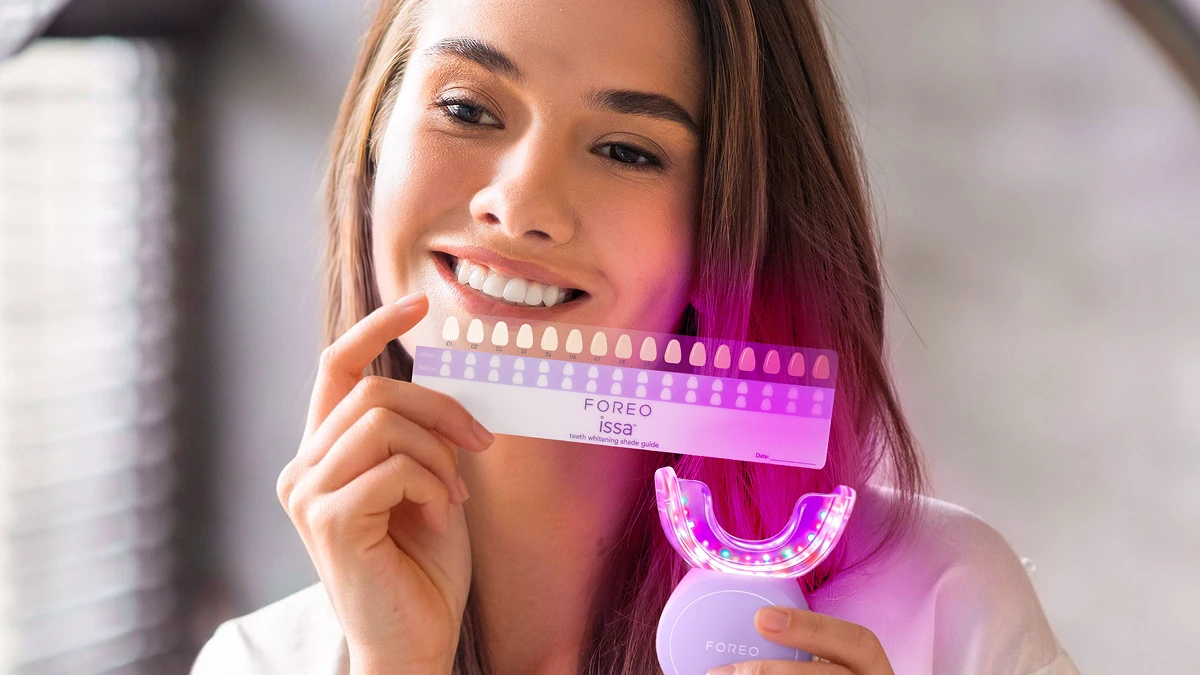
The ADA (American Dental Association) notes that in-office whitening sometimes uses light-activated systems, and also uses dental curing lights for polymerization of resin-based restoration materials. So the intervention of light in an at-home teeth whitening kit was not a huge jump, but mixing the light to hit various concerns, like whitening and gum health and vitality at the same time, is. That’s why we recommend the issa™ Teeth Whitening Set, the new kit featuring dual LED therapy.
issa™ Teeth Whitening Set
The set combines two top-tier products:
- issa™ dual LED + sonic teeth whitening device
- issa™ advanced teeth whitening gel
Powered by a clean, peroxide-free, and enamel-safe 18% PAP gel formula and dual LED tray, you no longer need to trade whiter teeth for pain and discomfort.
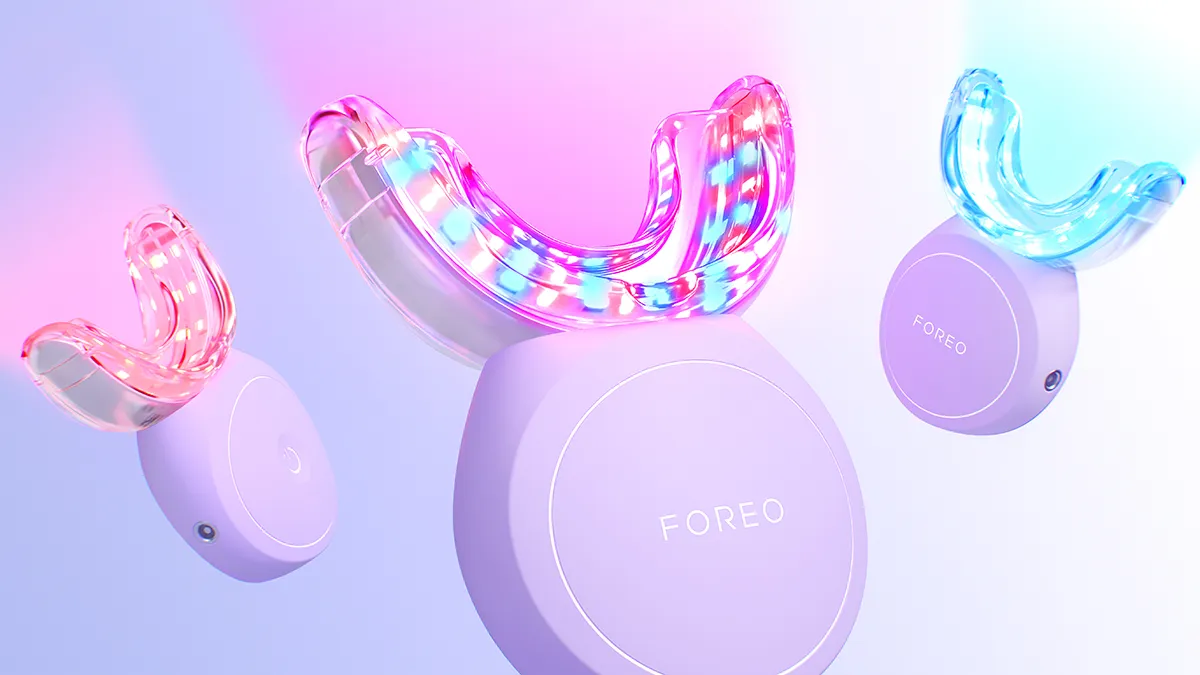
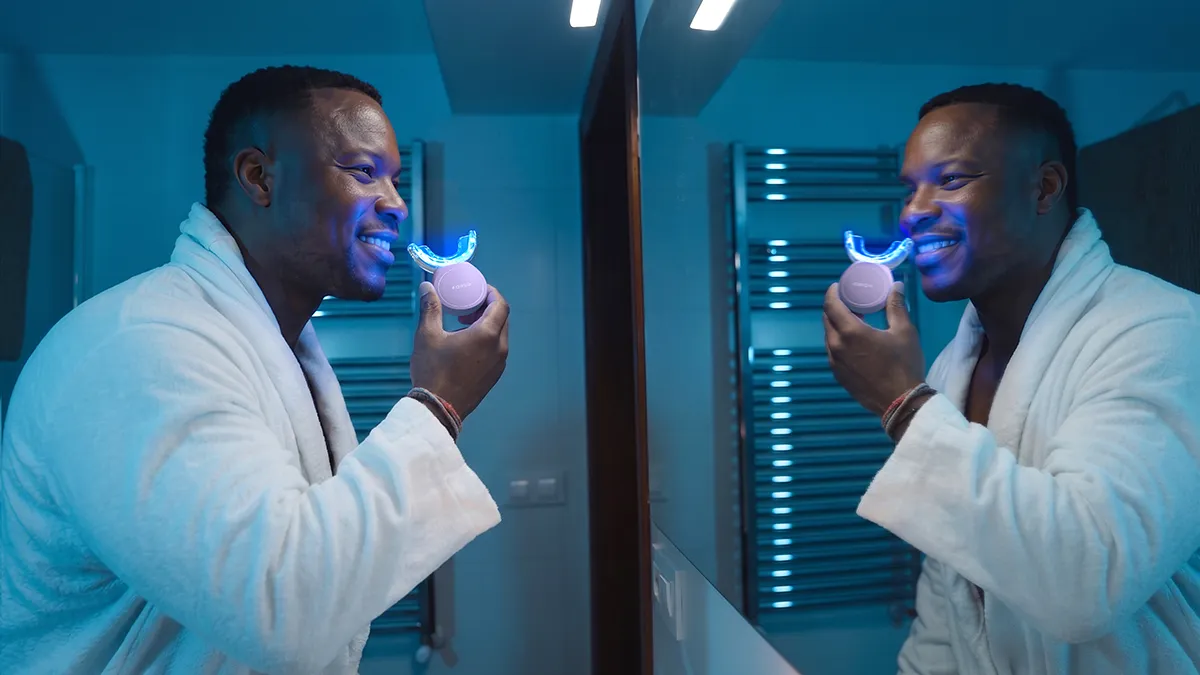
A precision-engineered teeth-whitening device features a combination of blue LED for enhanced whitening, red LED for gum care, and Sonic Pulse technology to spread the gel evenly. Used with LED-activated PAP gel, it shows visible results in just 6 days, up to 10 shades whiter in 15-minute sessions.
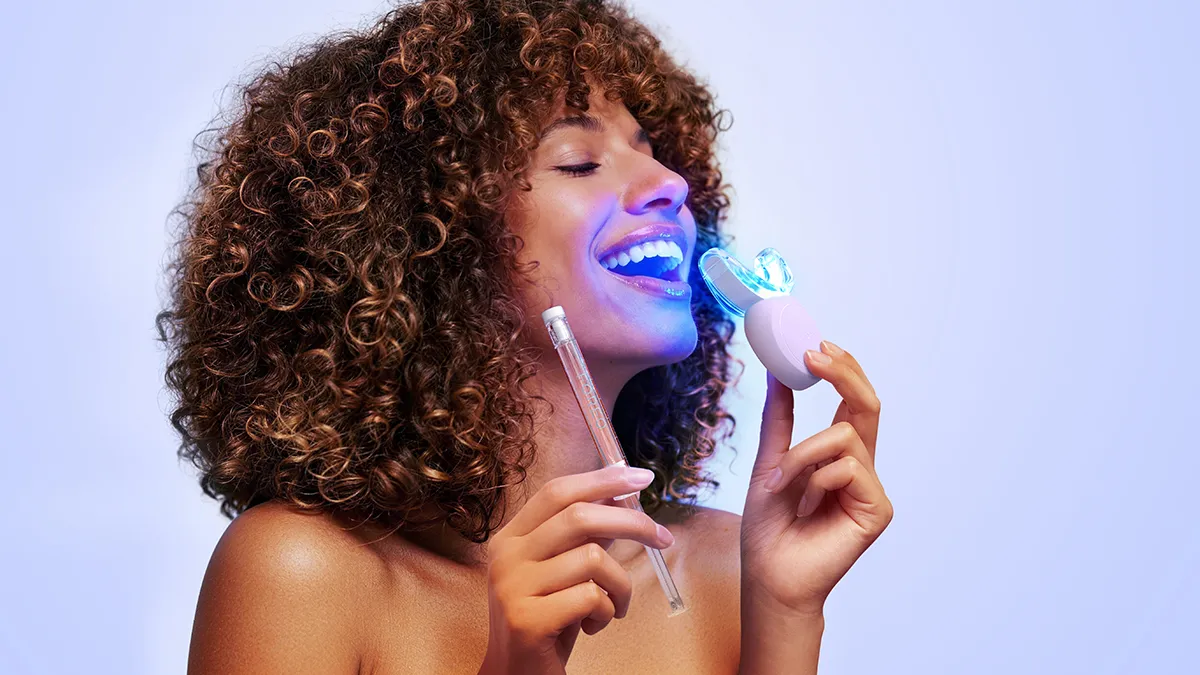
You can get this teeth whitening set as a duo and just buy extra gels for maintenance when you run out. The device will not be sold separately, as the light-activated whitening gel is the star of the show here. But the device has some impressive features that make it a superior investment:
Blue LED
Blue LED serves as a chemical catalyst for the 18% PAP gel, activating its chemistry with its distinct wavelength to break down stains.
Red LED
Red LED goes beyond whitening; its innate ability to improve mitochondrial energy production and boost circulation supports gum health from within. More energy and better blood flow will also reduce inflammation and rejuvenate gum tissue, contributing to healthier, pinker, less sensitive gums.
Sonic Pulse Technology
Sonic Pulse Technology, which you might know from the globally famous silicone sonic toothbrushes from the issa™ line, sends vibrations through the device’s whitening tray to actively spread the PAP gel evenly across every tooth and crevice during the first two minutes of each session. This improved gel-to-tooth contact delivers a uniform, natural-looking whitening effect, rather than a blotchy look caused by gel pooling.
Very flexible bleach tray
The bleach tray is also designed to be flexible and adapt to various tooth shapes and sizes, and you bite down on a sturdy yet comfortable, ultra-hygienic antibacterial silicone. It is a medical-grade, bacteria-resistant material safe for oral use and super easy to clean after each session. It’s so flexible that it could likely accommodate a Tudor jaw.
Smart Swedish design
Bonuses in my book are the single-button interface and radical customization available through the app. You may like a stronger vibration, want to separate whitening and gum care, or you’d like to extend or shorten your treatment that day (btw, with PAP you have some more wiggle room on treatment duration; it's not such a big deal like with peroxide-based gels). The battery life is great, some 2 hours per USB charge, which lasts over a week for most people, and the entire device is fully waterproof, so you’ll have it forever and can wash it all you want with zero concern of getting water into the charging port.
How Often Can You Use Teeth Whitening Gels?
It depends on the formula strength and treatment plan. Don’t use teeth whitening gels longer than the manufacturer or your dentist recommends just because you like the result. There's a ceiling beyond which you won't get any more visible improvement. Do your session(s) as intended, and you’ll be fine for 6 months to 2 years.
Excessive whitening can cause sensitivity, gum irritation, enamel damage, and porosity, and once it's damaged, you’re inviting cavities and hypersensitivity. Root canals are no fun at all.
Bonus tip:
It’s easy to get sucked into a loop, hoping you’ll wake up with a Vegas-stage smile. Some people have naturally more yellowish pigment, and no amount of bleaching will get you there. So follow the rules and don’t overdo it.
Are Teeth Bleaching Trays Safe?
Yes, super safe when used correctly and on healthy teeth and gums. The biggest problems don’t come from the products themselves but from misuse, like:
- excessive use
- too strong gel concentrations
- longer than recommended contact with teeth
- poor-fitting trays that don’t facilitate even coverage or spill onto the gums
- applying too much gel in a tray
- whitening despite untreated dental problems, where you can get very varying shades
TIP!
If you have cavities, cracked teeth, significant sensitivity, or gum disease, address those before reaching for the bleaching gel. Ignoring problems usually makes a tiny acorn grow into a giant oak. If you’re scared of the dentist, we’ve all been there. But dental medicine and anesthetics are really good today, and you won’t feel a thing. Get it sorted out because oral health affects every other system in your body. The mouth is the beginning and seed of your microbiome and affects everything from your weight, heart health, and chronic disease risks.
How Do You Use Whitening Gel in Trays?
The exact instructions will depend on your chosen teeth whitening products, but the general process is pretty much similar:
1. Brush and floss your teeth.
2. Add the recommended amount of gel. More is not better; it will only leak over your gums.
3. Insert the tray. Wipe away excess gel that escapes onto the gums.
4. Follow the specified treatment time, especially if you’re going to be using peroxide-based gels.
5. Remove and clean the tray and brush your teeth.
If you are using a dentist-prescribed teeth whitening routine, follow the schedule your dentist provided rather than copying a random internet routine. Dentists work with stronger stuff.
Hydrogen Peroxide or Carbamide Peroxide?
Both are effective. Hydrogen peroxide works directly and tends to work faster. Carbamide peroxide breaks down gradually, releasing hydrogen peroxide over time.
Studies of tray-delivered at-home whitening found both effective, with no significant differences in tooth sensitivity or gum irritation between the two categories, so the choice comes down to your preference.
But PAP, although a newcomer, still seems to have an advantage over hydrogen peroxide and carbamide peroxide when it comes to enamel damage and hypersensitivity.
Conclusion
At the end of the day, whitening trays and gels are a super simple way to whiten teeth up to 10 shades. Trays that fit well in your mouth, whether well-chosen, flexible commercial ones, or custom-made by a dentist, are just a vessel for the whitening gel that does the work. You’ll be safe and get visible results if you follow the instructions and don’t go all dental rogue in an unsupervised chemistry experiment that may leave you with damaged enamel and pain.
When it comes to choosing the right gel for you, peroxide-based gels remain the established choice, with decades of evidence and a history of use harking back all the way to the very rudimentary dentist’s ordinations in the 19th century, while PAP is a peroxide-free newcomer star, promising a gentler approach, particularly for those of us worried about sensitivity.
The catch is that PAP still has a much smaller clinical evidence base, so promising lab results aren't quite the same as decades of real-world data, but real-life experience and increasing proof are extremely promising. Whichever teeth whitening gel you choose, applying more gel, doing longer sessions, and bleaching more often don't automatically mean a whiter smile—they can simply mean more irritation and sensitivity in all cases, and not all stains can be bleached. In other words, choose your teeth whitening set based on what you need, want, and are willing to tolerate; follow the instructions; and talk to your dentist about any oral health issues before you dive into bleaching, whether in-office or with at-home whitening kits.
We hope this was useful and that you learned something to help you make a decision. Stay cool, curious, and smile like you mean it. The best is yet to come. The world may not change if you smile, but you’ll change how you see it and how it sees you.




Leave a comment